Escalation in the Gulf: Iranian Drones and Missiles Strike Kuwait and Saudi Arabia Amid Regional Conflict
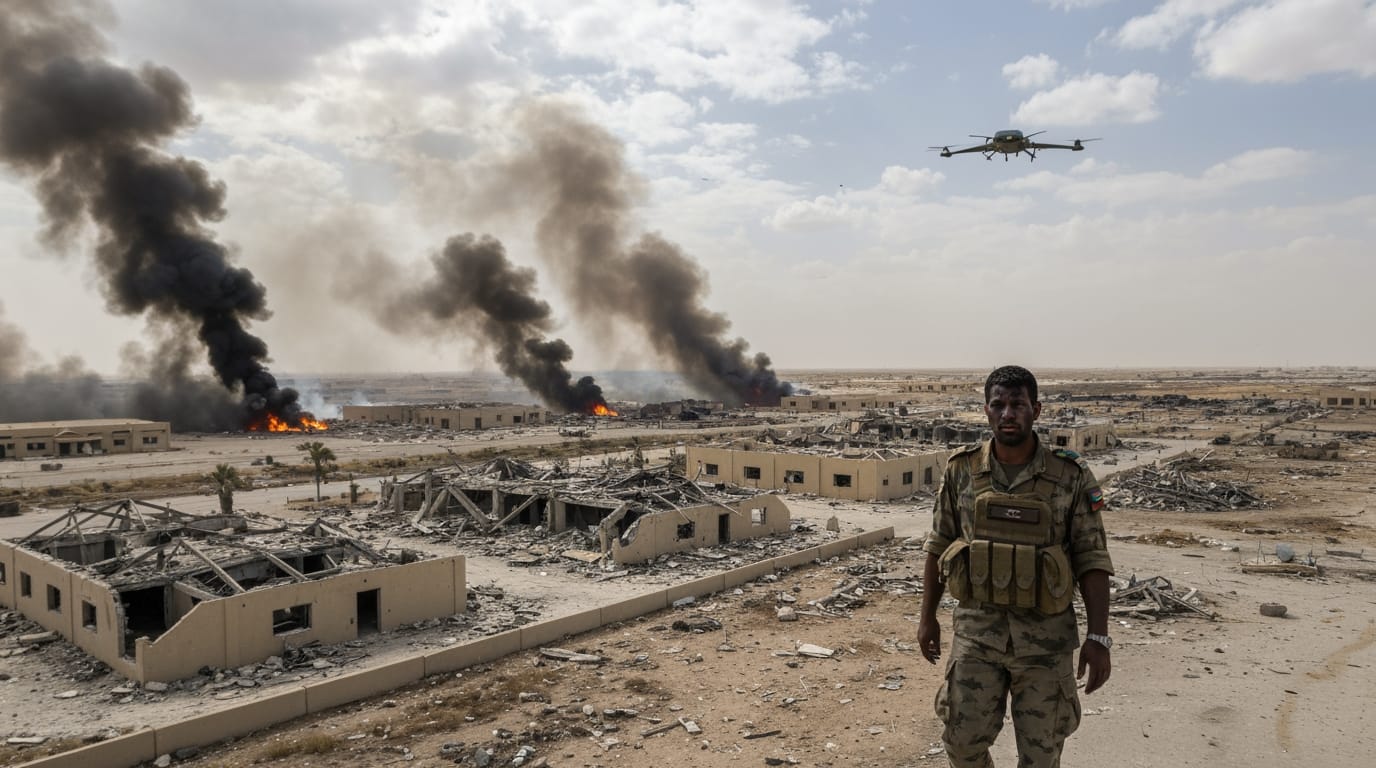
DUBAI, UAE – A significant escalation in regional hostilities has seen Kuwait and Saudi Arabia targeted by a barrage of Iranian drone and missile attacks in early March 2026, deepening a conflict described by some as an "ongoing 2026 Iran war." These strikes, occurring in the wake of joint U.S.-Israeli military actions against Iran, have impacted critical infrastructure, claimed lives, and sent ripples of instability and economic uncertainty across the Middle East.
The recent wave of aggression, largely attributed to Iran and its allied militias, underscores a broader strategy to raise the cost of the conflict and disrupt the region's vital oil and gas exports. All six member states of the Gulf Cooperation Council (GCC) have been affected, with Iranian projectiles striking military bases, embassies, and energy facilities, prompting widespread condemnation and calls for de-escalation.
Waves of Attacks Rock Saudi Infrastructure
Saudi Arabia, a cornerstone of global energy supply, has faced multiple direct assaults on its critical oil infrastructure and military installations. On March 2, 2026, the Ras Tanura refinery, the Kingdom's largest, was hit by an Iranian drone attack. While Saudi defenses intercepted two incoming drones, debris from the engagement caused a fire, leading to a precautionary shutdown of the 550,000 barrels-per-day facility. The incident, though causing minimal direct damage, triggered immediate spikes in global oil prices and necessitated the rerouting of Saudi propane and butane exports for several weeks. Another attempted drone attack on Ras Tanura followed two days later, on March 4, though no damage was reported.
Military bases have also been prime targets. The Prince Sultan Air Base in Al-Kharj witnessed sustained missile and drone activity. On March 3, Saudi defenses successfully intercepted eight drones. Subsequent days saw further attempts, with three ballistic missiles and one cruise missile intercepted on March 6, followed by five missiles on March 7. In one instance, a ballistic missile launched towards the base reportedly crashed in an uninhabited area.
The remote Shaybah oil field in the Empty Quarter, a vital "super-giant" field crucial to Saudi Arabia's gas strategy, was targeted by waves of drones on March 7. Saudi air defenses intercepted between 16 and 21 drones aimed at the facility. The capital, Riyadh, also experienced direct impacts; on March 3, the U.S. Embassy compound was struck by drones, resulting in a limited fire and minor structural damage. Saudi air defenses intercepted multiple drones in the Riyadh region on March 6 and 7. Despite evidence and attribution by various sources, Iran's Ambassador to Saudi Arabia, Alireza Enayati, denied his country's involvement in the U.S. Embassy attack.
Kuwait Bears the Brunt of Drone Strikes
Kuwait, historically a more stable presence in the Gulf, has not been spared in the escalating conflict. The nation's stability was significantly challenged by direct attacks on its international airport and military facilities, resulting in both material damage and casualties.
On the weekend preceding March 5, a devastating Iranian drone attack struck a tactical operations center at Shuaiba port, tragically killing six U.S. service members. Reports indicated the facility had inadequate overhead protection, contributing to the fatalities.
Kuwait International Airport has been repeatedly targeted. On March 1, a drone crash at the airport injured several employees and caused damage to the facility. A week later, on March 8, fuel tanks at the airport were hit by drones, leading to a large fire. Kuwaiti forces were actively responding to a "wave of hostile drones" penetrating the country's airspace at the time. Initial reports suggested no casualties from this specific incident.
U.S. military presence in Kuwait also faced direct threats. Iran claimed responsibility for firing cruise missiles at the Ali Al Salem Air Base on March 2, with Iranian state media confirming attacks on U.S. military bases in Kuwait. An Iranian missile reportedly struck near the base on March 6, igniting a fire. The sheer volume of incoming projectiles tested Kuwait's air defense capabilities; the Ministry of Defense reported detecting and intercepting 394 drones and 212 missiles since the conflict began. On March 6 alone, Kuwaiti air defenses successfully intercepted 12 drones and 14 missiles launched from Iran. However, the intensity of the attacks led to an unfortunate "friendly fire" incident where Kuwaiti air defenses mistakenly shot down three U.S. F-15E fighter jets during active combat, though all crew members survived.
Debris from intercepted drones also caused damage elsewhere in Kuwait. On March 2, two workers were injured at the Mina Al Ahmadi refinery when shrapnel fell after drones were shot down, though refinery operations remained unaffected. The U.S. Embassy in Kuwait City also saw smoke rising nearby on March 2, and the embassy issued security alerts warning of ongoing missile and UAV threats.
Regional Instability and Economic Fallout
The extensive drone and missile attacks represent a significant intensification of regional tensions, characterized by Gulf states as a "dangerous escalation" and "blatant violation of state sovereignty." Turkey, the United Arab Emirates, and Qatar have called for immediate restraint and diplomatic solutions to prevent a wider conflict. However, Iran's judiciary chief has asserted that attacks would persist against countries whose territories are perceived as being used by its adversaries. While Iranian President Masoud Pezeshkian offered an apology for attacks on neighboring countries, hardline elements within Iran maintained that the war strategy would not change.
The economic repercussions are profound. The shutdown of the Ras Tanura refinery and Kuwait's subsequent cuts in oil and refinery output, coupled with Qatar's halt of liquefied natural gas production following drone strikes, have significantly disrupted global energy markets. The attacks, particularly those targeting shipping in the Strait of Hormuz, have caused oil traffic to plummet and prices to soar, highlighting the vulnerability of global supply chains to regional instability.
The sheer volume of projectiles employed by Iran and its proxies has tested the limits of existing air defense systems across the Gulf. While many missiles and drones are intercepted, the continuous barrages risk saturating defenses, with drones proving particularly effective at penetrating airspace and causing localized damage. This asymmetric warfare strategy, combining various platforms and swarm tactics, underscores the evolving nature of modern conflict in the Middle East.
A Precarious Balance
The recent drone and missile attacks on Kuwait and Saudi Arabia signal a perilous new phase in the ongoing regional conflict. With Iran openly retaliating against perceived threats following U.S.-Israeli actions, and Gulf states struggling to defend against persistent incursions, the geopolitical landscape remains acutely volatile. The targeting of civilian infrastructure, military bases, and critical energy assets has not only caused immediate damage and tragic loss of life but has also created a climate of fear and economic uncertainty, posing a severe challenge to regional stability and global energy security. The coming weeks will be critical in determining whether diplomatic efforts can de-escalate the situation or if the region is poised for further, broader conflict.


