Ethiopia Teeters on the Brink: A Nation Grapples with Internal Strife and External Pressures
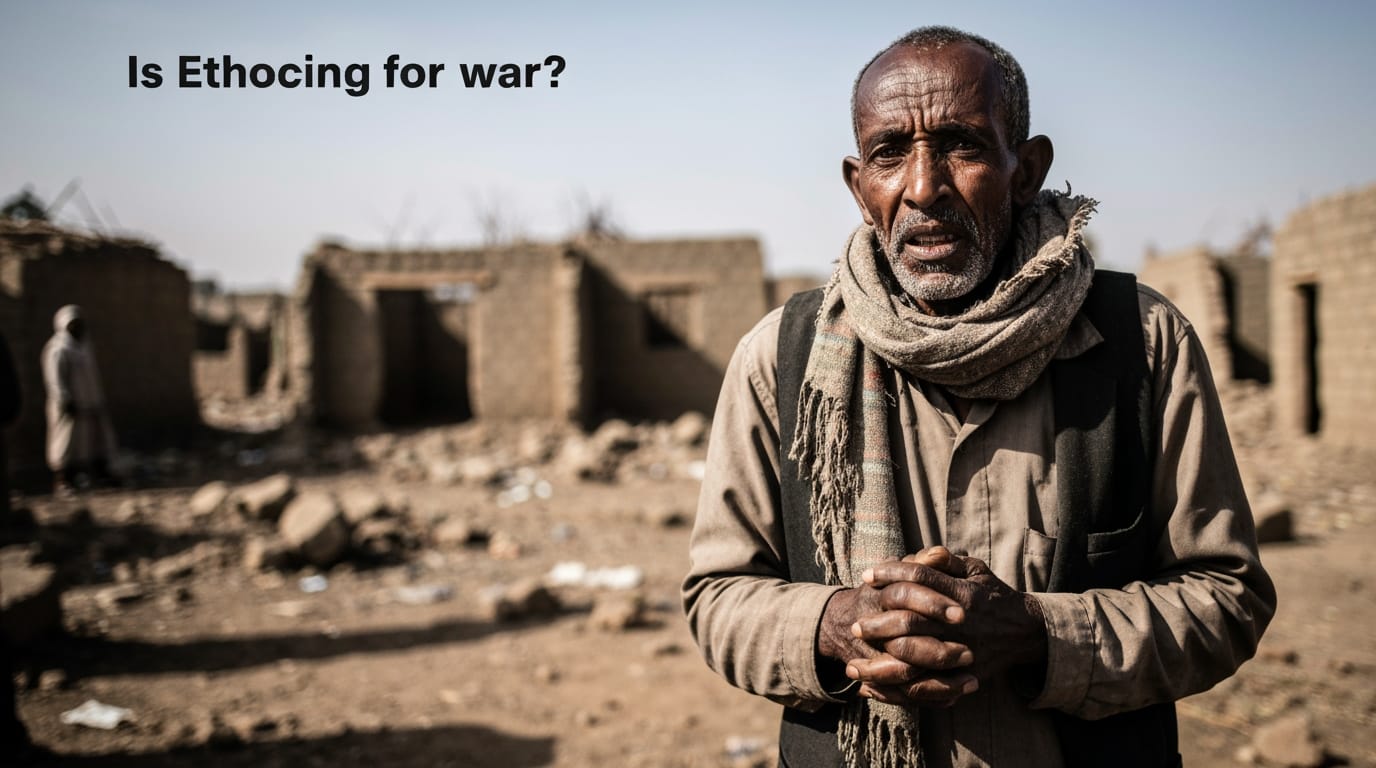
Ethiopia, a nation of over 130 million people, finds itself navigating a complex and perilous landscape, facing mounting internal insurgencies, unresolved historical grievances, and escalating regional tensions that collectively raise the specter of widespread conflict. The fragile peace brokered after the devastating two-year civil war in Tigray is under severe strain, while Addis Ababa's determined pursuit of Red Sea access has ignited fresh disputes with its neighbors. Simultaneously, a long-standing contention over the Grand Ethiopian Renaissance Dam (GERD) continues to simmer, drawing in powerful regional actors and exacerbating an already volatile situation. These converging crises are pushing the Horn of Africa towards a potential conflagration with severe humanitarian and geopolitical ramifications.
The Lingering Scars of Tigray and Shifting Alliances
The brutal civil war in Ethiopia's northern Tigray region, which raged from 2020 to 2022 and claimed an estimated 500,000 lives, left deep wounds that continue to fester. While a peace agreement, known as the Pretoria Agreement, aimed to end hostilities, its implementation remains tenuous. Recent reports indicate that Tigray's main political party, the Tigray People's Liberation Front (TPLF), has moved to restore its pre-war parliament, citing violations of the peace deal by the federal government. This decision signals a significant challenge to the fragile stability of northern Ethiopia.
The aftermath of the Tigray conflict has also witnessed a concerning realignment of regional forces. Previously, Eritrea and Ethiopia allied to combat the TPLF. However, current intelligence suggests a potential reversal, with fears growing that Eritrea and Tigrayan rebels might now be joining forces against the Ethiopian government, possibly alongside other ethnic militias. This dramatic shift underscores the fluid and unpredictable nature of alliances in the region. There have been reports of military buildups and troop movements along the Ethiopia-Eritrea-Tigray border, with Eritrea reportedly issuing military mobilization directives to its citizens and recalling reservists. Ethiopia, in turn, has accused Eritrea of supplying ammunition to rebel groups in its Amhara region, further fueling mutual distrust and hostility. Both nations are perceived to be preparing for potential conflict, with Eritrea allegedly funding rebellious groups within Ethiopia and acquiring military hardware, while Ethiopia is reportedly arming Eritrean opposition forces.
The Quest for the Red Sea: An "Existential" Issue Ignites Regional Fury
Ethiopia's landlocked status, a consequence of Eritrea's independence in 1993, has long been viewed by Addis Ababa as a significant impediment to its economic and strategic interests. Prime Minister Abiy Ahmed has explicitly stated that gaining Red Sea access is an "existential issue" for Ethiopia, a nation he described as being in a "geographic prison." This ambition materialized in January 2024 when Ethiopia signed a controversial Memorandum of Understanding (MoU) with Somaliland, a self-declared state, granting Ethiopia a 20-kilometer coastal lease in exchange for potential recognition of Somaliland's independence.
This agreement immediately triggered a fierce backlash from Somalia, which considers Somaliland part of its sovereign territory, as well as from Egypt and Turkey. Eritrea has vehemently denounced Ethiopia's pursuit of a Red Sea port as a "provocation" and labeled Addis Ababa's ambitions as "misguided and outdated." While Prime Minister Abiy has stated a preference for achieving maritime access "peacefully via dialogue," the heightened rhetoric and military posturing from neighboring countries indicate a rapidly escalating crisis. The Red Sea, a vital global shipping lane, has become a new flashpoint, with Ethiopia's determination clashing directly with the sovereign and security concerns of its neighbors.
The Nile's Lifeline and Regional Power Plays
Compounding these challenges is the unresolved dispute surrounding the Grand Ethiopian Renaissance Dam (GERD) on the Blue Nile. The massive hydroelectric project, now reportedly at full capacity, is a source of national pride and a cornerstone of Ethiopia's development ambitions. However, it has been a point of intense contention with downstream nations Egypt and Sudan, particularly Egypt, which views the Nile as its fundamental "lifeline."
Negotiations over the GERD's operations and water-filling schedule have repeatedly stalled, leading Egypt to reportedly abandon diplomatic avenues in favor of a more assertive stance. Cairo has taken significant steps to counter Ethiopia's actions, including signing a comprehensive military pact with Somalia. This agreement has resulted in the deployment of Egyptian troops, weapons, and aircraft near Ethiopia's borders, effectively creating a new layer of military presence in the volatile region. Furthermore, Egypt has reportedly secured agreements to upgrade Eritrea's strategically important port of Assab, which Ethiopia lost in 1993, for use by Egyptian warships. Cairo has also finalized a deal to develop Djibouti's Dorale port, a critical trade artery through which over 90% of Ethiopia's international trade flows. These actions are widely interpreted as an attempt by Egypt to encircle Ethiopia militarily and exert pressure on the GERD issue. Egypt has also reportedly offered to facilitate Ethiopia's Red Sea access through existing ports in Djibouti, Eritrea, and Somalia, but crucially, this offer comes with the condition that Ethiopia accepts binding rules on GERD operations.
Internal Fractures and the Humanitarian Imperative
Beyond these external pressures, Ethiopia continues to grapple with pervasive internal instability. The country is currently battling multiple insurgencies, including in the Amhara region, where Eritrea is alleged to be supporting rebels, and in Oromia, the largest region. These internal conflicts are exacerbated by deep-seated ethnic tensions, a complex legacy of the nation's "ethnic federalism" system, and a proliferation of local militias and armed factions. The 2020-2022 civil war in Tigray starkly exposed these violent ethnic fissures, and ongoing human rights concerns, particularly in Western Tigray, continue to make the safe return of displaced populations a distant prospect.
The involvement of external powers further complicates this internal landscape. Reports suggest the active presence of "malicious Gulf actors," with, for instance, the United Arab Emirates reportedly backing a training camp for the Rapid Support Forces militia in Sudan. Such external support risks transforming internal grievances into proxy conflicts, destabilizing the entire region. The cumulative effect of these protracted conflicts and political uncertainties has created a severe humanitarian crisis, marked by massive internal displacement, widespread food insecurity, and a desperate need for assistance.
Conclusion
Ethiopia stands at a critical juncture, with multiple, interconnected crises threatening to unravel the fabric of the nation and destabilize the broader Horn of Africa. The unresolved aftermath of the Tigray war, the escalating confrontation over Red Sea access, and the persistent deadlock regarding the GERD, all against a backdrop of deep internal ethnic divisions and insurgencies, create an extremely volatile environment. While diplomatic efforts are being pursued, the bellicose rhetoric, military buildups, and shifting alliances suggest a region bracing for potential wider conflict. The international community faces a formidable challenge in de-escalating these tensions and fostering a path towards sustainable peace, lest a new "human calamity" unfolds across an already fragile part of the world.


