Ethiopia's 2026 Election: Regional Crises Cast Long Shadow Over Credibility
ADDIS ABABA, Ethiopia – Ethiopia is bracing for national elections in June 2026, a pivotal moment intended to reinforce democratic transition and stability. However, persistent and escalating crises in the Amhara and Tigray regions, alongside simmering tensions elsewhere, are casting a long shadow over the electoral process, raising significant concerns about its inclusivity, legitimacy, and the potential for increased instability. The upcoming polls, which will elect members to the House of Peoples' Representatives and regional councils, are set against a backdrop of deep-seated conflicts, humanitarian challenges, and a fractured political landscape that mirrors, and in some aspects, exacerbates the issues that plagued the 2021 elections.
The challenges are multifaceted, encompassing active insurgencies, unresolved territorial disputes, widespread displacement, and a shrinking civic space. Observers fear that conducting elections under such precarious conditions risks deepening national divisions rather than fostering unity.
Amhara: A Region Engulfed in Conflict
The Amhara region, Ethiopia's second most populous state, has been engulfed in an armed conflict since April 2023, pitting the Ethiopian military against the Fano militia. This insurgency, comprised of fragmented local self-defense groups, views its struggle as legitimate resistance against perceived government oppression and unfulfilled promises, particularly following the Tigray peace agreement which they felt betrayed their interests.
The conflict has been marked by severe human rights abuses committed by all warring parties. Reports from 2024 and 2025 detail extrajudicial executions, sexual violence, torture, ill-treatment of civilians, and the use of drones and heavy artillery against civilian areas by government forces. Fano militias have also been implicated in killings of civilians and attacks on civilian infrastructure. In July 2024, Fano militants launched a significant offensive, seizing control of several key cities and strategic areas, including the vital border town of Metemma, which links Ethiopia to Sudan. Heavy fighting has continued across multiple zones, with airstrikes reported in both rural and urban locales.
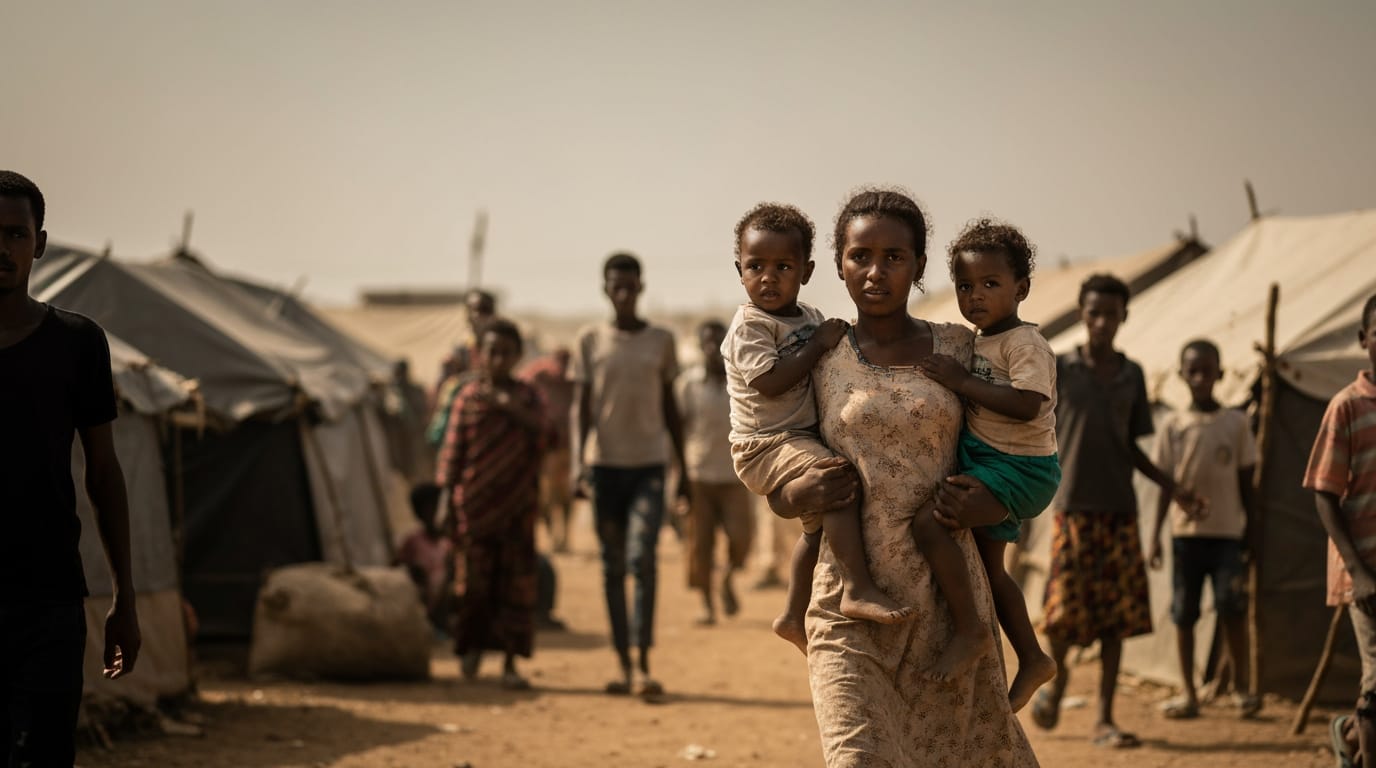
The humanitarian consequences are dire. Millions have been displaced, leading to a profound erosion of the social fabric necessary for political participation. Aid agencies face extreme restrictions and violence, with reports of aid workers being killed and kidnapped, leading the United Nations to consider suspending relief operations in the region. This widespread insecurity makes state administration and the logistical arrangements for ballot distribution virtually impossible in many areas, with Fano militants expected to actively disrupt polling stations.
Tigray's Fragile Peace and Unresolved Grievances
In the Tigray region, the 2022 Pretoria peace agreement, which ended a devastating two-year conflict, achieved a cessation of large-scale conventional warfare but left numerous critical issues unresolved. These include persistent territorial disputes, a lack of progress on transitional justice, and challenges in the reintegration of armed actors. Tigray remains in a "fragile political limbo," further complicated by internal divisions within the Tigray People's Liberation Front (TPLF). The National Election Board of Ethiopia (NEBE) revoked the TPLF's legal status as a political party in May 2025, a decision that could further disenfranchise voters in the region.
A major flashpoint involves contested territories, particularly Western Tigray. Despite the peace agreement's call for the withdrawal of non-federal forces, Eritrean forces and Amhara militias continue to control significant parts of Western, Southern, and Northern Tigray. A decision by the House of Federation to proceed with federal elections in five disputed constituencies outside Tigray's administrative authority has sparked widespread protests across the region, with Tigrayan leaders questioning the legality of the move and warning of potential renewed conflict.
The post-conflict period in Tigray has also seen lagging reconstruction efforts, high youth unemployment, and continued reliance on humanitarian assistance. Food insecurity is projected to remain a structural risk through 2026. These conditions, combined with a stalled peace agreement and delayed return of internally displaced persons (IDPs), deepen mistrust between local communities and federal institutions. Consequently, it is widely anticipated that voting will not occur in most of Tigray, further complicating the notion of a truly national election.
Electoral Logistics and Legitimacy Under Scrutiny
The National Election Board of Ethiopia (NEBE) faces an uphill battle to organize credible elections amidst these widespread insecurities. The board, which struggled with similar issues in 2021, plans to implement a three-tier security classification system, designating "red areas" as unfit for voting. This approach, while acknowledging security realities, raises concerns that significant portions of the electorate, particularly in Amhara and Tigray, could be disenfranchised.
The integrity of the electoral process is further undermined by a constrained political environment. While 23 opposition parties are accredited for the 2026 elections, many are fragmented, weakened, or excluded from effective political participation. There have been reports of government crackdowns on the media and political parties, including the suspension of journalists and organizations, which stifles open debate and genuine competition. Opposition parties criticize the NEBE's reliance on government data for security assessments and some question the fairness of participating in a system they view as fundamentally flawed.
The specter of the 2021 elections, where a significant number of parliamentary seats remained vacant due to security concerns and boycotts, looms large over 2026. Experts warn that holding elections without addressing the root causes of conflict and ensuring broad participation risks merely replaying a "turbulent" and "flawed" exercise.
Broader Implications and International Concerns
The instability in Amhara and Tigray, alongside other conflict-affected regions like Oromia, poses a significant threat to Ethiopia's overall stability and has broader implications for the volatile Horn of Africa. The international community has expressed concerns over ongoing human rights abuses and the stalled transitional justice process. International partners emphasize the need for sustained pressure to ensure the full implementation of peace agreements and to support genuine political dialogue and reconciliation efforts across Ethiopia.
The upcoming election is not just a domestic affair; its outcome and legitimacy will resonate across the region, impacting relations with neighboring countries like Eritrea, with whom Ethiopia's relations remain fragile.
A Nation at a Crossroads
As Ethiopia approaches its June 2026 election, the fundamental question remains whether a credible and inclusive democratic process can truly unfold amid such profound national fragmentation and persistent conflict. The crises in Amhara and Tigray are not merely regional challenges; they represent existential threats to the election's legitimacy and the country's long-term stability. Without a concerted effort to de-escalate conflicts, resolve underlying grievances, ensure unfettered humanitarian access, and create a truly open political space, the 2026 elections risk becoming another stress multiplier, amplifying existing tensions and further undermining the democratic aspirations of the Ethiopian people.


