Katherina Reiche: Seasoned Strategist Takes Helm of Germany's Economy Ministry
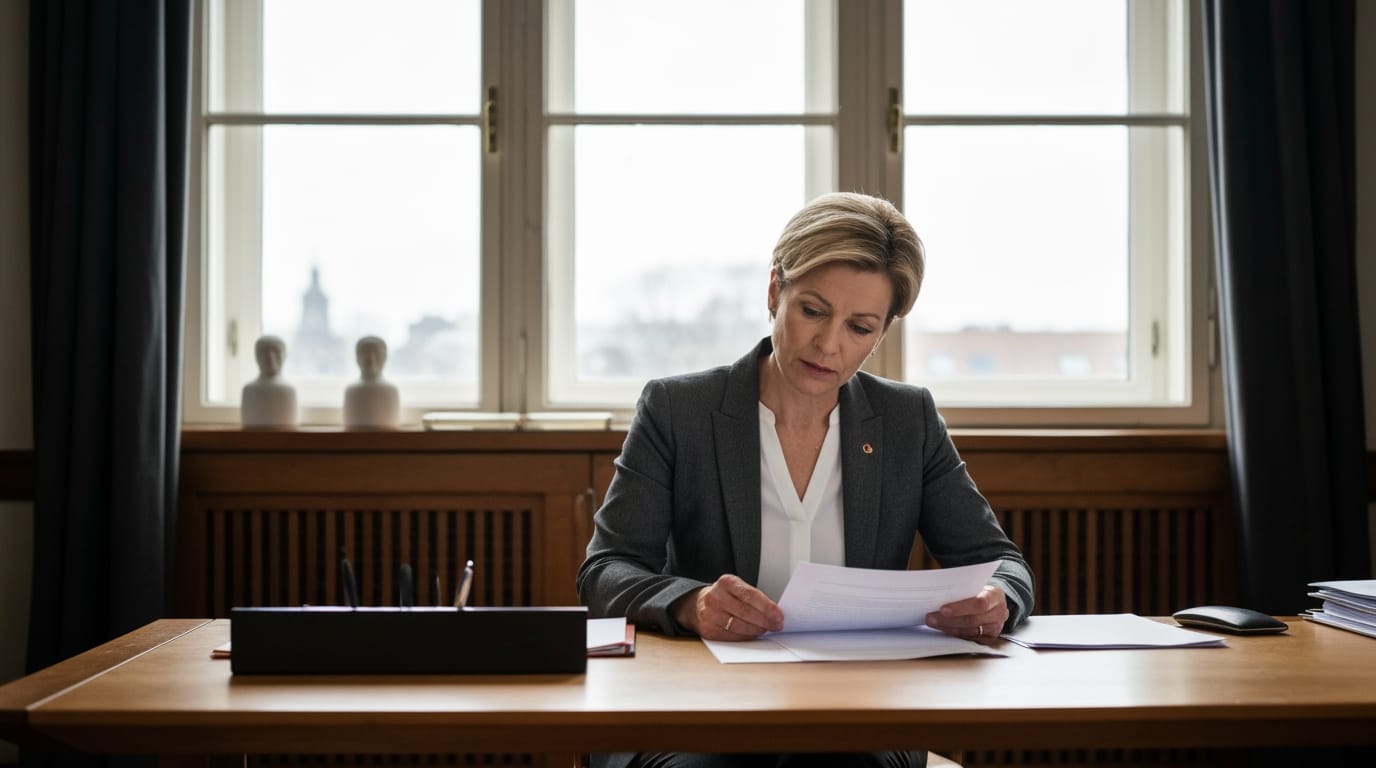
Berlin, Germany – Katherina Reiche, a chemist by training and a political veteran with significant experience in both public service and the private sector, has returned to the forefront of German politics as the Federal Minister for Economic Affairs and Energy. Appointed on May 6, 2025, to Chancellor Friedrich Merz's cabinet, Reiche's trajectory from Bundestag member to energy industry executive and back to a pivotal ministerial role underscores her deep understanding of Germany's complex energy landscape and economic challenges. Her appointment signals a strategic move to infuse the ministry with pragmatic, market-oriented leadership at a critical juncture for Europe's largest economy.
Born on July 16, 1973, in Luckenwalde, Katherina Reiche's early academic pursuits laid a foundation for a career that would consistently intersect with scientific and technological policy. She pursued chemistry studies at the University of Potsdam, Clarkson University in the United States, and the University of Turku in Finland, successfully earning her diploma in chemistry in 1997. Her entry into politics began swiftly, joining the Young Union in 1992 and the Christian Democratic Union (CDU) in 1996. This early engagement quickly propelled her into federal politics, culminating in her election to the Bundestag in 1998, where she served for 17 years until 2015. During her initial parliamentary tenure, Reiche ascended through the ranks, notably serving as Deputy Chairperson of the CDU/CSU parliamentary group from 2005 to 2009. Her early political career was not without its moments of public scrutiny, particularly in 2002 when her appointment as a shadow minister for family affairs drew criticism from conservative factions due to her status as an unmarried mother at the time. This period forged her reputation as a resilient politician, capable of navigating ideological differences while maintaining focus on policy.
Reiche's governmental roles further solidified her expertise in crucial policy areas. From 2009 to 2013, she served as Parliamentary State Secretary at the Federal Ministry for the Environment, Nature Conservation and Nuclear Safety. In this capacity, she played a direct role in some of Germany's most significant energy policy shifts, including the decision to phase out nuclear power by 2022 and reforms to solar subsidies. Following the 2013 federal elections, she transitioned to become Parliamentary State Secretary at the Federal Ministry of Transport and Digital Infrastructure, a position she held until 2015. Here, her portfolio was expansive, encompassing critical efforts in traffic safety, the automotive industry, and research into fuel strategies and electromobility. Her engagement in these diverse ministries provided her with a comprehensive understanding of the regulatory frameworks and technological demands shaping Germany's industrial and environmental future. She also contributed to the government's "coal commission" between 2018 and 2019, tasked with developing a strategy for phasing out coal and creating new economic prospects for coal-mining regions.
A notable chapter in Reiche's career began in 2015 when she made a significant pivot from legislative politics to executive leadership in the private sector. She resigned her seat in the Bundestag to become Chief Executive Officer of the German Association of Local Public Utilities (VKU). This transition sparked a broader debate in Germany regarding the ethics and necessity of mandatory waiting periods for politicians entering the private sector, given the potential for perceived conflicts of interest. Despite the discussion, Reiche quickly established herself as a formidable leader in the energy industry. In 2016, she was unanimously elected President of the European Centre of Enterprises with Public Participation and of Enterprises of General Economic Interest (CEEP), further extending her influence on a European scale. Her industry journey continued as she took on the role of CEO of Westenergie, a subsidiary of the energy giant E.ON, from 2020 until her return to government in 2025. At Westenergie, she was responsible for critical infrastructure, including electricity, gas, water, and broadband networks, gaining practical experience in the operational challenges of Germany's energy supply. A particularly influential role during this period was her appointment as Chairwoman of the National Hydrogen Council of the Federal Government in June 2020. In this capacity, she actively promoted hydrogen as a fundamental technology for decarbonizing industry and heavy transport, advising the government on its National Hydrogen Strategy and advocating for the expansion of hydrogen infrastructure.
Now, as Federal Minister for Economic Affairs and Energy, Reiche faces a demanding portfolio at a time of considerable global and domestic economic uncertainty. Her appointment by Chancellor Friedrich Merz signals a desire for stability and a renewed focus on economic growth and industrial competitiveness. Reiche has articulated an "ordoliberal" economic philosophy, advocating for policies that enable rather than over-regulate, asserting that the state's role is to create conditions for economic development rather than direct it. Her immediate priorities include ensuring competitive electricity prices for businesses and households, a critical issue given Germany's relatively high energy costs. She recently announced plans to accelerate a reduction in the electricity tax, underscoring her commitment to alleviating financial burdens on consumers and industries. Furthermore, her deep engagement with the National Hydrogen Council is expected to continue shaping Germany's ambitious hydrogen strategy, positioning the nation as a leader in this burgeoning field. The approval of the hydrogen core network by the Federal Network Agency, which Reiche hailed as a strong signal for the energy transition, exemplifies her commitment to building robust infrastructure for a future energy system.
Katherina Reiche's career path is a testament to her versatility and sustained influence within Germany's political and economic spheres. Her unique blend of parliamentary experience, deep ministerial insight, and hands-on leadership in critical energy industries equips her with a comprehensive perspective on the challenges and opportunities facing Germany's economy. From her early days in chemistry to her leadership roles in environmental policy and her strategic guidance of the National Hydrogen Council, Reiche has consistently positioned herself at the nexus of innovation, policy, and practical implementation. As she steers the Economy Ministry through a period of profound transformation, her emphasis on pragmatic solutions, competitive markets, and robust infrastructure development will be crucial in shaping Germany's economic resilience and its leadership in the global energy transition. Her journey exemplifies a modern public servant, adept at bridging the traditional divides between government, industry, and the evolving demands of a sustainable future.


