EU and India Forge Historic Trade Pact as Global Order Shifts Under US Tariff Pressure
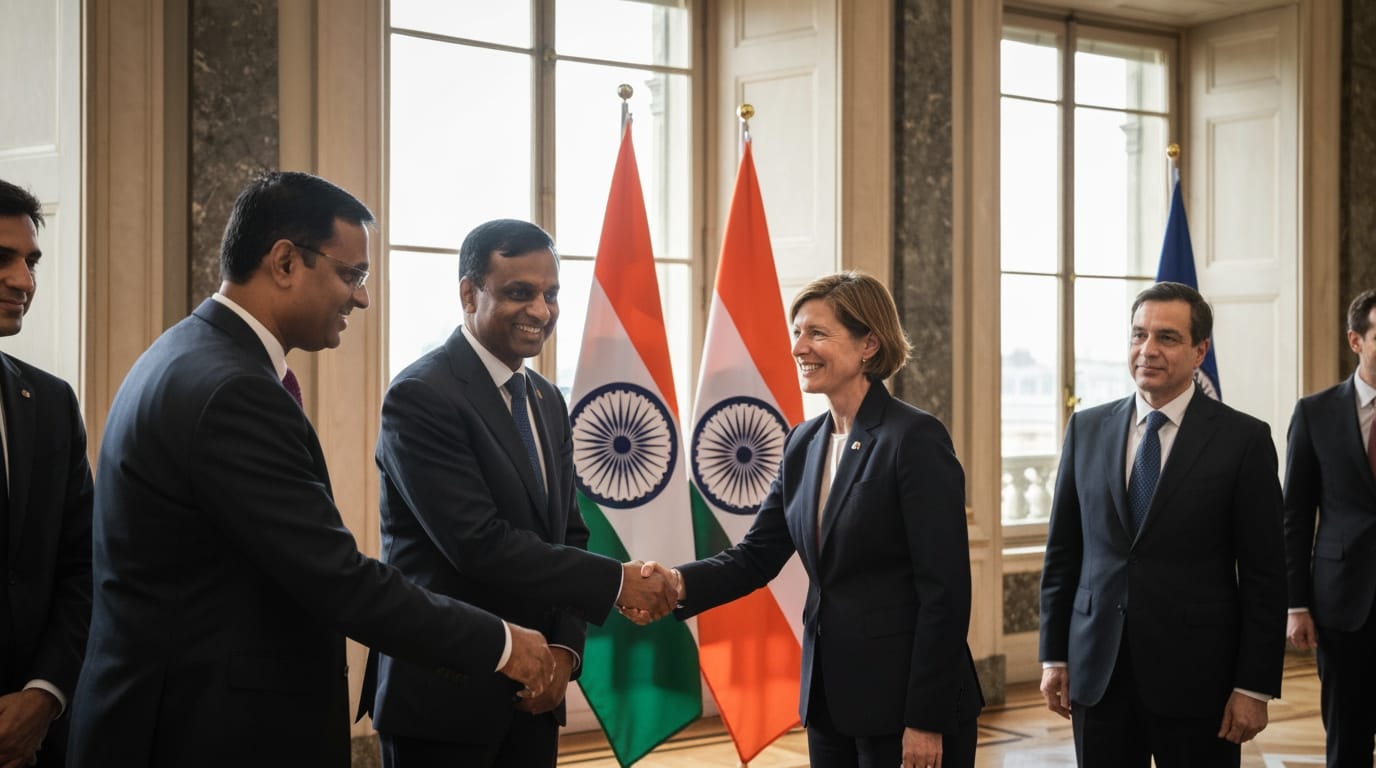
NEW DELHI – The European Union and India are on the cusp of finalizing a sweeping free trade agreement (FTA), a monumental accord poised to redefine global commerce and strategic alliances. With an official announcement anticipated during the EU-India Summit in New Delhi this week, the deal emerges as a direct response to a fractured global trade landscape increasingly shaped by protectionist policies and significant tariffs imposed by the United States. Leaders from both blocs describe the impending agreement as the "mother of all deals," reflecting its expansive scope and profound implications for nearly two billion people.
The negotiations, spanning almost two decades and revived with renewed vigor in 2022 after a nine-year hiatus, are culminating at a pivotal moment. The European Commission President Ursula von der Leyen and European Council President António Costa are currently in India, underscoring the urgency and strategic importance both sides attach to solidifying this partnership. This impending agreement signals a decisive move by the EU and India to foster economic resilience and diversify trade ties amidst a tumultuous international environment.
A Geopolitical Chessboard: Responding to Protectionism
The momentum behind the EU-India FTA is significantly driven by a shared desire to counter rising protectionism, particularly from the United States. The current U.S. administration's imposition of tariffs, reaching up to 50% on certain goods, has disrupted global supply chains and prompted major economies to seek new trading partners. India, for instance, has seen its key exports, including textiles and jewelry, hit with substantial U.S. duties. Similarly, Europe has faced its own trade disputes with the U.S., intensifying its efforts to broaden its economic horizons.
This environment has propelled both the EU and India to strategically de-risk from over-reliance on existing trade relationships and to insulate their economies from unpredictable external pressures. The FTA is seen as a mechanism to establish an "India-EU Third Pole" in a world increasingly characterized by US-China bipolarity, offering a robust alternative for supply chain resilience and market access. The agreement also aligns with the EU's broader strategy of strategic autonomy, aiming to strengthen its economic security through geographic diversification of supplies and reduction of critical dependencies.
Economic Windfalls: A Market of Billions
The potential economic benefits of the FTA are substantial for both the 27-nation EU bloc and India, the world's fastest-growing major economy. The deal aims to eliminate tariffs on over 90% of traded goods, phasing out duties over five to ten years. Currently, Indian goods entering the EU face an average tariff of 3.8%, while European products entering India face a higher average of 9.3%; these figures are expected to drop to zero for most goods under the new agreement.
For India, the FTA is projected to enhance export competitiveness, potentially increasing goods trade by 20-30%. It is expected to lower duties on crucial Indian exports such as garments, pharmaceuticals, steel, and petroleum products, while simultaneously attracting foreign direct investment to bolster its manufacturing sector. Furthermore, analysts predict the agreement could generate between 8-10 million jobs in India over the next decade, particularly in labor-intensive sectors like textiles, pharmaceuticals, and IT services, as firms expand to meet increased EU demand. This diversification also serves India's strategic goal of reducing its trade dependence on China.
The EU stands to gain significant access to India's burgeoning 1.4 billion-strong market, which is crucial for diversifying supply chains and expanding its services exports. European services exports to India are projected to double, with India's services exports to the EU expected to rise by about 50%. Job growth is anticipated in Europe's high-tech services, engineering, and green technology sectors, with estimates of 1-2 million new positions stemming from enhanced market access and joint ventures. European industries like aircraft manufacturing, electrical machinery, diamonds, and chemicals are also expected to see increased exports to India. The current bilateral trade in goods and services already exceeds $136 billion annually, with projections suggesting the FTA could push this figure past $200-250 billion within a decade.
Navigating Complexities: Sticking Points and Broader Cooperation
While the potential gains are clear, the path to this agreement has been protracted, marked by complex negotiations that highlight inherent differences between the two economic giants. Discussions have historically stalled over issues such as intellectual property rights, sustainable development standards (including the EU’s Carbon Border Adjustment Mechanism or CBAM), and market access in sensitive sectors like agriculture, dairy, and automobiles. These sectors, particularly agriculture, are likely to see phased tariff reductions or be subject to quotas to protect domestic industries on both sides in the initial stages.
Current sticking points in negotiations include the impact of the EU's CBAM on Indian steel exports and differing safety and quality standards in the pharmaceutical and automotive sectors. India seeks "data-secure" status under EU data regulations and simplified mobility for its professionals, while the EU aims for broader access to India's financial and legal services and robust assurances regarding labor and environmental standards.
Beyond trade, the deepening engagement extends to a broader strategic partnership. Both sides are expected to sign a new Security and Defence Partnership, aiming to expand cooperation in areas such as maritime security, counter-terrorism, and cyber defense. This move aligns with Europe's efforts to lessen its military reliance on the U.S. and diversify its defense alliances, mirroring India's own efforts to reduce dependence on traditional military suppliers like Russia. Initiatives like the Trade and Technology Council, the Global Gateway, and the India-Middle East-Europe Economic Corridor (IMEC) further underscore the expanding multi-faceted cooperation.
A New Chapter in Global Trade
The impending EU-India Free Trade Agreement represents more than just a commercial accord; it is a profound strategic recalibration in an increasingly fragmented global economy. By forging this comprehensive partnership, both the European Union and India are asserting their commitment to open trade and multilateralism, even as other major economies lean towards protectionism. This "mother of all deals" is poised not only to unlock significant economic opportunities for both blocs but also to reshape geopolitical dynamics, foster greater supply chain resilience, and lay the groundwork for enhanced cooperation across a spectrum of critical areas. The outcome of this week's summit will undoubtedly mark a new and influential chapter in international trade relations.


