Germany's FBI at 75: The Bundeskriminalamt's Enduring Fight Against Crime
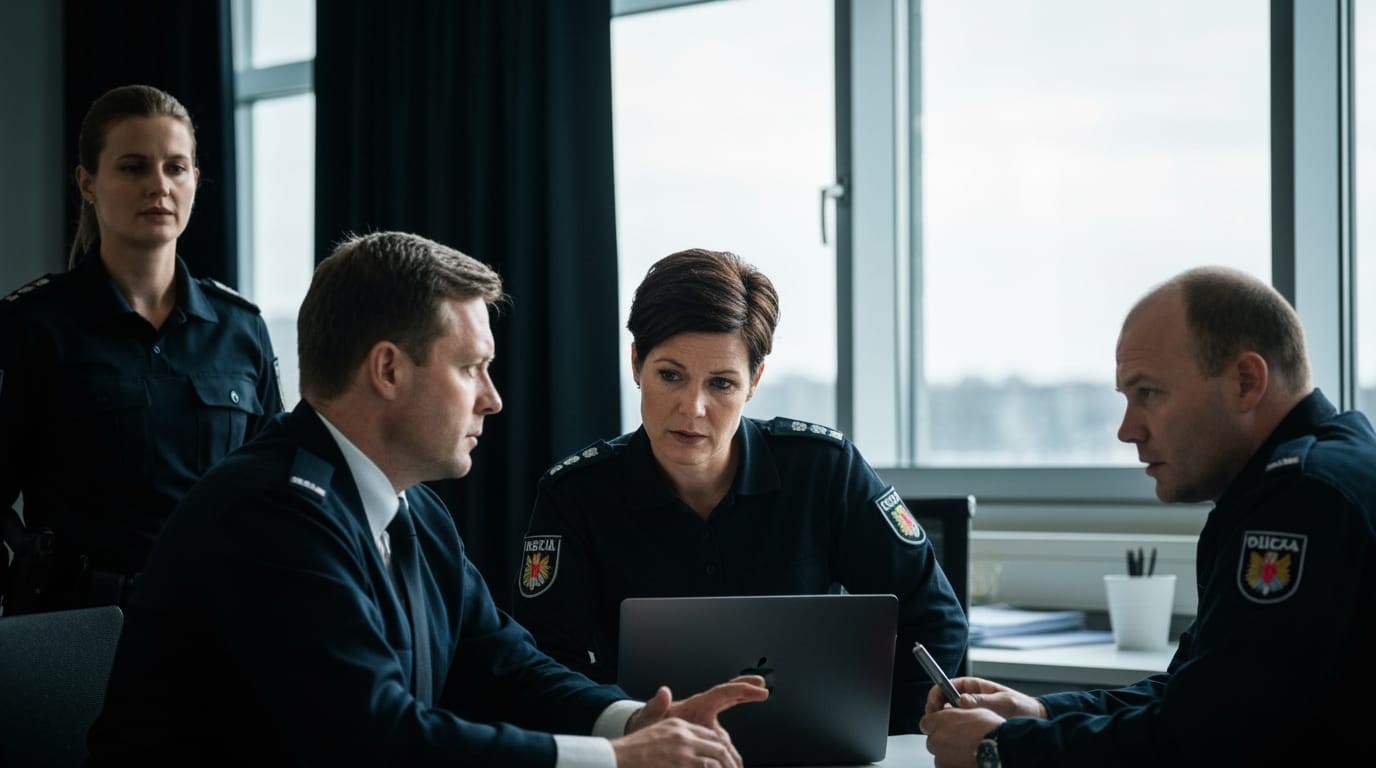
WIESBADEN, Germany – Seventy-five years after its formal establishment, Germany's Federal Criminal Police Office, widely known as the Bundeskriminalamt (BKA), stands as a pivotal pillar of the nation's security architecture. Founded in the nascent years of the Federal Republic, the BKA has evolved from a coordinating body into a powerful investigative agency, tackling complex national and international criminal challenges while navigating significant historical scrutiny. Its anniversary, marked by ceremonies and reflections on its past and future, underscores a legacy defined by adaptation, responsibility, and an unwavering commitment to public safety.
A Foundation of Federalism and Security
The BKA officially began its operations following the signing of the "Law on the Establishment of a Federal Criminal Police Office" on March 8, 1951. Born from the necessity to standardize criminal police work across the newly formed federal states, its initial mandate was to serve as a central office for police information and communication. Headquartered in Wiesbaden, the agency was designed to overcome the fragmentation of law enforcement that characterized post-war Germany, ensuring a coordinated national response to crime. At its core, the BKA was tasked with providing support to state police forces, preventing duplication of effort, and maintaining centralized systems for criminal data. This foundational role established the BKA as a crucial linchpin in Germany's federal system, acting as a unified front against a diverse range of criminal activities that transcended state borders.
Evolving Threats, Expanding Mandate
Over seven decades, the nature of crime has undergone profound transformations, and with it, the BKA's mandate has expanded significantly. Initially focused on coordinating efforts against general crime, the agency's role broadened to include direct investigative powers in cases of serious and internationally significant offenses. The 1970s and 1980s presented a formidable challenge with the rise of domestic terrorism, particularly from the Red Army Faction (RAF), which profoundly influenced the BKA's operational focus and capabilities.
In the years that followed, the BKA adapted to new criminal phenomena, including the growth of international drug trafficking, organized crime, and the emergence of cybercrime. Since 2002, its original jurisdiction has explicitly included internationally organized terrorism and particularly serious cases of computer sabotage. The BKA also plays a critical role in cases involving the kidnapping or hostage-taking of German citizens abroad, stepping in when no competent state police agency has been assigned. Furthermore, the agency is responsible for protecting members of Germany's constitutional organs. This continuous evolution reflects the BKA's dynamic response to a changing world, positioning it at the forefront of Germany's efforts to combat increasingly complex and transnational criminal networks.
A Complicated Past: The Shadow of Post-War Continuity
While celebrating its achievements, the BKA has also confronted uncomfortable truths about its origins. Investigations in the 21st century revealed that, like many German post-war institutions, the BKA's early ranks included individuals who had served in Nazi units and were implicated in war crimes. Dieter Schenk, a security specialist, exposed these connections in his 2001 book, "Auf dem rechten Auge blind: Die braunen Wurzeln des BKA" (Turning a Blind Eye to the Right: The Brown Roots of the BKA). Subsequent historical commissions, initiated by the BKA itself, largely corroborated these findings, acknowledging a significant degree of continuity from the Third Reich within the agency's initial decades. This historical reckoning has been a vital, albeit painful, part of the BKA's journey, highlighting Germany's broader struggle to confront and overcome its Nazi past within its state institutions. This critical examination has reinforced the agency's commitment to democratic values and transparent accountability.
Modern Challenges and Future Outlook
In its 75th year, the BKA continues to adapt to an increasingly digitized and interconnected world. The agency now boasts approximately 8,000 permanent positions and a budget nearing 1.3 billion euros, a substantial increase from previous decades, reflecting its escalating responsibilities. Modern priorities include enhanced international cooperation, with the BKA serving as the national central office for Interpol, Europol, and the Schengen Information System, facilitating critical information exchange and joint operations across borders.
Technological advancement is another key area of focus, with efforts to leverage AI-supported data analyses and the matching of biometric data to empower investigators in combating contemporary threats. Recent political discourse, such as comments from CDU leader Friedrich Merz at the anniversary event, has also linked the BKA's expansion to addressing the security implications of irregular migration. The agency's role in counter-terrorism remains paramount, with heightened security concepts and protective measures for vulnerable communities and institutions. The BKA's laboratories also represent a state-of-the-art hub for forensic science, providing expert opinions and developing new methods for crime suppression. These efforts underscore a proactive approach to evolving security landscapes, ensuring the BKA remains equipped to face future challenges.
As the Bundeskriminalamt marks its 75th anniversary, it stands as a testament to Germany's sustained commitment to internal security and international law enforcement cooperation. From its inception as a federal coordinator to its current status as a leading investigative body, the BKA has consistently evolved to meet an ever-changing threat landscape. Despite a complex past, the agency's enduring legacy is defined by its continuous adaptation, its embrace of innovation, and its fundamental role in upholding the rule of law and protecting the people of Germany. The motto for its anniversary year – "Security, Responsibility, Innovation" – encapsulates the core tenets that will guide the Bundeskriminalamt in the decades to come.


