EU Leaders Grapple with Ukraine Financing Amid Mounting Urgency and Deep Divisions
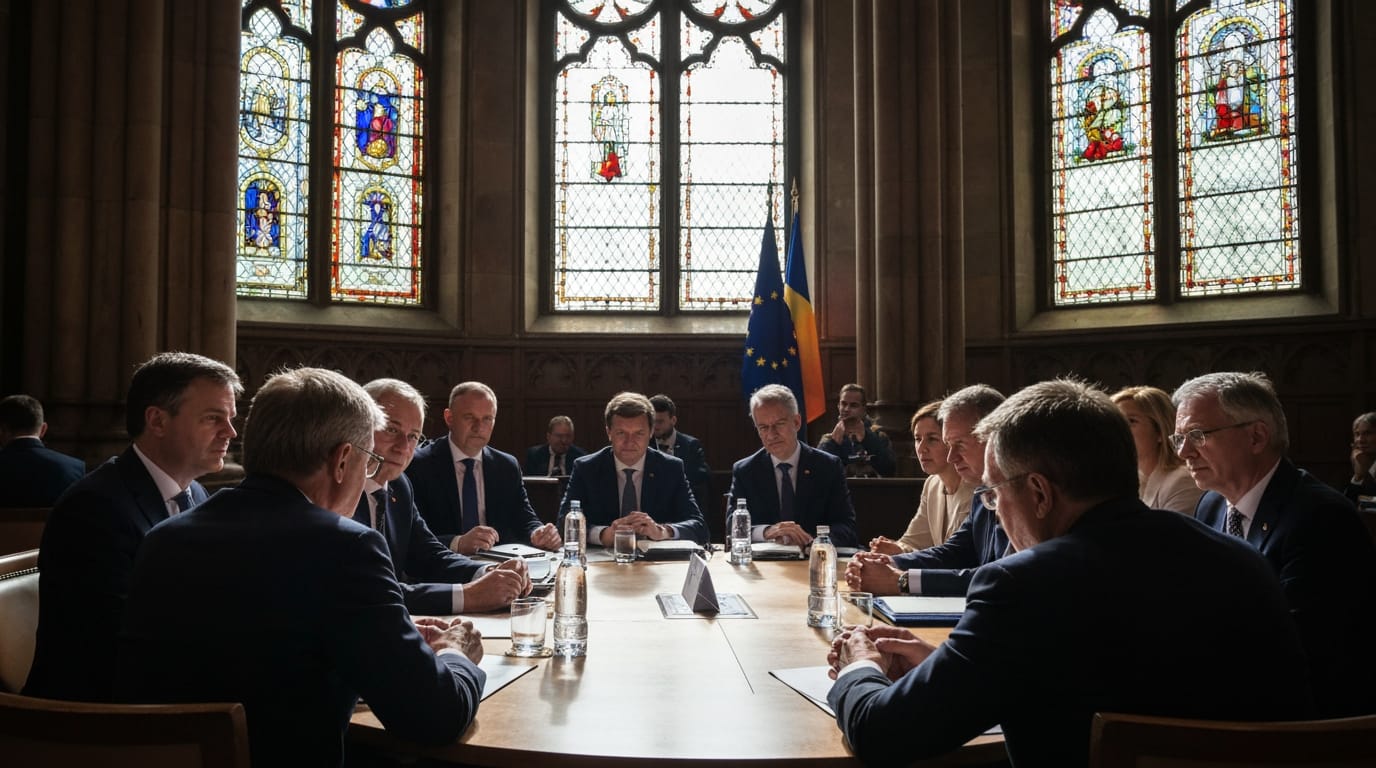
BRUSSELS — European Union leaders convened Thursday in Brussels for a high-stakes summit, with the urgent task of finalizing a substantial financial package for Ukraine taking center stage. The bloc faces immense pressure to secure long-term funding for Kyiv's military and civilian needs, as Ukraine confronts a critical financial shortfall and the geopolitical landscape underscores Europe's responsibility in defending democratic values. The discussions are marked by a fierce debate over how to fund these commitments, particularly focusing on the unprecedented proposal to utilize frozen Russian sovereign assets, a move fraught with legal complexities and internal dissent.
The Dire Need for Sustained Support
Ukraine's financial situation has reached a critical juncture, with the International Monetary Fund (IMF) estimating that the war-torn nation will require approximately €137 billion ($160 billion) in 2026 and 2027 to sustain its operations and begin vital reconstruction efforts. Without this crucial infusion of aid, Ukraine is projected to exhaust its European financial resources early in the first quarter of next year, a scenario that could have catastrophic consequences for its defense against ongoing aggression.
Since the onset of the full-scale invasion, the EU and its member states have provided an impressive €187.3 billion in financial, military, humanitarian, and refugee assistance to Ukraine by December 2025, including €66 billion in military support. A significant portion of this commitment was solidified in February 2024, when EU leaders unanimously agreed on a €50 billion ($54 billion) support package, known as the Ukraine Facility, designed to provide predictable funding through 2027. This package includes €33 billion in concessional loans and €5.27 billion in grants, tied to reforms and anti-corruption efforts in Ukraine. However, the protracted conflict necessitates further long-term solutions, particularly as uncertainty looms over continued financial support from other international partners.
European Commission President Ursula von der Leyen emphasized the gravity of the moment, stating that the decision to fund Ukraine for the next two years is paramount. European Council President António Costa, chairing the current summit, has pledged to keep leaders negotiating until a consensus is reached, underscoring the perceived existential threat posed by a potential Russian victory, which would not only imperil Ukraine but also challenge the security and credibility of Europe itself.
Navigating the Controversial "Reparations Loan"
At the core of the current summit's deliberations is a contentious proposal to fund Ukraine's immediate needs through a "reparations loan," collateralized by some €210 billion ($246 billion) in frozen Russian sovereign assets held within the EU. The plan envisions providing a €90 billion ($105 billion) loan to Ukraine for 2026 and 2027, which Kyiv would only be obliged to repay if Russia eventually provides war reparations. The vast majority of these immobilized assets, approximately €185 billion, are located in the Belgian-based financial clearing house Euroclear.
Proponents of this measure argue it is a just way to make Russia pay for the destruction it has wrought and would provide Ukraine with the critical funds needed to maintain its defense and stability. However, the proposal faces significant hurdles and strong opposition from several member states. Belgium, as the primary custodian of these assets, has voiced serious concerns, fearing Russian retaliation through legal challenges or other less conventional means. The Russian Central Bank has already initiated a lawsuit against Euroclear in Moscow, intensifying pressure on Belgium and its European partners.
Furthermore, the European Central Bank (ECB) has cautioned that seizing the principal of these assets, rather than just the interest they generate, could undermine international trust in the euro as a global reserve currency and potentially trigger financial instability. Legal experts also highlight the complex and potentially uncertain legal territory of such an unprecedented move. As an alternative, Belgium has suggested that the bloc raise the necessary funds by borrowing on international markets, a method previously used for post-pandemic recovery, though this would require unanimous agreement from all 27 member states.
Hungary's Persistent Obstruction and the Test of Unity
A significant challenge to reaching a unified agreement comes from Hungary, whose Prime Minister Viktor Orbán has consistently voiced opposition to large-scale financial aid for Ukraine. Orbán has argued that funds for Ukraine should not come from the EU's shared budget, given that Ukraine is not a member state. He has also used national consultations, presenting results from 1.6 million questionnaires that allegedly indicate public opposition to aiding Ukraine through increased taxes.
Hungary's stance has repeatedly tested the bloc's unity, particularly on issues concerning Russia and Ukraine. Orbán, often characterized as Russian President Vladimir Putin's closest ally in Europe, has used his position to obstruct decisions, though workarounds, such as qualified majority voting for specific financial instruments, have sometimes been employed. While Hungary eventually relented in February 2024 to allow the €50 billion Ukraine Facility, its consistent resistance to further aid, including opposition to the reparations loan alongside Slovakia, continues to highlight the internal divisions within the EU.
These internal disagreements are amplified by the context of waning US financial support for Ukraine, placing an even greater burden on Europe to demonstrate its resolve and capacity for autonomous action. The current summit, therefore, represents not only a crucial moment for Ukraine's survival but also a significant test of the EU's cohesion and its ability to act decisively on the global stage. Failure to forge a consensus could weaken the bloc's international standing and undermine trust among its member states.
The Path Ahead and Broader Implications
The determination to secure funding for Ukraine remains a top priority for most EU leaders. European Commission President Ursula von der Leyen has also proposed a larger, long-term €100 billion fund for Ukraine within the Multiannual Financial Framework for 2028-2035, though this initiative would also require unanimous approval and parliamentary consent.
For the immediate challenge, the "reparations loan" model, despite its complexities, is seen by many as the most viable path forward, capable of being approved with a qualified majority rather than unanimous consent, potentially circumventing individual vetoes. The indefinite freezing of €210 billion in Russian assets by the EU has laid the groundwork for such a mechanism.
The decisions made at this summit will have profound implications, not only for the trajectory of the conflict in Ukraine but also for the future of European security architecture and the credibility of the EU as a geopolitical actor. As leaders continue their deliberations, the balance between strategic necessity, legal prudence, and political unity hangs precariously, with the world watching to see if Europe can coalesce to meet this defining challenge.


