EU-Mercosur Trade Deal Nears Crucial Vote Amidst Deep Divisions
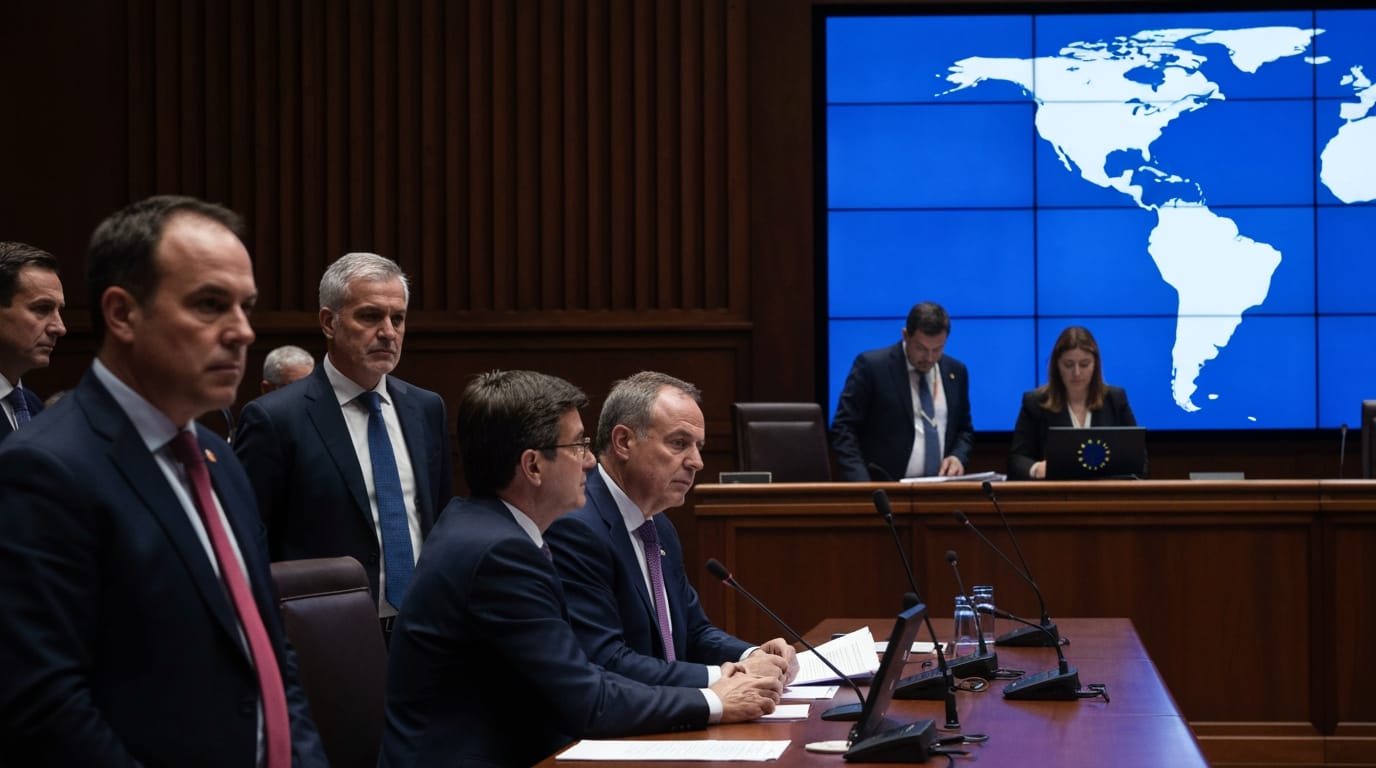
Brussels, Belgium – After decades of protracted negotiations, the European Union is poised for a pivotal vote on a sweeping trade agreement with the South American bloc Mercosur, a decision that could redefine global trade relationships but faces significant opposition from within the EU. The proposed pact, hailed by proponents as a strategic economic opportunity and criticized by opponents for its environmental and social implications, has ignited fervent debate across the continent, particularly among agricultural and environmental groups. The vote, expected to take place this week, comes after numerous delays and intense political maneuvering, highlighting the profound and often conflicting interests at play in forging such a comprehensive international accord.
A Decades-Long Endeavor to Forge a Mega-Deal
The journey toward an EU-Mercosur trade agreement has spanned over two decades, beginning in 1999, with an agreement-in-principle reached in 2019. The Mercosur bloc comprises Argentina, Brazil, Paraguay, Uruguay, and recently Bolivia, representing a combined population of approximately 260 million people. The EU, with its 27 member states and a population of 449 million, would, if ratified, create a trade zone encompassing nearly 780 million consumers and a significant portion of global GDP. The deal aims to eliminate or reduce tariffs on a vast array of goods, with the EU set to remove duties on 92% of Mercosur imports and Mercosur on 91% of EU goods. This reduction in customs duties is projected to save EU exporters over €4 billion annually. Beyond goods, the agreement also seeks to liberalize trade in services and public procurement processes, establishing more stable and predictable rules for investment and commerce. Supporters emphasize the agreement's potential to diversify supply chains, reduce reliance on single markets like China, and secure access to critical raw materials for the EU. It is envisioned as more than just a trade deal, laying the groundwork for a strategic partnership that includes political dialogue and cooperation.
Economic Prospects and Deep-Seated Concerns
For the European Union, the agreement offers significant market access for its industrial goods, including cars, car parts, machinery, chemicals, pharmaceuticals, and textiles, which currently face tariffs as high as 35% in Mercosur countries. European wine and cheese producers also stand to benefit from improved market access. Conversely, Mercosur nations anticipate a boost in exports of agricultural commodities such as beef, poultry, sugar, and ethanol. The deal proposes reduced tariffs on 99,000 tonnes of beef entering the EU, subject to a 7.5% duty, a substantial reduction from the typical 40-45% tariff. However, this aspect has become a flashpoint for fierce opposition from EU agricultural sectors, particularly farmers in countries like France, Ireland, and Poland. European farmers express deep concern about unfair competition from Mercosur products, arguing that they are produced under less stringent environmental, animal welfare, and food safety standards, potentially leading to a flood of cheaper imports that could depress prices and threaten livelihoods. The European Commission has attempted to allay these fears by proposing an emergency fund for farmers and legal mechanisms to suspend the agreement if adverse impacts are proven.
Environmental and Social Crossroads
Beyond economic considerations, the trade deal faces intense scrutiny over its potential environmental and social consequences. Environmental organizations worldwide have raised alarm bells, citing concerns that increased demand for Mercosur agricultural products, such as beef, soy, and ethanol, will exacerbate deforestation in critical biomes like the Amazon rainforest and the Cerrado. Critics point to the non-binding nature of the environmental commitments within the agreement, arguing that they lack the enforceability needed to prevent further ecological damage and could undermine the EU's own climate goals and the EU Deforestation Regulation. The lack of transparent traceability processes in some Mercosur countries further complicates efforts to ensure that imports are not linked to deforestation.
Social justice advocates also voice concerns regarding human rights. They argue that expanding agribusiness in Mercosur could lead to land conflicts, forced displacement of indigenous communities, and labor exploitation due to weaker labor protections in the region. Reports indicate violations of core International Labour Organization conventions in some Mercosur countries, further fueling calls for robust and enforceable human and labor rights standards within the trade pact.
A Fractured European Front and the Road Ahead
The political landscape within the EU regarding the Mercosur deal is sharply divided. While countries like Germany, Spain, Denmark, Sweden, and Finland have expressed strong support, citing economic benefits for their industrial sectors and the strategic importance of diversifying trade, others remain staunchly opposed. France, a powerful agricultural nation, has been a leading opponent, with President Emmanuel Macron stating that the deal is "an agreement from another era" and does not justify exposing sensitive agricultural sectors. Ireland, Hungary, and Poland have also declared their intent to vote against the agreement, primarily due to concerns about their farming sectors. Italy, initially a vocal critic, has offered conditional backing, pushing for stronger safeguards for its agricultural industries.
Despite this significant opposition, the agreement is still expected to pass, as the vote in the European Council operates under a qualified majority system. This means that if 15 of the 27 member states, representing 65% of the EU's population, vote in favor, the deal can be approved, potentially overriding the objections of a few large nations. Following a political agreement reached in December 2024, the European Commission submitted proposals for the agreement's signature and conclusion in September 2025. The current vote, delayed from December 2025 to January 2026, marks a critical juncture for an agreement that has been a quarter-century in the making.
Balancing Ambition with Responsibility
The impending vote on the EU-Mercosur trade deal encapsulates the complex challenge of balancing economic ambition with environmental and social responsibilities in the 21st century. Proponents highlight the geopolitical significance of strengthening ties between two major blocs and the potential for economic growth and diversification. Critics, however, demand a trade framework that prioritizes sustainability, human rights, and the protection of vulnerable sectors. The outcome of this vote will not only determine the future of trade relations between the EU and Mercosur but will also send a powerful message about the European Union's commitment to its stated values and its approach to global trade in an increasingly interconnected and environmentally conscious world. The decision will undoubtedly shape economic landscapes and environmental policies for decades to come.


