EU Pushes Forward with Contentious Mercosur Trade Deal Amidst Provisional Implementation
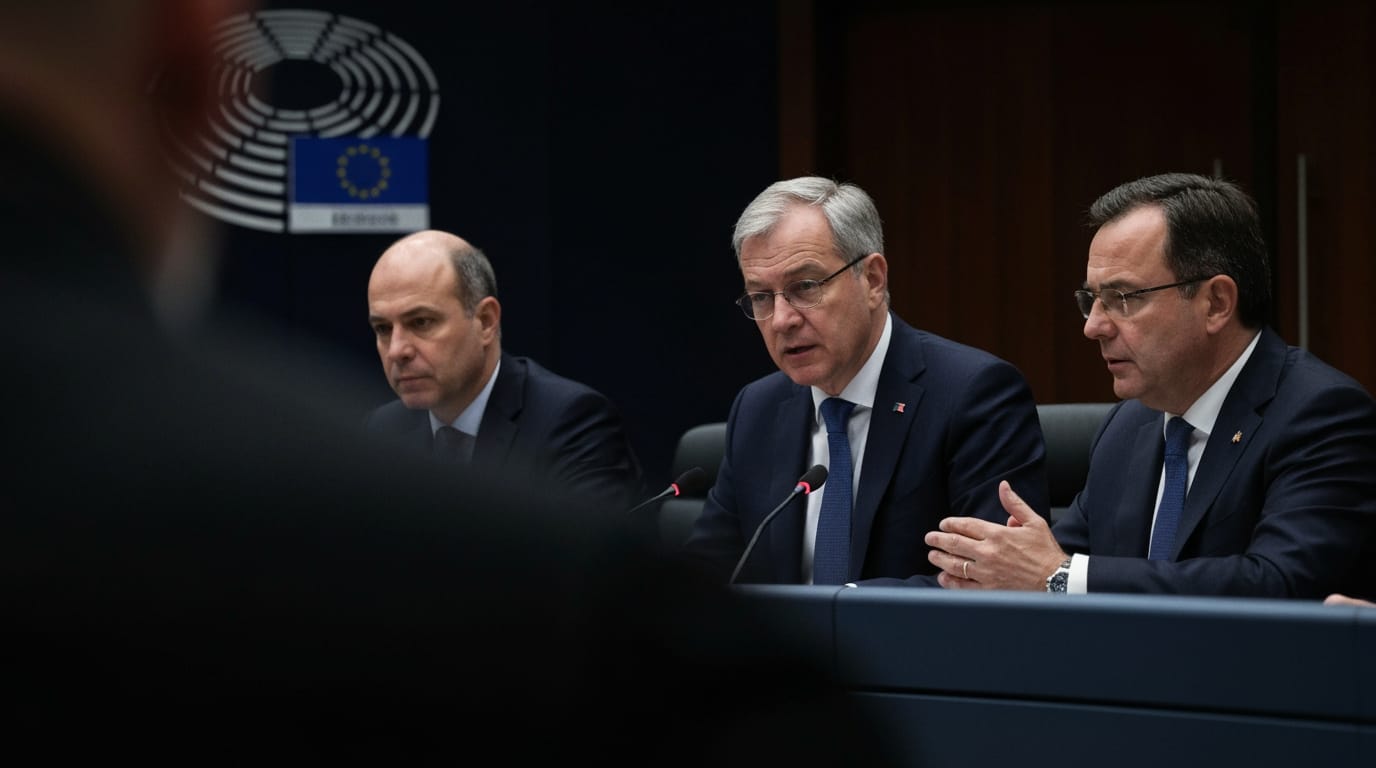
BRUSSELS — The European Union is set to provisionally implement a long-negotiated trade agreement with the South American Mercosur bloc, a move confirmed by European Commission President Ursula von der Leyen on Friday. This significant step aims to activate key aspects of the deal, including tariff reductions, even as the full agreement faces ongoing legal scrutiny and staunch opposition from various sectors across Europe. The decision to proceed with provisional application follows the completion of ratification processes by Mercosur members Uruguay and Argentina, signalling a readiness from the South American side to move forward.
The EU-Mercosur Partnership Agreement, which has been over two decades in the making, seeks to create one of the world's largest free trade areas, encompassing more than 700 million consumers and roughly 30% of global GDP. While proponents hail the deal as a strategic imperative for boosting trade, diversifying supply chains, and strengthening geopolitical ties, critics warn of severe environmental consequences and significant economic disruption for European farmers. The provisional implementation allows the European Commission to enact the trade provisions of the agreement while the broader political and cooperation pillars navigate the complex and potentially lengthy full ratification process across all EU member states.
A Quarter-Century in the Making: The Deal's Journey
The path to the EU-Mercosur agreement has been protracted, with negotiations spanning nearly 25 years before an agreement in principle was reached in 2019. Further political agreement on the trade pillar was announced in December 2024, aiming to update an existing interregional framework cooperation agreement. The comprehensive pact is structured into three main pillars: trade, political dialogue, and cooperation, a common model for the EU's extensive international agreements.
Economically, the deal promises substantial tariff reductions. The EU stands to eliminate duties on over 91% of its exports to Mercosur countries—Argentina, Brazil, Paraguay, and Uruguay—with an estimated €4.5 billion in annual duties saved. Key European exports such as automobiles, machinery, chemicals, textiles, wine, and cheese are expected to gain improved market access. Conversely, the EU will liberalize 95% of goods imported from Mercosur, including 82% of agricultural products, opening its markets to South American beef, poultry, sugar, and ethanol. Overall, the European Commission projects an almost €80 billion boost to the EU economy upon full implementation, adding up to 0.05% to its GDP. Beyond tariffs, the agreement also seeks to reduce non-tariff barriers, simplify customs procedures, and facilitate trade in services.
Provisional Application: A Contested Shortcut
The decision for provisional application is a contentious one, enabling the deal's trade aspects to come into force without requiring the consent of the European Parliament or individual national parliaments in the short term. Under EU law, tariffs on most goods can be scrapped two months after a Mercosur state ratifies the deal internally and notifies Brussels, with the Commission then notifying Mercosur of its intent to provisionally apply. Uruguay and Argentina finalized their internal ratification processes on Thursday, February 26, clearing a crucial hurdle for the EU's move.
However, this provisional pathway has already sparked a backlash. In January, the European Parliament voted to refer the deal to the European Court of Justice (ECJ) for a legal opinion, a step that could delay full ratification for up to two years. The Parliament's challenge seeks to determine whether the agreement complies with European treaties and if its provisions restrict the EU's ability to set environmental and consumer health policies. Despite this, the European Commission retains the right to provisionally apply the agreement in the interim, effectively overriding the immediate impact of the ECJ referral on trade flows.
Environmental and Agricultural Anxieties
The EU-Mercosur deal has ignited fierce criticism, particularly from environmental organizations and farming communities across Europe. Environmental groups express profound concerns that the agreement's trade incentives will exacerbate deforestation in the Amazon and other critical ecosystems like the Cerrado, fueling biodiversity loss and increasing greenhouse gas emissions. Critics argue that the deal's environmental commitments are vague, non-binding, and lack effective enforcement mechanisms, potentially undermining the EU's own climate and human rights standards, and weakening the EU Deforestation Regulation. They highlight that increased exports of products like beef, soy, and bioethanol, which are often linked to deforestation, will intensify these environmental pressures. Furthermore, concerns have been raised about the potential increase in the use and import of pesticides in Mercosur countries, especially given the deal's elimination of duties on pesticides.
European farmers, particularly in agricultural powerhouses like France, Poland, and Ireland, fear that an influx of cheaper South American agricultural products—such as beef, poultry, and sugar—will create unfair competition and undercut their livelihoods. Farming unions, such as COPA-COGECA, which represents 23 million EU farmers, have vehemently opposed the deal, calling it a "dark moment" and a "disgraceful sell-out." These agricultural concerns have led to significant political resistance, with countries like France, Austria, Hungary, Ireland, and Poland voting against the agreement in the EU Council.
Geopolitical Stakes and the Road Ahead
Beyond the immediate economic impacts, the agreement carries significant geopolitical weight. Proponents argue that the deal allows both blocs to diversify trade relations, reducing reliance on major economic powers like China and the United States. It is also seen as a commitment to rules-based trade liberalization amidst rising global protectionism and fragmentation. The EU has actively pursued trade deals across Latin America, and securing this agreement with Mercosur is viewed as a way to further extend preferential access for EU exporters and strengthen political ties within the region.
The full ratification of the agreement remains a complex process. While the EU Council has approved the agreement by a qualified majority, the European Parliament's consent is still required for the trade pillar. If the agreement is ultimately classified as a "mixed agreement"—which includes areas of shared competence between the EU and its member states—it would also necessitate approval from the national parliaments of all 27 EU member states, a process that can be lengthy and vulnerable to domestic political shifts. The provisional implementation, while providing an immediate boost to trade, therefore navigates a highly politicized landscape, with its long-term future still subject to significant hurdles.
Conclusion: Balancing Opportunity and Responsibility
The provisional implementation of the EU-Mercosur trade deal marks a critical juncture in a decades-long saga. It signals the EU's determination to forge stronger economic and political alliances in South America, offering significant opportunities for increased trade and economic growth for both blocs. However, the decision also underscores the deep divisions and unresolved tensions surrounding the agreement, particularly concerning its environmental and social ramifications and the anxieties of Europe's farming communities. The move for provisional application highlights a strategic push to realize immediate trade benefits while the broader, more contentious issues of full ratification and long-term sustainability commitments continue to be debated and scrutinized by legal bodies and civil society alike. The ultimate success and acceptance of the EU-Mercosur pact will depend on its ability to navigate these complex challenges, balancing economic opportunity with robust environmental and social safeguards.


