EU Top Diplomat Urges Inclusion of Nuclear Experts in Iran Talks to Avert "More Dangerous Iran"
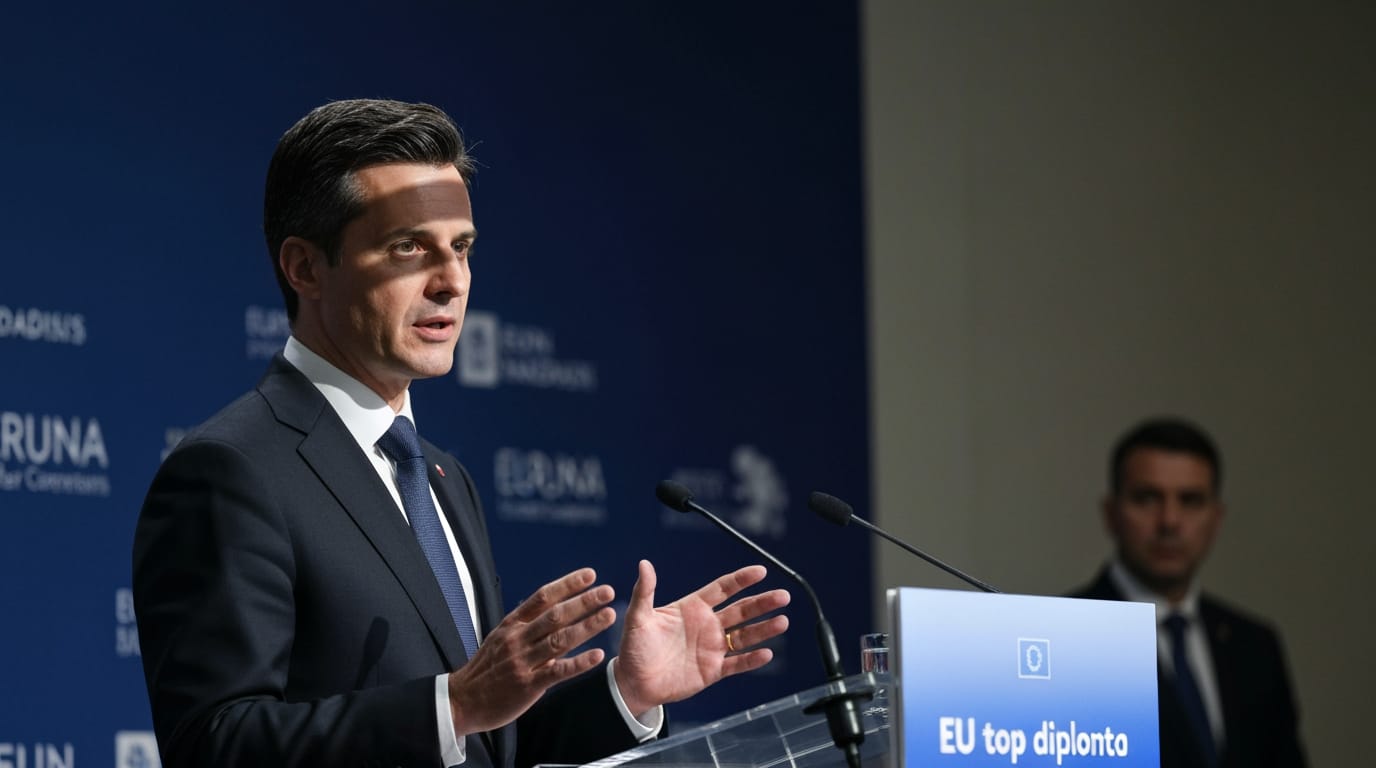
BRUSSELS — The European Union’s top diplomat, Kaja Kallas, has issued a stark warning regarding ongoing negotiations with Iran, stressing the critical need for nuclear experts to be at the table. Failure to include specialized knowledge in these sensitive discussions risks producing an agreement weaker than its predecessors, potentially leading to a "more dangerous Iran" in the volatile Middle East. Kallas’s urgent call underscores a growing concern within European diplomatic circles that a piecemeal approach could undermine long-term security and stability.
The Imperative of Expert Oversight
Kallas, the EU Foreign Policy Chief, articulated her position ahead of an informal summit of EU leaders in Cyprus, emphasizing that the absence of nuclear experts could severely compromise the efficacy of any future accord. "If the talks are only about the nuclear and there are no nuclear experts around the table, then we will end up with an agreement that is weaker than the JCPOA was," Kallas stated, referring to the 2015 Joint Comprehensive Plan of Action. This previous deal, designed to curb Iran's nuclear program in exchange for sanctions relief, saw the United States withdraw in 2018. The concern is that without deep technical understanding informing the negotiations, any new agreement could contain loopholes or insufficient verification mechanisms, rendering it less effective in preventing Iran from pursuing nuclear weapons capabilities. The intricate technicalities of uranium enrichment, centrifuges, and verification protocols necessitate the direct input of those with specialized knowledge to ensure robust and verifiable commitments.
The European diplomat highlighted that the goal must be a comprehensive and ironclad agreement, not merely a superficial one. The complex nature of Iran's nuclear program, including its enrichment levels and stated intentions, requires constant and informed scrutiny. Iran has, for instance, been enriching uranium to 60 percent, a level significantly higher than the 3.67 percent limit set by the JCPOA, though still below the 90 percent needed for a nuclear warhead. This escalation in enrichment activities further amplifies the need for expert assessment and guidance during negotiations, ensuring that any resolution effectively addresses proliferation risks.
Beyond the Atom: Addressing Broader Regional Instability
Kallas's concerns extend beyond the immediate nuclear dossier, encompassing a broader spectrum of Iranian activities that contribute to regional instability. She explicitly warned that if the negotiations fail to address issues such as Iran’s missile programs, its support for proxies across the Middle East, and its hybrid and cyber activities impacting Europe, the result would undeniably be a "more dangerous Iran." This comprehensive view reflects a realization among European leaders that the nuclear question cannot be isolated from Iran’s wider foreign policy and security posture.
The EU’s top diplomat argued that a truly effective resolution demands confronting these interconnected challenges head-on. Iran's development of ballistic missiles and its backing of non-state actors in Lebanon, Syria, Iraq, and Yemen have long been sources of tension and conflict, fueling proxy wars and destabilizing fragile states. Furthermore, the rising threat of cyber warfare and hybrid activities underscores a new dimension of potential Iranian influence and disruption, which Kallas believes must be brought into the diplomatic framework. Neglecting these areas in favor of a narrow focus solely on nuclear issues, according to Kallas, would leave significant avenues for continued regional aggression and global security threats unaddressed.
Historical Context and Current Diplomatic Flux
The current push for enhanced expert involvement arrives amidst a complex historical backdrop and a dynamic diplomatic environment. The 2015 JCPOA, which imposed strict limits on Iran’s nuclear program, marked a significant diplomatic achievement, involving Iran and the P5+1 group of world powers (China, France, Germany, Russia, the United Kingdom, and the United States). The US withdrawal from the deal in 2018 under the previous administration critically weakened its framework, leading Iran to gradually roll back its own commitments. This history of unraveling agreements highlights the fragility of diplomatic solutions without sustained commitment and robust safeguards.
Diplomatic efforts continue in various forms, with the EU consistently advocating for a diplomatic resolution to Iran's nuclear program. For instance, earlier discussions involved foreign ministers from Britain, France, Germany, and the EU's top diplomat meeting with their Iranian counterpart in Geneva. While the details of specific ongoing negotiations remain sensitive, the general consensus among European powers, as expressed by Kallas, is that diplomacy remains the most viable path. However, this path must be navigated with extreme care and informed precision to avoid repeating past mistakes or creating new vulnerabilities. The call for experts signals a desire to imbue future talks with the technical rigor and foresight necessary to forge an enduring peace.
The High Stakes of a Fragmented Approach
The stakes surrounding the Iran talks are profoundly high, touching upon regional stability, global non-proliferation efforts, and international security. A fragmented agreement, one that either lacks expert validation or ignores Iran's broader destabilizing activities, risks perpetuating a cycle of tension and potential conflict. Kallas's warning of a "more dangerous Iran" encapsulates the fear that an insufficient deal could embolden Tehran, potentially leading to further proliferation, intensified proxy conflicts, and increased cyber aggression.
The region is already reeling from various conflicts and geopolitical tensions, with discussions involving Iran's foreign minister and Pakistani officials also touching upon ceasefires in a broader "war with the United States and Israel," underscoring the deep entanglements at play. In this volatile context, a robust and comprehensive nuclear agreement, backed by technical expertise and addressing all facets of Iran's disruptive actions, is seen as paramount. The alternative—a fragile deal that merely kicks the can down the road—is viewed as an unacceptable risk, one that could plunge the Middle East into greater uncertainty and pose renewed threats to international peace and security.
Conclusion: A Call for Comprehensive and Informed Diplomacy
Kaja Kallas's unequivocal call for the inclusion of nuclear experts in Iran talks serves as a powerful reminder of the complex technical and geopolitical challenges inherent in achieving a lasting resolution. Her message is clear: a superficial or narrowly focused agreement, devoid of the granular insights that only experts can provide, risks creating a "more dangerous Iran" and undermining years of diplomatic effort. To secure a truly effective and comprehensive deal, one that addresses both the nuclear threat and Iran's broader destabilizing activities, future negotiations must embrace a holistic, expert-driven approach. The international community, therefore, faces a critical juncture where informed diplomacy is not merely an option, but an absolute necessity, to navigate the perilous path toward a more secure future.


