Mount Everest Spring Climbing Season Stalls as Massive Ice Block Blocks Crucial Route
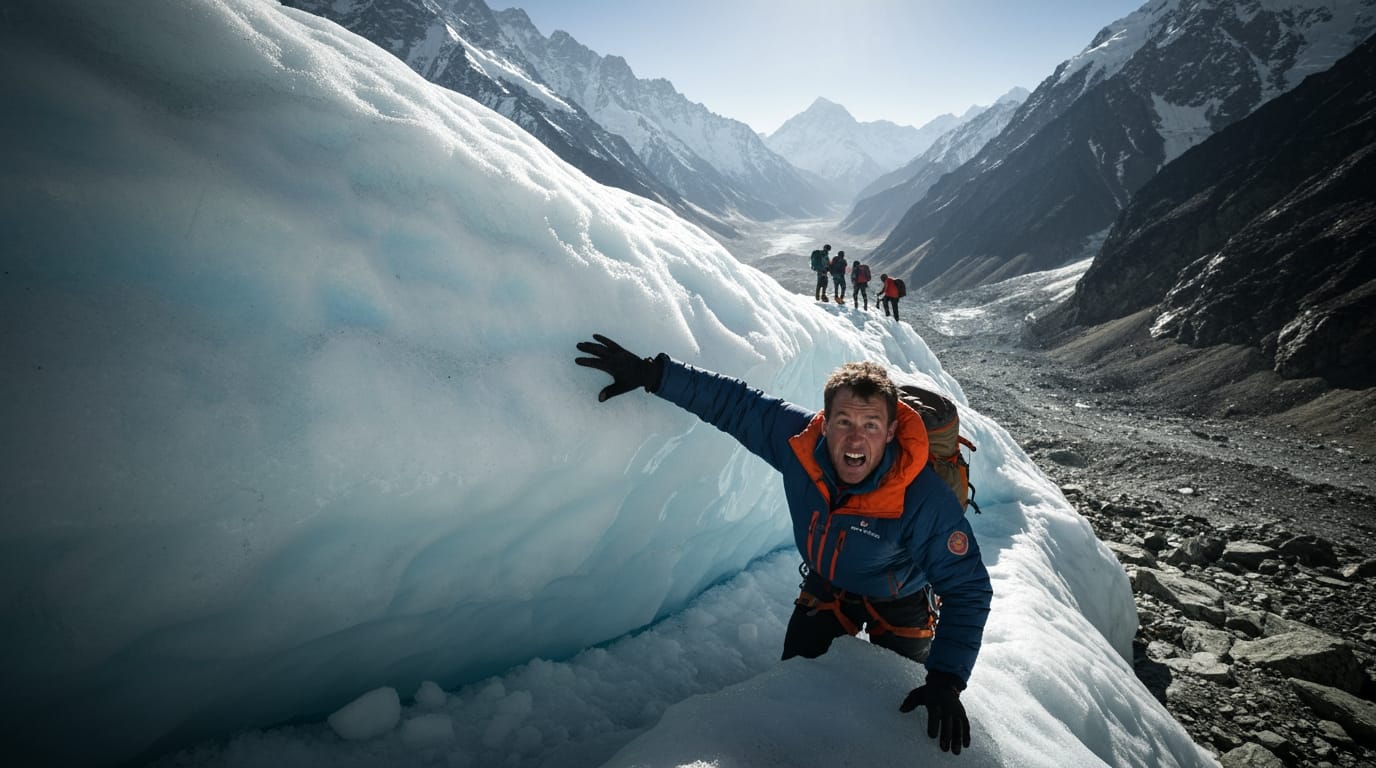
KATHMANDU, Nepal – Hundreds of ambitious climbers and their support teams find themselves in an unprecedented state of limbo at Mount Everest Base Camp, as a colossal and unstable ice block, known as a serac, has completely obstructed the vital route leading to higher altitudes. The perilous natural barrier, situated in the infamous Khumbu Icefall between Base Camp and Camp One, has brought the start of the critical spring climbing season to a grinding halt, raising concerns about safety, logistics, and the narrow window of opportunity for summit attempts.
The Treacherous Obstruction: A Serac in the Khumbu Icefall
The impediment to the 2026 spring climbing season is a massive serac, a towering block of glacial ice that officials describe as unstable and posing a high risk of avalanche. This formidable obstacle lies within the Khumbu Icefall, a constantly shifting glacier notorious for its deep crevasses and gigantic, overhanging ice formations, some of which can rival the height of 10-story buildings. Nepal's Department of Mountaineering spokesperson, Himal Gautam, confirmed the serac's instability, emphasizing the inherent danger it presents to climbers.
The Khumbu Icefall is widely considered one of the most challenging and perilous sections of the ascent to Everest's summit. Its volatile nature is a constant threat, as evidenced by past tragedies. In 2014, a portion of the glacier detached, triggering an avalanche that claimed the lives of 16 Sherpa guides as they transported equipment for clients, marking one of Everest's deadliest disasters. More recently, in 2023, three Nepali guides perished in the Khumbu Icefall after being swept into a deep crevasse by a falling ice block while carrying supplies. This history underscores the gravity of the current situation and the necessity of extreme caution. Officials note that this particular serac is "not something you can fix or move" and that waiting for it to melt naturally is currently the only viable option.
Impact on a Crowded Season
The blockage comes at a crucial time, as the spring climbing season, which typically concludes by the end of May, is just beginning. Nepali authorities have issued 410 permits to foreign climbers for Mount Everest this season, with over 900 permits granted for various Himalayan peaks. With each foreign climber typically accompanied by at least one local guide and support staff, the total number of individuals impacted at Base Camp alone is estimated to be over 1,000, creating a bustling "sea of tents" awaiting the green light to proceed.
The "Icefall Doctors," an elite team of highly skilled Sherpa guides responsible for establishing and maintaining the climbing route by fixing ropes and securing ladders over crevasses, usually complete their arduous task by mid-April. However, the dangerous serac has disrupted their work for nearly two weeks, leading to significant delays in route preparation. Expedition organizer Iswori Poudel, of Himalayan Guides Nepal, noted that climbers would typically be engaged in acclimatization climbs by this point in the season, highlighting the extent of the disruption. Many climbers are now undertaking preparatory climbs on neighboring peaks while they await the opening of the Everest route.
Official Response and Uncertain Outlook
In response to the critical situation, officials from Nepal's Department of Mountaineering and the Sagarmatha Pollution Control Committee (SPCC) are actively working with climbers and expedition organizers to assess the evolving circumstances. Himal Gautam, spokesperson for the Department of Tourism, affirmed that the situation is natural and requires patience for the serac to melt. The SPCC, which deploys the Icefall Doctors, plans an aerial survey to thoroughly evaluate the serac's stability and devise potential strategies.
Lama Kazi Sherpa, Chairman of the SPCC, expressed hope that the serac would melt down to a safe level within a few days, allowing for the resumption of route-setting operations. Discussions are also underway regarding alternative plans, including the possibility of airlifting supplies by helicopter to ensure that routes can be prepared on schedule, should the current obstruction persist. Despite these proactive measures, the unpredictable nature of the Khumbu Icefall means the timeline for resolving the blockage remains uncertain. The situation serves as a stark reminder of the formidable power of the Himalayas and the inherent risks associated with scaling the world's highest peak.
Everest's Enduring Allure and Environmental Challenges
Nepal, home to eight of the world's ten highest peaks, continues to attract hundreds of climbers each spring, drawn by the allure of Everest's summit. The relatively warmer temperatures and calmer winds of this season offer the most favorable conditions for ascents. The climbing industry has grown into a lucrative enterprise since Sir Edmund Hillary and Tenzing Norgay Sherpa's pioneering ascent in 1953.
However, the increasing popularity of Everest has also brought challenges, including concerns about overcrowding and environmental degradation. The route to the summit can sometimes resemble a busy thoroughfare, leading to issues like accumulated litter and even unrecovered bodies. While the current ice blockage is a natural event, it inadvertently highlights the delicate balance between human ambition and the raw, untamed environment of the world's highest mountain. The current delay not only impacts the climbers' dreams but also underscores the critical role of the Sherpa community, whose lives and livelihoods are intertwined with the success of each climbing season.
As hundreds of hopeful mountaineers remain grounded at Base Camp, their gaze fixed on the formidable peak, the unfolding situation on Mount Everest serves as a powerful testament to nature's ultimate authority. The collaborative efforts of officials, expedition organizers, and the resilient Icefall Doctors are crucial in navigating this unpredictable challenge, ensuring the safety of those who dare to venture into the planet's most extreme environment. The climbing world watches, waiting for the mountain itself to dictate when the path to the summit will once again become clear.


