Europe Grapples with Deep-Seated Reliance on U.S. for Defense, Urgency Mounts for Autonomy
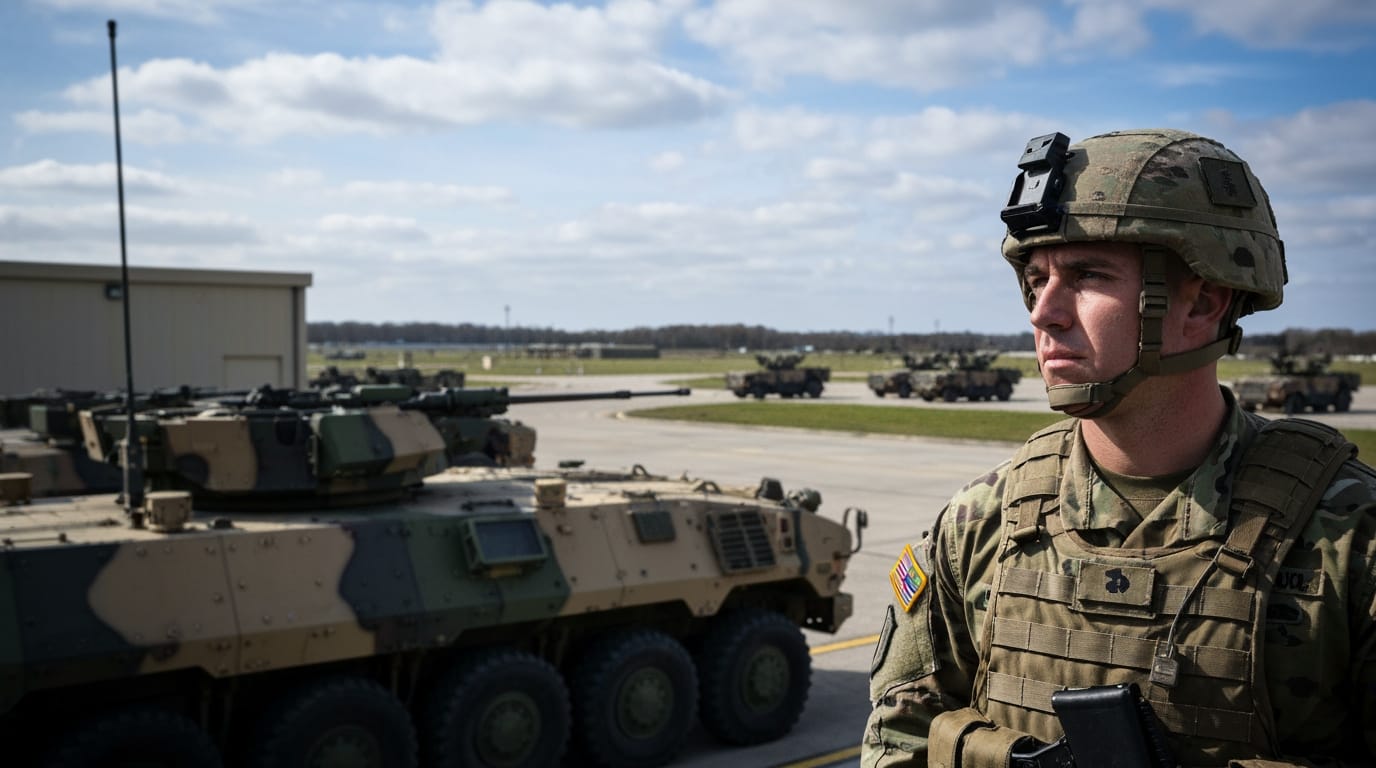
Brussels, Belgium – Decades after the Cold War, Europe's defense remains profoundly dependent on the United States, a reliance that extends far beyond mere weaponry to encompass critical technology, intelligence, and command structures. Despite a significant surge in military spending and ambitious initiatives aimed at fostering strategic autonomy, the continent finds itself at a pivotal juncture, pressured by ongoing geopolitical crises and an evolving transatlantic relationship to finally forge a more self-reliant security posture.
This enduring dependency, rooted in the post-World War II security architecture, has been starkly illuminated by recent global events, particularly Russia's aggression in Ukraine. While European nations are pouring billions into their armed forces, a substantial portion of these funds continues to flow towards American suppliers, deepening a complex entanglement that leaders are now striving to unravel.
A Legacy of Transatlantic Security
The foundation of Europe's security landscape was laid in the aftermath of World War II, with the United States emerging as the primary guarantor of peace and stability. The establishment of the North Atlantic Treaty Organization (NATO) in 1949 cemented a transatlantic alliance, where the U.S. committed to the defense of its European allies under Article 5. Throughout the Cold War, a robust U.S. military presence and its technological superiority provided a crucial deterrent against Soviet expansion, shaping Europe's defense planning and capabilities for generations. This arrangement, while providing unparalleled security, inadvertently fostered a reliance that became deeply embedded in the continent's military doctrine and industrial base.
In the decades following the Soviet Union's collapse, European defense spending often lagged behind the targets set by NATO, further widening the capability gap with the United States. This trend, coupled with the U.S. retaining a significant lead in military research and development, solidified America's role not just as a security partner, but as the indispensable backbone of European defense.
The Pervasive Scope of Dependence
The extent of Europe's reliance on the United States is multifaceted and deeply integrated into its defense ecosystem. Financially, the disparity in defense expenditure remains substantial. In 2025, the United States is estimated to contribute $845 billion, or 60.2%, to NATO's total defense budget of $1,404 billion. European NATO members and Canada collectively account for the remaining 39.8%, or $559 billion. Another estimate for 2025 places U.S. spending at $980 billion, approximately 62% of the alliance's total.
Beyond mere spending, this reliance is particularly pronounced in several critical areas. European nations frequently procure advanced military hardware and technology from the U.S., a trend that has accelerated since 2022. Between 2022 and 2024, European NATO countries saw a significant increase in military equipment purchases through the U.S. Foreign Military Sales program, jumping from 27.83% to 50.7% of their total military equipment spending compared to the 2019-2021 period.
Key capability gaps persist across Europe, particularly in strategic enablers. These include areas such as strategic air transport, advanced intelligence, surveillance, and reconnaissance (ISR) systems, and air-to-air refueling. Moreover, European forces often depend on U.S. technology for critical operational functions, such as the maintenance software for F-35 fighter jets and the Aegis Combat System utilized by several European navies. The command and control architecture underpinning European defense also largely remains under U.S. leadership within NATO.
<h3>Catalysts for Change: Geopolitical Shifts and Domestic Pressure</h3> The geopolitical landscape has undergone profound transformations, propelling the issue of European strategic autonomy to the forefront. Russia's annexation of Crimea in 2014, followed by its full-scale invasion of Ukraine in 2022, served as a stark reminder of conventional warfare's return to the continent. This aggression prompted an urgent reassessment of defense capabilities and a recognition that Europe could no longer outsource its security indefinitely.Concurrently, a growing unease has emerged regarding the long-term reliability of U.S. security guarantees. Varying stances from different U.S. administrations have generated uncertainty among European allies, fostering a strong desire to build indigenous capacity. Calls for Europe to shoulder a greater share of its defense burden have intensified, with some European leaders noting U.S. troop withdrawals from Germany as an indicator of an eroding security commitment. These twin pressures—external threats and internal questioning of alliance dynamics—have galvanized efforts towards greater European defense self-sufficiency.
Europe's Push for Strategic Autonomy: Ambitions and Obstacles
In response to these pressures, European nations have embarked on an unprecedented push to enhance their defense capabilities and foster strategic autonomy. Defense spending across the EU has seen a significant uptick, marking its tenth consecutive annual increase. In 2024, EU member states' defense expenditure reached €343 billion, with projections estimating a rise to €381 billion in 2025. Overall, European defense spending is projected to increase by 53-65% between 2021 and 2026. Many countries are now meeting or exceeding NATO's target of spending 2% of GDP on defense, with European NATO members and Canada committing to a 3.5% GDP target by 2035.
The European Union has launched several initiatives to promote defense cooperation and reduce fragmentation. The Permanent Structured Cooperation (PESCO), the European Defence Fund (EDF), and the Coordinated Annual Review on Defence (CARD) aim to streamline procurement, encourage joint projects, and optimize resource allocation. The European Defence Investment Programme (EDIP) specifically seeks to subsidize equipment production with at least 65% EU-made components, encouraging a stronger internal defense industrial base. Manfred Weber, chairman of the European People's Party Group in the European Parliament, advocates for joint European defense structures within NATO to reduce reliance on the U.S., emphasizing that equal footing in negotiations requires overcoming the fragmentation of 27 separate national armies.
However, the path to true strategic autonomy is fraught with significant challenges. The European defense industrial base remains highly fragmented, characterized by divergent national requirements, overlapping procurement frameworks, and limited interoperability among member states. This fragmentation leads to inefficiencies, higher costs, and a proliferation of incompatible weapon systems, hindering the ability to scale production and ensure seamless joint operations. Munitions production, for instance, continues to fall short of operational demand, with long lead times for crucial subsystems.
A "procurement paradox" persists, where despite increased spending, a substantial portion of these funds still benefits non-EU suppliers. In 2022-2023, 78% of EU countries' equipment acquisitions were from outside the EU, with the U.S. alone accounting for 63% of that share. Between 2019 and 2023, approximately 55% of Europe's major arms imports came from the U.S. This trend, driven by the immediate need for readily available, high-end capabilities, inadvertently locks European forces into American systems for decades and diverts capital from developing a robust indigenous defense industry. The significant gap in defense research and development, with the U.S. outspending Europe considerably (€150 billion versus €13 billion in 2024), further complicates efforts to close the technology gap.
A Critical Juncture
Europe stands at a critical juncture, balancing the immediate need for robust defense with the long-term imperative of strategic autonomy. While the commitment to increase defense spending and foster greater cooperation is evident, the fundamental challenge lies in translating political ambition into tangible industrial and operational independence. The integration of defense capabilities and industrial bases across 27 sovereign nations remains a complex undertaking, impeded by national interests and entrenched procurement practices.
Ultimately, achieving a more balanced transatlantic partnership where Europe can confidently manage its own security challenges will require sustained political will, innovative funding mechanisms, and a concerted effort to overcome industrial fragmentation. The ongoing evolution of this dynamic will not only reshape Europe's defense posture but also redefine the very nature of its relationship with its long-standing American ally.


