Germany's Ruhr Valley Navigates Perilous Economic Waters Amidst Decades-Long Transformation
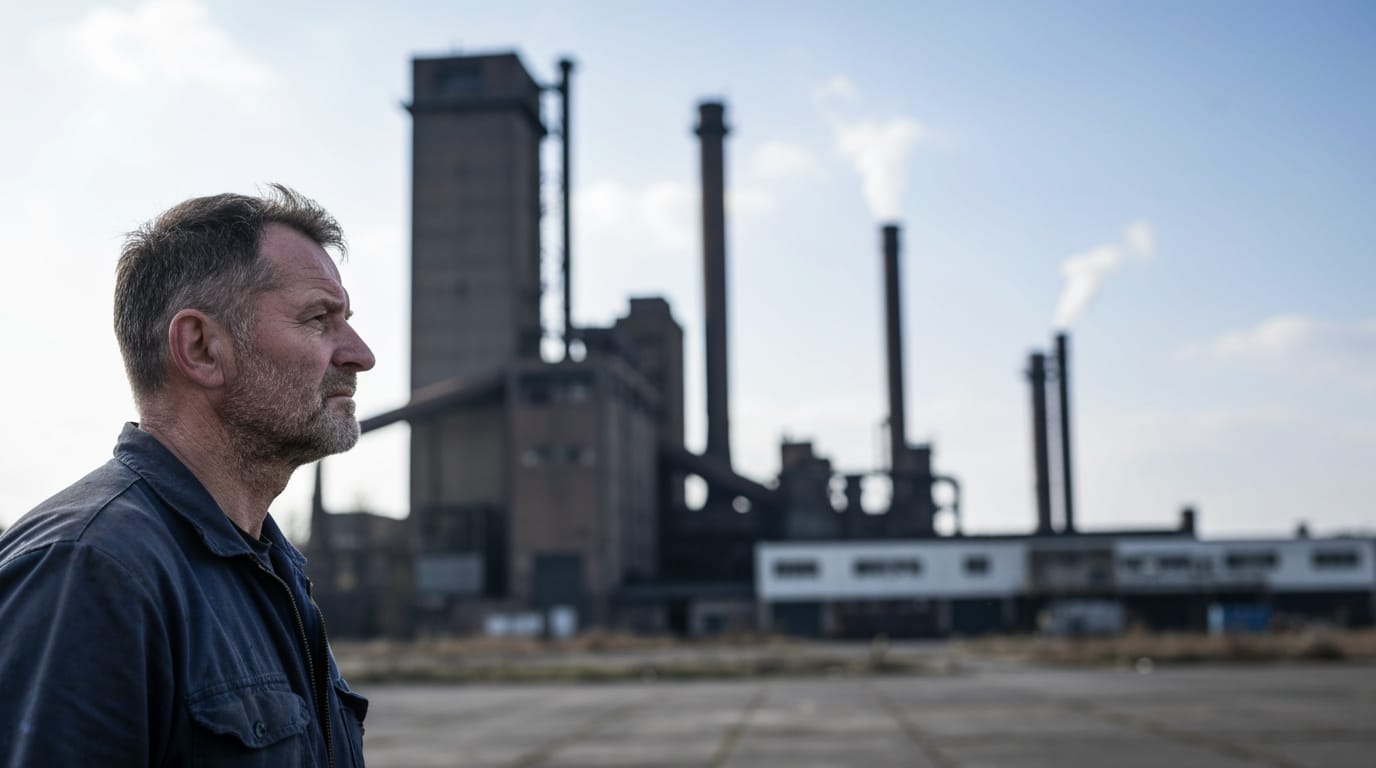
ESSEN, Germany – Once the industrial heartland that fueled Germany's economic prowess, the Ruhr Valley finds itself in a protracted and often challenging metamorphosis, grappling with the remnants of its heavy industry past while striving to forge a sustainable future. While not on the immediate brink of financial collapse, the region faces persistent economic headwinds, marked by elevated unemployment, municipal financial strain, and the daunting task of reinventing itself for the 21st century. Its ongoing struggle serves as a critical barometer for the broader German economy, which contracted in 2024 and anticipates only modest growth in 2025.
Echoes of Industry: A Century of Transformation
The Ruhr Valley's story is inextricably linked to coal and steel. For much of the 20th century, its mines and factories were the engines of German industry, leading to significant post-World War II rebuilding and attracting hundreds of thousands of workers, including numerous immigrants, into demanding but honorable labor. This era of intense industrialization, however, began to wane in the mid-22nd century. The region experienced its first major shock with the coal crisis of the 1960s, followed by a steel crisis in the 1980s, driven by international competition and a global shift away from traditional energy sources.
The slow, often painful, process of deindustrialization saw mines gradually close, culminating in the closure of the last hard coal mine in 2018. The legacy of this intensive mining is profound, with the ground having sunk by approximately 75 feet in some areas. This geological change necessitates continuous pumping to prevent the Ruhr River from flooding, an "eternity cost" that highlights the long-term environmental and financial burden inherited by the region's five million inhabitants. This history of upheaval is not new; the Ruhr Valley previously faced significant economic instability, including hyperinflation following its occupation by French and Belgian forces after World War I due to unpaid reparations.
The Weight of Legacy: Current Economic Headwinds
Today, the economic landscape of the Ruhr Valley remains a mosaic of progress and enduring challenges. While the region as a whole has made strides, certain cities bear a disproportionate burden. Gelsenkirchen, for example, currently registers Germany's highest unemployment rate and suffers from some of the nation's lowest income per capita and highest rates of child poverty. Region-wide, unemployment stood at around 9.7% in 2023, significantly higher than the national average of 3%.
This regional distress is compounded by broader national economic slowdowns. Germany's economy experienced a contraction in 2024, its worst performance in two decades, with only a projected 0.2% GDP growth for 2025. High energy costs, largely a consequence of the Ukraine war disrupting cheap Russian gas supplies, continue to severely impact manufacturers, particularly the small- and medium-sized enterprises (Mittelstand) that form the backbone of the German economy. Insolvencies across Germany rose by 30% in 2024, signaling a challenging business environment. Moreover, many municipalities within the Ruhr Valley grapple with financial stress and infrastructure deficits, including in transportation, exacerbating the difficulty of attracting and retaining new businesses. The economic strain has also translated into political shifts, with the far-right Alternative for Germany (AfD) party seeing a significant rise in popularity in areas like Gelsenkirchen, reflecting voter frustration over economic conditions.
Forging a New Future: Green Ambitions and Knowledge Economy
Despite these significant obstacles, the Ruhr Valley is actively engaged in a comprehensive, decades-long structural transformation aimed at building a diversified, sustainable, and knowledge-based economy. Central to this effort is the ambition to become "the greenest industrial region." This involves extensive investment in green infrastructure and renewable energy sources, including photovoltaics, wind power, biomass, and the utilization of mine gas. Projects focus on resource efficiency and climate protection, positioning the region as a leader in environmental technology.
Education and research play a pivotal role in this transformation. By 2014, the Ruhr region boasted 22 universities with over 250,000 students, significantly boosting its profile as a knowledge-based economy and contributing to the development of a skilled workforce. Cultural initiatives have also been leveraged as economic drivers, with efforts to preserve and repurpose industrial heritage sites like the Zollverein, now a UNESCO World Heritage Site, transforming them into cultural landmarks and tourist attractions. The state of North Rhine-Westphalia is supporting this structural change through programs like the "5-location program," which allocates €662 million until 2038 for sustainable land development, new mobility solutions, and climate protection efforts in key cities like Duisburg, Gelsenkirchen, Herne, Hamm, and the Unna district.
A Model in Progress: The Human Element and Persistent Challenges
The Ruhr Valley's journey is frequently cited as an exemplary case of managing a "just transition" away from fossil fuels, emphasizing worker-focused policies and extensive public investments. However, the success of this transformation has been uneven. While many production jobs were lost, a significant number of service jobs were created; yet, these new positions often offer lower wages. The benefits of economic diversification have not been equitably distributed across all districts, with some areas struggling more than others.
Challenges persist in attracting new industries beyond traditional sectors, addressing infrastructure deficits, and mitigating concerns about gentrification as the region attempts to attract creative and high value-added industries. The "peculiar and specific mentality" of the region, shaped by its history of hard work and collective identity, remains a crucial, if intangible, factor in its resilience.
Conclusion
The Ruhr Valley's economic trajectory is less a story of imminent collapse and more one of an arduous, ongoing reinvention. It stands as a testament to the profound societal and economic challenges of transitioning a deeply entrenched industrial region in the face of global shifts and national economic pressures. While some communities face acute distress, the broader region is actively leveraging strategic investments in green technology, education, and cultural heritage to carve out a new identity. The success of its long-term transformation will hinge on sustained political commitment, innovative economic diversification, and equitable development that ensures prosperity is shared across its diverse communities, ultimately determining if its hard-won metamorphosis can withstand the test of time.


