Europe Heeds Trump's Call: A New Era for Transatlantic Defense Unfolds at EPC Summit
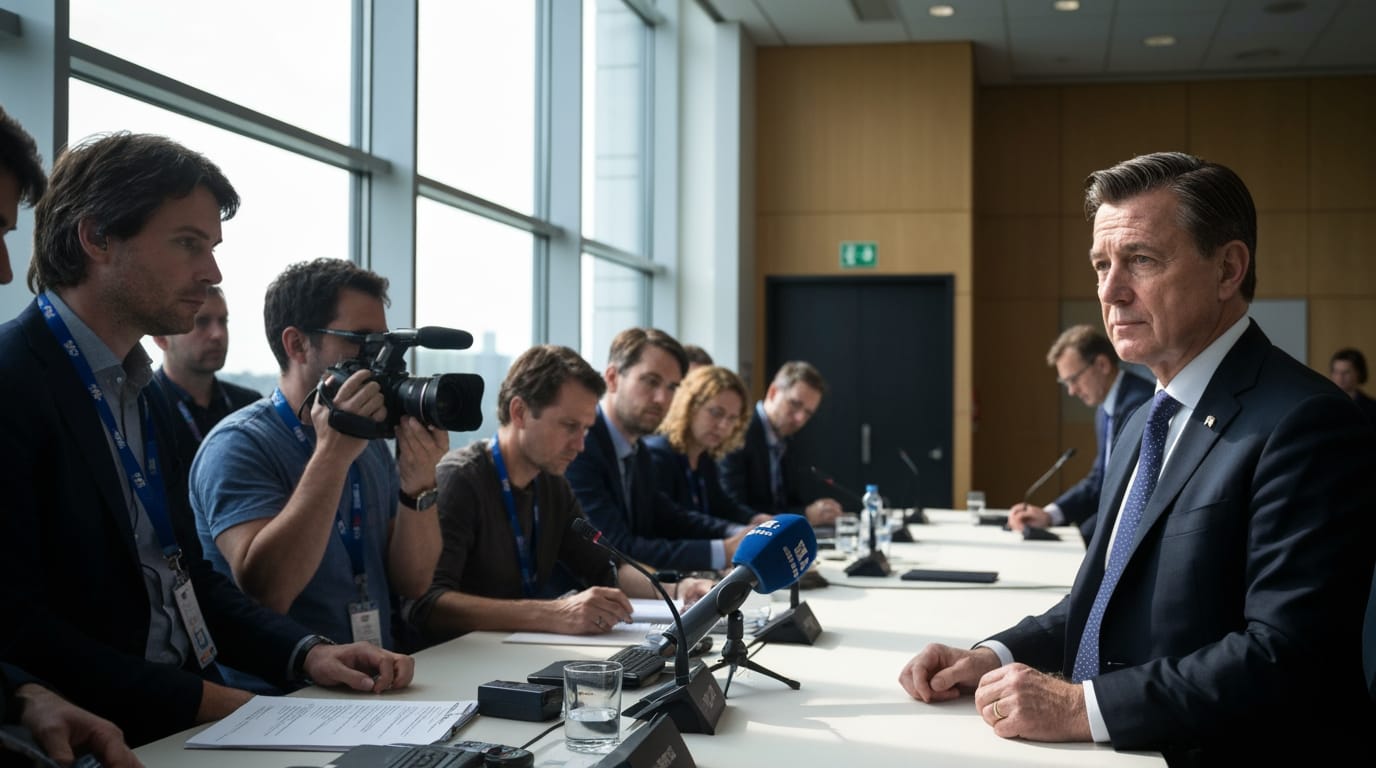
YEREVAN, Armenia — European leaders convened Monday for the 8th European Political Community (EPC) summit in Yerevan, Armenia, amidst a palpable shift in the continent's defense posture, largely influenced by years of persistent pressure from former U.S. President Donald Trump. The gathering, themed "Building the future: unity and stability in Europe," has become a crucial forum for discussing enhanced cooperation on security, energy, and economic ties. This comes as NATO Secretary General Mark Rutte, speaking from the summit, acknowledged that Europeans have "gotten the message" regarding their defense spending, a message underscored by a recent U.S. announcement to withdraw 5,000 troops from Germany. The convergence of these events signals a potentially transformative period for European security and the transatlantic alliance.
The EPC, established in 2022, serves as a broad political platform designed to foster dialogue and cooperation among nearly 50 European nations on matters of common interest, including peace and security. The Yerevan summit's agenda reflects this imperative, with discussions spanning democratic resilience, hybrid threats, connectivity, and economic security. However, the looming specter of a re-evaluated U.S. commitment to European security has undeniably dominated the strategic discourse. The presence of Canadian Prime Minister Mark Carney, the first non-European leader to attend an EPC summit, has been interpreted by some as a subtle assertion of broader international solidarity in the face of shifting geopolitical dynamics.
Trump's Unrelenting Demands: A Decade of Pressure
For years, Donald Trump has been an outspoken critic of what he views as insufficient defense spending by European NATO members. His rhetoric, characterized by demands for greater burden-sharing, often included explicit threats that the United States might reconsider its security commitments if allies did not increase their military outlays. While the NATO target for defense spending had long been 2% of a nation's Gross Domestic Product (GDP), Trump frequently pushed for an even higher threshold, at times suggesting a 4% or even 5% benchmark.
These demands intensified during his presidency and continued into his post-presidency political commentary. A pivotal moment occurred in June 2025 at a NATO summit in The Hague, dubbed by some as "the Trump summit." There, NATO allies formally agreed to an unprecedented target: to spend 5% of their national budgets on defense by 2035. This commitment outlined that 3.5% would be allocated to core defense capabilities like weapons and troops, with an additional 1.5% dedicated to security infrastructure, including cybersecurity and military transport. Trump notably claimed personal credit for this significant increase, asserting that his persistent urging had compelled European leaders to act.
Europe's Defensive Awakening: From Rhetoric to Reality
The message, once often met with apprehension or outright dismissal in some European capitals, now appears to have been unequivocally received. NATO Secretary General Mark Rutte's statement at the Yerevan summit—that Europeans have "heard the message loud and clear" and are now "stepping up"—underscores a profound shift in European strategic thinking. This change is not merely rhetorical; it is reflected in tangible increases in defense budgets across the continent.
European defense spending has surged in recent years, doubling since 2019. In 2025 alone, European military expenditure rose by 14%, reaching $864 billion, with the 29 European NATO members collectively spending $559 billion. A significant majority of these nations, 22 out of 29, met the long-standing 2% of GDP target in 2025. Germany, a country historically hesitant to significantly boost military spending, saw its defense budget reach a 36-year high, exceeding 2% of its GDP for the first time since 1990. This dramatic acceleration in spending is driven by a dual imperative: the perceived threat from Russia and a recognition of "reduced US willingness to underwrite regional security."
Forging European Autonomy in a Changing World
Beyond simply increasing financial contributions, Europe is actively pursuing greater strategic autonomy. French President Emmanuel Macron and EU chief Ursula von der Leyen have both articulated the need for Europe to "take their destiny into their own hands" and "step up military capabilities to be able to defend and protect ourselves." This ambition is manifesting in various forms, including the operationalization of Article 42.7 of the bloc's mutual defense clause. European Union leaders are working on a "handbook" to guide the use of this clause, signaling a preparedness for collective response independent of, though not necessarily in opposition to, NATO.
However, the path to European defense autonomy is not without its complexities. Trump's proposed 5% spending target, while adopted by NATO, initially met with mixed reactions, with some European officials deeming it "impossible" for many nations. Debates continue regarding the optimal structure for European security, with some analysts advocating for the creation of a European Security Council, separate from existing EU frameworks, to enhance unified decision-making and resilience. This evolving landscape reflects a growing consensus that while the transatlantic alliance remains critical, a more self-reliant Europe is essential for its long-term stability.
A Redefined Transatlantic Relationship
The recent U.S. announcement of troop withdrawals from Germany, coupled with a U.S. national security strategy that critically assessed Europe, further underscores the shifting dynamics. European Council President Antonio Costa has acknowledged a "changed" relationship between the United States and Europe, emphasizing the need for the continent to adapt to new geopolitical realities. While some European leaders have expressed concern over the U.S. stance, others, like Estonian Prime Minister Kaja Kallas, viewed the criticism as "expected" and "partly fair," reinforcing the notion that Europe must shoulder more responsibility for its own defense.
Ultimately, the confluence of Trump's sustained pressure and the geopolitical realities emanating from Eastern Europe has undeniably acted as a powerful catalyst for a recalibration of European defense. The EPC summit in Yerevan serves as a stark reminder that Europe is now actively and increasingly taking ownership of its security. The transatlantic relationship, while enduring, is evolving into a partnership where Europe is expected to be a more formidable and self-sufficient pillar, capable of addressing its own security challenges with greater autonomy and collective strength. This transformation, driven by both external demands and internal imperatives, marks a significant chapter in the ongoing narrative of European integration and global security.


