U.S. Launches "Project Freedom" to Escort Ships Through Blockaded Strait of Hormuz Amid Escalating Iran Conflict
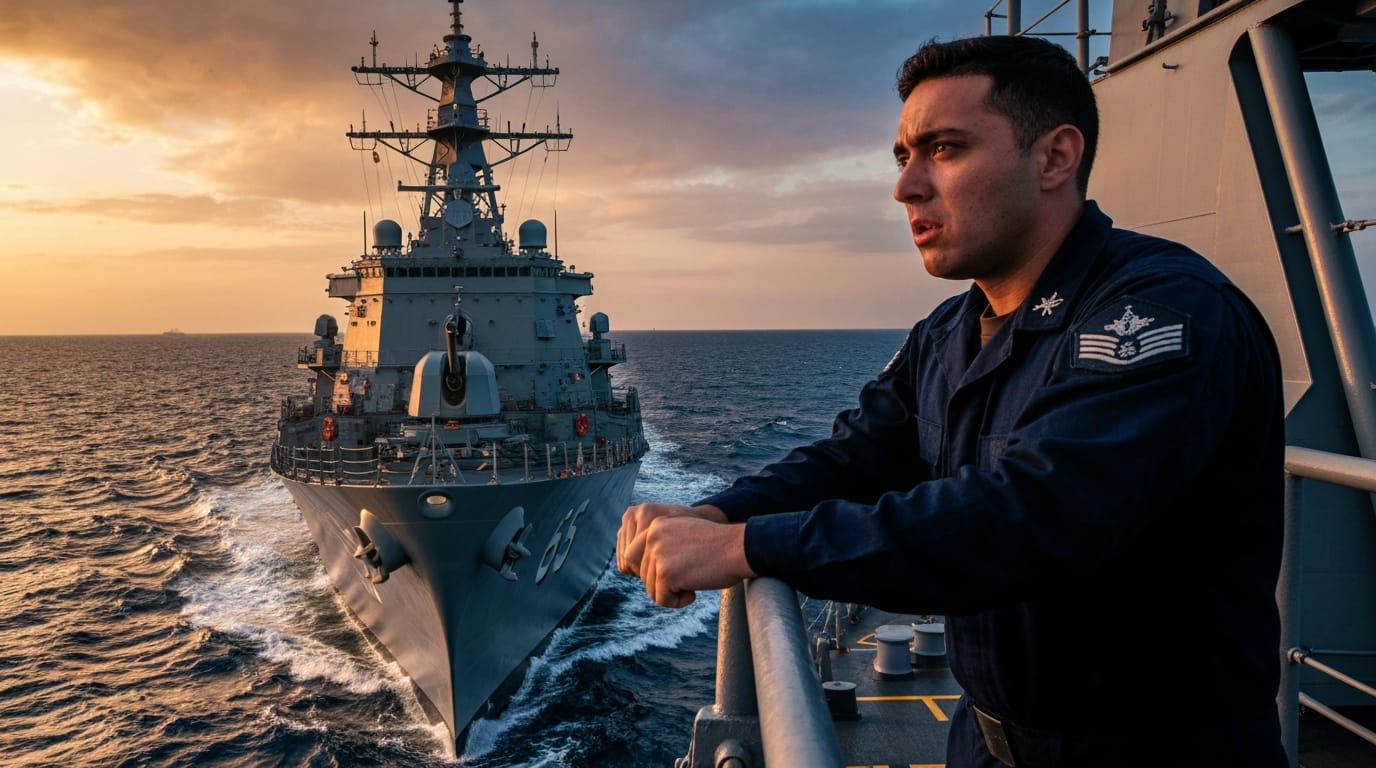
WASHINGTON D.C. – The United States has initiated a significant maritime operation, dubbed "Project Freedom," to escort neutral commercial vessels through the Strait of Hormuz, a critical global chokepoint currently under an Iranian blockade. The announcement by President Donald Trump on Sunday, May 3, 2026, marks a dramatic escalation in the ongoing conflict with Iran, which began with a US-Israeli air war in late February and has since seen Tehran retaliate by closing the vital waterway. The move aims to alleviate the severe economic repercussions of the blockade, which has crippled global shipping and sent oil prices soaring, but it has been met with immediate and stern warnings from Iran, threatening a direct military confrontation.
The Chokepoint in Crisis: Global Commerce Held Hostage
The Strait of Hormuz, a narrow passage connecting the Persian Gulf with the Gulf of Oman and the Arabian Sea, stands as the world's most strategically important oil transit chokepoint. It typically facilitates the passage of approximately 20-25% of the world's seaborne oil and roughly one-fifth of global liquefied natural gas (LNG) trade daily, making it indispensable for global energy security and commerce. Nations like China, India, Japan, and South Korea are particularly reliant on these flows, with over 80% of crude oil and condensate moving through the Strait destined for Asian markets.
Tensions in the region reached a boiling point in the lead-up to 2026, following stalled nuclear negotiations and a prior 12-day air conflict in 2025. The current crisis was ignited on February 28, 2026, when the United States and Israel launched an air war against Iran, which included the assassination of Iran's supreme leader. Tehran swiftly retaliated with missile and drone attacks on Israeli targets, US military bases, and US-allied Gulf states.
In a direct response to these hostilities, Iran's Revolutionary Guard (IRGC) announced the closure of the Strait of Hormuz to all shipping, except for its own vessels, effectively halting international maritime transit. On March 27, Iran declared the Strait closed to any vessel traveling "to and from" the ports of the U.S., Israel, and their allies. Adding to the peril, Iranian forces reportedly laid sea mines, boarded and attacked merchant ships, and issued explicit warnings that any vessels attempting passage would be "set ablaze". They further asserted that the security of the Strait is entirely under Iranian control, demanding that any safe passage be coordinated with their armed forces, and even attempting to levy "toll" payments from vessels.
The impact has been immediate and devastating for global trade. Shipping traffic through the Strait plummeted by an initial 70% before coming to a near standstill. Over 150 commercial ships have been left stranded outside the chokepoint, with an estimated 20,000 mariners and hundreds of vessels trapped within the Persian Gulf, facing shortages of food and supplies. Global oil prices surged, exceeding $100 per barrel by March 8, 2026, and peaking at $126, marking the largest monthly increase in recent history and the most significant disruption to world energy supply since the 1970s energy crisis. Beyond oil, other commodity markets, including aluminum, fertilizer, and helium, have also experienced significant disruptions and price hikes.
"Project Freedom" Launched: A Humanitarian Mission Amidst War
In response to the mounting global economic pressure and humanitarian concerns for stranded crews, President Trump declared the launch of "Project Freedom." The operation, set to commence on Monday morning, May 4, 2026, Middle East time, aims to "guide stranded ships safely out of the restricted waters so they can continue their journeys." Trump characterized the initiative as a "humanitarian gesture" for nations caught in a conflict they are not a part of.
The United States Central Command (CENTCOM) has been tasked with overseeing the mission, committing substantial military resources, including thousands of troops, advanced aircraft, warships, and multi-domain unmanned platforms, as part of its effort to support merchant vessels seeking free transit. This commitment underscores the perceived gravity of the situation and the critical need to restore stability to the vital waterway.
However, Iran has vehemently opposed the U.S. initiative, warning that any American interference or attempt to enter the Strait of Hormuz without their coordination would be considered a direct violation of the existing ceasefire and would be met with a "harsh response". Senior Iranian lawmaker Ibrahim Azizi explicitly stated that "any American interference in the new maritime regime of the Strait of Hormuz will be considered a violation of the ceasefire".
Escalating Tensions and Global Ramifications
The deployment of U.S. naval escorts creates a highly volatile situation, effectively establishing a "dual blockade" in the region. Since April 13, the U.S. has maintained a naval blockade on vessels entering or leaving Iranian ports in response to Tehran's actions. This U.S. blockade, combined with Iran's closure of the Strait, has further tightened the stranglehold on regional shipping. The Office of Foreign Assets Control (OFAC) has also issued warnings to U.S. and non-U.S. persons regarding the sanctions risks associated with paying any "toll" demands made by Iran for safe passage.
The international community watches with bated breath as diplomatic efforts struggle to gain traction. A shaky ceasefire, mediated by Pakistan, had been in effect since April 8, following the intense initial phase of the US-Israel-Iran conflict. Iran briefly lifted its blockade on April 17, announcing the Strait would be open for commercial shipping during a truce, but reimposed restrictions after the U.S. continued its blockade of Iranian ports. Recent negotiations have been deadlocked, with Iran presenting a 14-point plan to end hostilities, which President Trump has deemed "not acceptable." Tehran has set a one-month deadline for negotiations to reopen the strait, dissolve the U.S. naval blockade, and end the war.
Echoes of History, Uncertain Future
The current crisis evokes strong parallels with the "Tanker War" of the 1980s, during the Iran-Iraq War, when the U.S. Navy conducted "Operation Earnest Will" to escort Kuwaiti tankers reflagged as American vessels through the Persian Gulf. That historical intervention, the largest naval convoy operation since World War II, was fraught with risks, including mines, attacks on warships, and casualties.
However, military analysts suggest that the current situation is even more complex and dangerous. The intervening decades have seen significant advancements in military technology, and Iran is now perceived to be in an "existential conflict" with the U.S. and Israel, potentially making it more aggressive and less inclined to avoid direct confrontation than in the 1980s. The U.S. objective also appears less defined than the clear goal of protecting reflagged tankers in the past, further complicating the operational landscape.
Conclusion
As U.S. naval forces prepare to escort ships through the Strait of Hormuz, the global community faces an unprecedented test of maritime security and international diplomacy. The Iranian blockade has already triggered a severe energy crisis and disrupted global supply chains, affecting countless industries and consumers worldwide. While "Project Freedom" aims to alleviate these immediate pressures, it simultaneously heightens the risk of direct military engagement between the United States and Iran, a prospect with potentially catastrophic consequences for regional stability and the global economy. The urgent need for a diplomatic solution to de-escalate tensions and secure the free passage of commerce through the Strait of Hormuz remains paramount to avert a wider conflict and stabilize global markets.


