Europe Springs Forward, Daylight Saving Time Returns Amidst Ongoing Debate
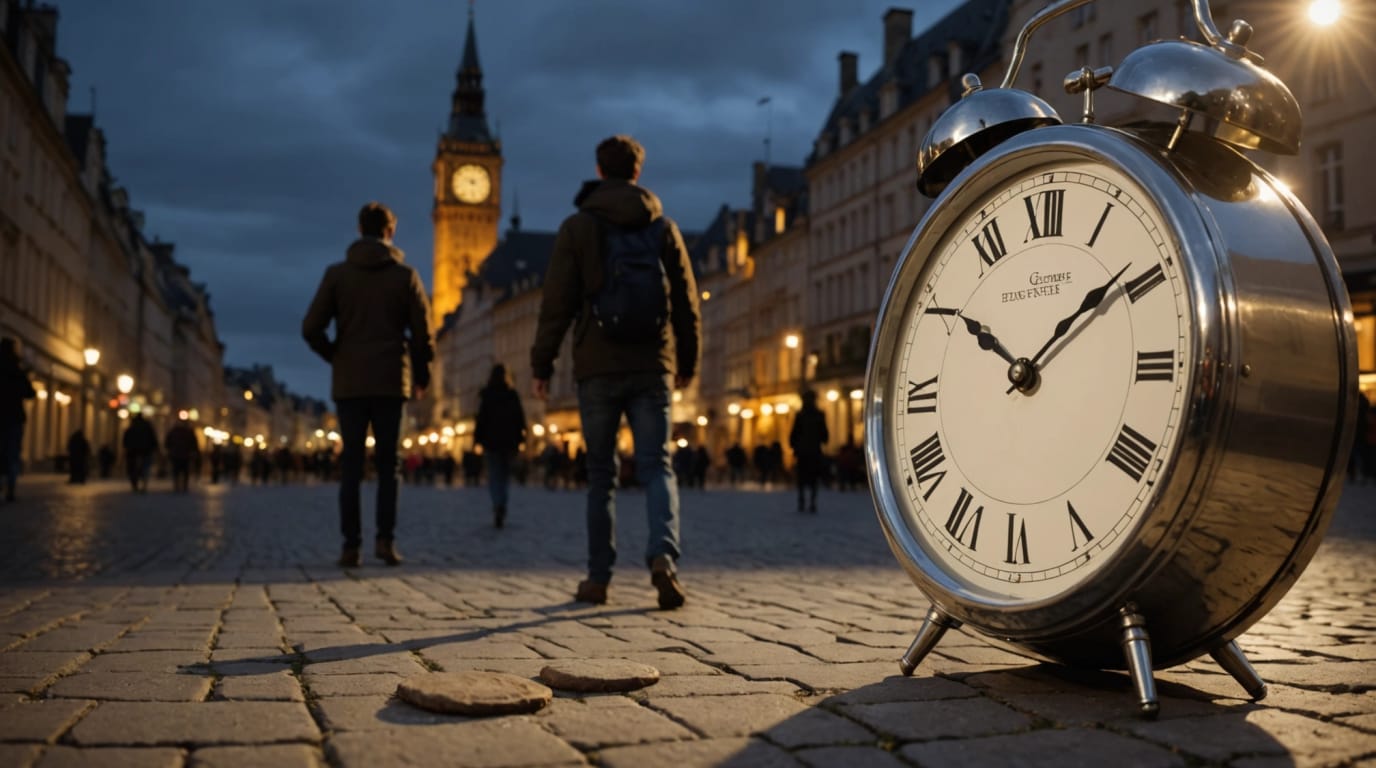
Across most of Europe, clocks were turned forward by one hour on Sunday, March 30, 2025, marking the start of Daylight Saving Time (DST). This annual ritual, observed in the European Union and many other European countries, shifts the continent into summer time, a practice intended to make better use of daylight hours. However, the return of DST also reignites a long-standing debate about its necessity, impact on health, and economic consequences.
The coordinated time change occurred at 01:00 Coordinated Universal Time (UTC), impacting various time zones across the continent. For example, countries observing Central European Summer Time (CEST), including Austria, France, Germany, Italy, Hungary, Poland, Spain and Switzerland, moved their clocks forward from 2:00 a.m. to 3:00 a.m. Eastern European Summer Time (EEST) countries like Bulgaria, Estonia, Finland, Greece, Latvia, Lithuania, and Romania shifted from 3:00 a.m. to 4:00 a.m. Western European Summer Time (WEST), observed in the Canary Islands, the Faroe Islands, and Portugal, saw clocks advance from 1:00 a.m. to 2:00 a.m.
The practice of DST dates back to World War I, when Germany first implemented it in 1916 to conserve energy. The idea quickly spread to other nations, including the United Kingdom, France, Italy, and Russia. While many countries abandoned DST after the war, it was reintroduced during World War II and again during the 1970s oil crisis as a means to save energy.
The Push to Abolish DST
Despite its historical roots, DST has faced increasing criticism in recent years. Opponents argue that the biannual clock changes disrupt the human body's natural circadian rhythms, leading to various health problems. Studies have suggested a link between DST and a modest increase in the occurrence of acute myocardial infarction, particularly in the first week after the spring shift. Sleep disruption, reduced productivity, and increased road accidents are also cited as negative consequences.
Fueled by these concerns, the European Commission launched a public consultation in 2018, asking citizens for their views on scrapping the time changes. The consultation garnered a record 4.6 million responses, with 84% of participants favoring an end to DST. In response, the European Parliament voted in 2019 to abolish the seasonal clock changes, proposing that the change should be implemented in 2021.
Stalled Progress and Diverging Opinions
However, the proposal to abolish DST has since stalled due to disagreements among EU member states. One of the main obstacles is the question of whether to adopt permanent summertime or wintertime. Member states have struggled to reach a consensus, fearing that a lack of coordination could result in a patchwork of different time zones across the continent, potentially disrupting cross-border trade and travel. Brexit and the COVID-19 pandemic further sidelined the discussions.
Despite the standstill, the issue remains on the agenda. Poland, which holds the EU's rotating presidency for the first half of 2025, has pledged to revive the debate. Polish Development Minister Krzysztof Paszyk has expressed strong support for abolishing DST, arguing that it causes unnecessary confusion and costs for businesses while also negatively impacting public health. The European Commission has also signaled its support for resuming discussions under the Polish presidency.
Economic and Logistical Implications
The return of DST also has implications for financial markets and trading hours. As PrimeXBT noted, the start of DST in the EU leads to temporary changes in trading hours across various assets. Traders and investors are advised to adjust their strategies accordingly to avoid potential disruptions.
Furthermore, the debate over DST has raised questions about its effectiveness in achieving its original goal of energy conservation. Some studies suggest that the energy savings from DST are minimal or even non-existent, while others point to potential economic costs associated with the disruption to daily routines and productivity.
The Future of Time in Europe
As Europe adjusts to summer time, the debate over the future of DST continues. While the European Parliament has expressed its support for abolishing the clock changes, the final decision rests with the EU member states. The Polish presidency's efforts to reignite the discussion offer a glimmer of hope for those who wish to see an end to the biannual time shifts.
Whether Europe will ultimately choose to embrace permanent summertime, permanent wintertime, or maintain the status quo remains to be seen. However, the ongoing controversy surrounding DST highlights the complex interplay of health, economic, and political considerations in shaping the way we experience time. Until a consensus is reached, Europeans will continue to spring forward in March and fall back in October, grappling with the disruptions and debates that accompany the changing of the clocks.


