Europe Vows Firm Response to Trump's Greenland "Blackmail" as Transatlantic Rift Deepens
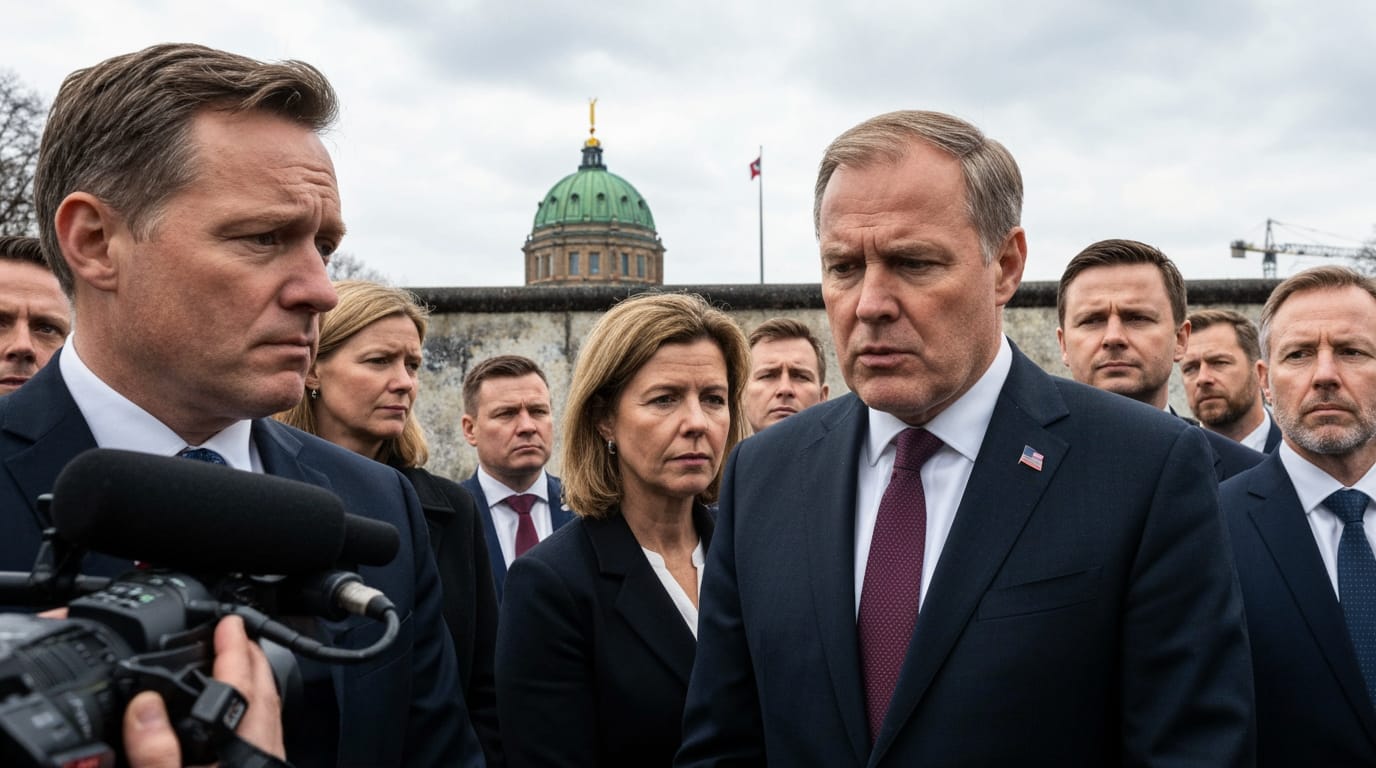
BERLIN, Germany — Europe has unequivocally declared it will not succumb to what it describes as "blackmail" from former U.S. President Donald Trump, after he levied new tariffs against several European nations over their refusal to cede Greenland to the United States. The escalating dispute, rooted in Trump's persistent ambition to acquire the vast Arctic island, threatens to severely strain transatlantic alliances and reconfigure geopolitical dynamics in a rapidly changing Arctic landscape. German Vice Chancellor Lars Klingbeil, also serving as the nation's finance minister, announced Monday that Europe is actively preparing a united and forceful response, underscoring a deepening chasm between Washington and its traditional allies.
The current diplomatic crisis intensified over the weekend when Trump announced a 10% tariff on imports from eight European countries—Denmark, Norway, Sweden, France, Germany, the United Kingdom, the Netherlands, and Finland. These tariffs are slated to increase to 25% by June 1, with Trump explicitly stating they would remain in effect "until such time as a Deal is reached for the Complete and Total purchase of Greenland." This latest move follows Trump's reasserted desire for the U.S. to acquire Greenland, a self-governing territory within the Kingdom of Denmark, which he has previously described as "essentially a real estate deal" and has even threatened to annex. The targeted European nations had recently dispatched small contingents of military personnel to Greenland for Arctic security exercises, a move Trump viewed as opposition to his designs.
The Arctic as America's New Frontier
Trump's renewed push for Greenland is framed around perceived national security imperatives, echoing a long-standing, albeit often dormant, U.S. interest in the island dating back to the 19th century. Citing increased Russian and Chinese activity in the Arctic, Trump has argued that Greenland is "so strategic right now" and "needed for economic security." White House Press Secretary Karoline Leavitt has even confirmed that "utilizing the U.S. military is always an option" for acquiring the territory. Historically, the U.S. attempted to purchase Greenland in 1867, and again in 1946 with a secret $100 million offer to Denmark, which was subsequently rejected.
In a controversial tactic, officials within the Trump administration have reportedly discussed offering individual payments ranging from $10,000 to $100,000 to Greenlanders to incentivize them to secede from Denmark and join the United States. Such proposals, however, have been met with widespread scorn and protests both in Greenland and Denmark. The U.S. already maintains a significant military presence in Greenland, notably the Pituffik Space Base (formerly Thule Air Base), which is critical for missile warning, defense, and space surveillance operations for both the U.S. and NATO. This existing cooperation underscores Europe's argument that outright acquisition is unnecessary and destabilizing.
Europe's United Front Against Coercion
The imposition of tariffs has ignited a fierce backlash across Europe, with leaders condemning the action as an unacceptable form of economic coercion. German Vice Chancellor Lars Klingbeil, speaking alongside French Economy Minister Roland Lescure in Berlin, emphatically stated, "We will not allow ourselves to be blackmailed." He outlined potential European countermeasures, which could include suspending the existing tariff deal with the United States, activating previously suspended European tariffs on U.S. imports, and deploying the European Union's anti-coercion instrument—a measure designed to address economic blackmail. French Minister Lescure echoed this sentiment, emphasizing that "blackmail between allies of 250 years, blackmail between friends, is obviously unacceptable."
The European response extends beyond Germany and France. European Council President Antonio Costa is coordinating a joint response among the EU's 27 member states, emphasizing that Europe would remain united and committed to upholding its sovereignty. The leaders of the eight directly targeted nations issued a joint statement, asserting their "full solidarity with the Kingdom of Denmark and the people of Greenland" and warning that "tariff threats undermine transatlantic relations and risk a dangerous downward spiral." They highlighted that the Danish-led military exercises in Greenland, known as "Arctic Endurance," were pre-coordinated with allies and "pose no threat to anyone." This collective European stance signals a profound concern not just for Greenland's status, but for the fundamental principles of international law and the integrity of the transatlantic alliance.
Greenland: Not for Sale, Not a Pawn
At the heart of the controversy is Greenland itself, an autonomous territory of Denmark with a population of approximately 56,000 people. Greenlanders are recognized as a distinct people under international law, possessing the right to self-determination. Both Greenlandic and Danish authorities have consistently and unequivocally rejected any notion of a sale or annexation. Danish Prime Minister Mette Frederiksen famously dismissed Trump's initial 2019 inquiry as "absurd," while Greenlandic Prime Minister Jens-Frederik Nielsen has urged an end to "fantasies about annexation."
The island's capital, Nuuk, along with several Danish cities, has seen protests against Trump's ambitions, with residents holding signs proclaiming "Greenland is not for sale" and "Yankees go home!" While Greenland maintains wide-ranging autonomy over its internal affairs, Denmark retains control over foreign policy, defense, and currency. Economically, Greenland remains significantly reliant on an annual subsidy from Denmark, amounting to over €700 million, which constitutes more than 20% of its GDP. It also receives financial support and has a special association with the European Union, particularly in areas like fisheries and green growth initiatives. The strong cultural and political ties with Denmark, coupled with a deep-seated commitment to self-determination, make any U.S. attempt at acquisition a direct affront to the wishes of its inhabitants and sovereign rights.
A Strategic Jewel in a Warming World
Greenland's immense geopolitical importance cannot be overstated, a factor fueling both American and broader international interest. Geographically situated between North America and Europe, with over two-thirds of its landmass within the Arctic Circle, it occupies a crucial position for global security. The island is a vital component of the GIUK (Greenland, Iceland, United Kingdom) Gap, a critical maritime corridor used by NATO to monitor naval movements in the North Atlantic, particularly those of Russia.
Beyond its military significance, Greenland holds vast, untapped natural resources. It boasts significant deposits of critical minerals and rare earth elements, essential for modern technologies from cell phones to advanced military equipment. The European Commission has identified 25 of the 34 critical raw materials vital for Europe's economic and technological future within Greenland's soil, offering a potential pathway to reduce Western dependence on dominant suppliers like China.
Furthermore, climate change is rapidly transforming the Arctic, making Greenland even more strategically pivotal. As Arctic ice melts at an accelerated rate, new shipping routes are opening across the polar region, significantly shortening transit times between Asia, Europe, and North America. Greenland sits directly alongside these emerging routes, positioning it to become a key player in international trade and navigation. This confluence of military, economic, and environmental factors has thrust Greenland into the epicenter of a growing geopolitical competition involving the U.S., Russia, and China.
Conclusion: A Test of Transatlantic Solidarity
The current standoff over Greenland represents more than a territorial dispute; it is a profound test of transatlantic solidarity and international norms. European leaders, including Germany's Vice Chancellor Klingbeil, have made it clear that they view Trump's actions as a dangerous precedent that challenges the sovereignty of nations and the foundations of long-standing alliances. The insistence from Nuuk and Copenhagen that Greenland is not for sale underscores the principle of self-determination, a cornerstone of international law. As Europe prepares its coordinated response, the coming weeks will reveal the extent of the impact on U.S.-European relations and the delicate balance of power in the strategically critical, and increasingly accessible, Arctic. The resolution of this crisis will undoubtedly shape the future of diplomatic engagement and security cooperation in a multipolar world.