European Leaders Intensify Ceasefire Efforts in Berlin Amid Critical Ukraine Peace Talks
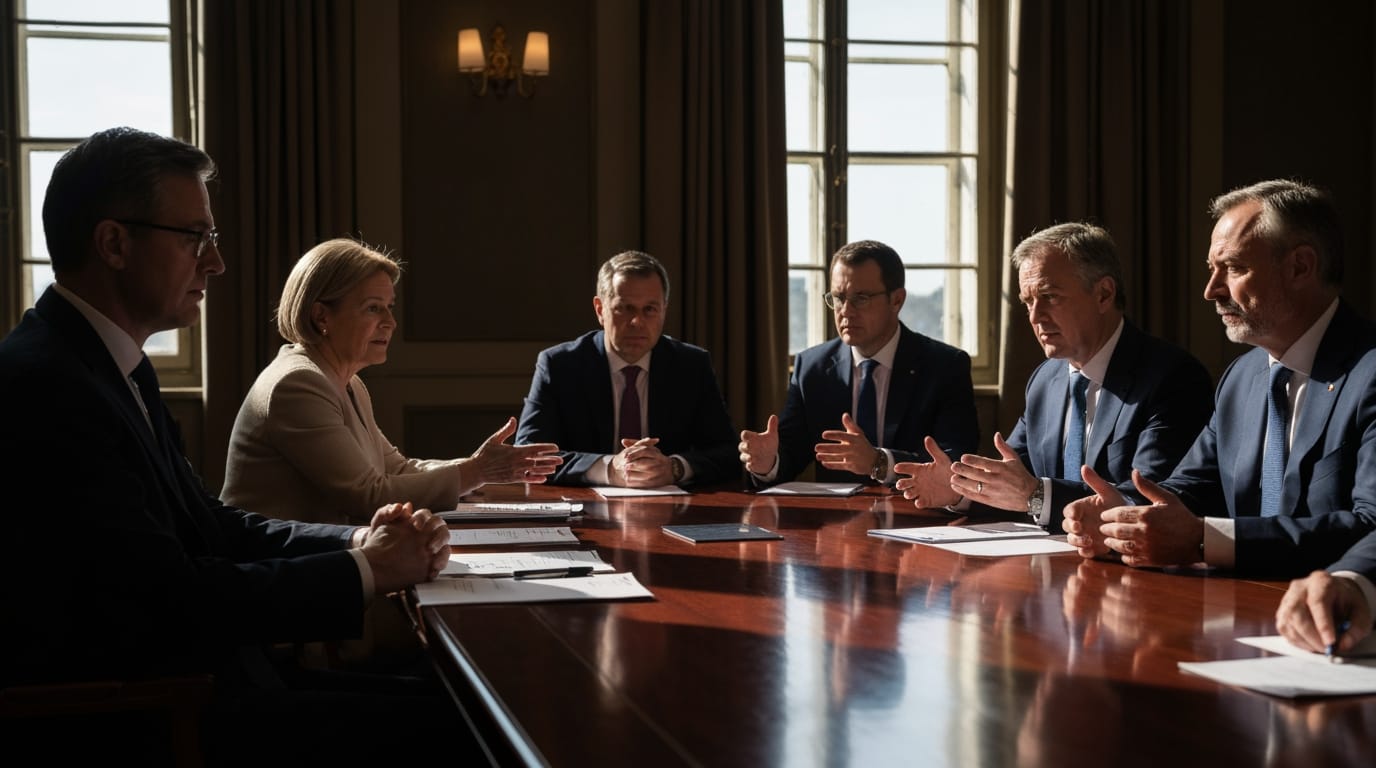
Berlin, Germany – European leaders, alongside high-level U.S. envoys and Ukrainian President Volodymyr Zelenskyy, are engaged in a crucial series of ceasefire talks in Berlin this week, aiming to forge a political agreement to end the nearly four-year conflict in Ukraine. These intensified diplomatic efforts, taking place on December 14th and 15th, represent a concerted push to navigate deep-seated disagreements over territorial integrity and security guarantees, as the war continues to exact a heavy toll on civilians and stability across the continent.
The high-stakes meetings underscore a growing urgency to find a viable path to peace, with Ukraine expressing conditional flexibility on its NATO aspirations while firmly rejecting any territorial concessions. European powers, notably Germany, France, and the United Kingdom, are working to solidify their support for Kyiv and refine a U.S.-backed peace proposal that has faced scrutiny for its initial demands on Ukraine.
The Diplomatic Nexus in Berlin
The German capital has become the epicenter of frenetic diplomatic activity, with Ukrainian President Volodymyr Zelenskyy meeting with U.S. President Donald Trump's special envoys, Steve Witkoff and Jared Kushner, as well as German Chancellor Friedrich Merz. These discussions are set to expand to include numerous other European heads of state and government, along with top representatives from the European Union and NATO. The immediate objectives of these talks are to hammer out concrete security guarantees for Ukraine and lay the groundwork for post-war recovery.
The current round of negotiations builds on previous high-level engagements, including a meeting in London on December 8th where UK Prime Minister Keir Starmer, French President Emmanuel Macron, and German Chancellor Merz rallied behind Zelenskyy. European leaders have emphasized the need for a "just and lasting peace" that includes "robust security guarantees" against further Russian aggression. The presence of U.S. envoys signals Washington's active role, with President Trump reportedly keen on a swift resolution to the conflict.
Bridging the Divide: Ukraine's Demands and European Concerns
A significant development preceding the Berlin talks is President Zelenskyy's expressed readiness to potentially forgo Ukraine's long-standing aspiration for NATO membership. This concession, previously a cornerstone of Ukraine's foreign policy and enshrined in its constitution, is now on the table in exchange for concrete, legally binding Western security guarantees. Zelenskyy seeks assurances similar to NATO's Article 5, which mandates collective defense among members, to prevent future Russian invasions. He highlighted Russia's history of disregarding treaties, including the 1994 Budapest Memorandum, which offered security assurances in exchange for Ukraine relinquishing its nuclear arsenal.
However, Ukraine remains steadfast in its refusal to cede any territory to Russia. This stance directly challenges parts of the U.S.-backed peace plan, initially a 28-point proposal drafted by U.S. envoy Steve Witkoff. Critics, including Ukraine and some European allies, argued that the initial U.S. plan heavily favored Russian demands, suggesting Ukraine cede control of Crimea, Luhansk, and Donetsk, limit its military, and abandon NATO ambitions. The proposal has since been reduced to 20 points following consultations, though specific changes have not been fully disclosed.
European leaders have played a critical role in pushing back against aspects of the U.S. plan they deemed unfavorable to Kyiv. Countries like France, Germany, and the UK have stressed that any peace settlement must involve Ukraine fully and uphold its sovereignty and territorial integrity. German Chancellor Merz, in particular, warned that Russia's objective is a "fundamental change to the borders in Europe" and the "restoration of the old Soviet Union within its borders."
Another key point of European support for Ukraine involves efforts to utilize frozen Russian assets for Kyiv's reconstruction. Over £180 billion of Russian assets remain frozen in European banks. EU leaders are set to meet later in December to potentially approve a proposal to funnel a significant portion of these assets into a "reparations loan" for Ukraine's military and civilian budgets, a move aimed at ensuring Russia eventually pays for the war's damages.
Russia's Stance and Enduring Obstacles
Despite the intense diplomatic activity in Berlin, Russia's demands remain largely unchanged and continue to pose significant obstacles to a lasting peace. Moscow insists that Ukraine must withdraw its forces from all parts of the Donetsk region still under its control and formally abandon its bid to join NATO. Kremlin officials have also indicated that Russian police and national guard troops would remain in parts of eastern Ukraine's Donbas, even if these areas were to become a demilitarized zone under a future peace plan – a demand Kyiv is highly likely to reject.
Moscow has consistently downplayed the significance of recent peace talks, with a Kremlin foreign affairs adviser suggesting that alterations to the initial U.S. proposals by Ukraine and its European allies have "worsened" the plan. This rigid stance, coupled with continued aerial attacks on Ukrainian cities and infrastructure, highlights the formidable challenges facing negotiators.
The fundamental disagreement over territorial control – Ukraine's insistence on reclaiming all occupied lands versus Russia's demands for recognition of its sovereignty over seized regions – remains the most significant hurdle. Without a breakthrough on this core issue and on the nature and enforcement of security guarantees, a comprehensive peace agreement appears distant.
The Unfolding Humanitarian Crisis and European Stability
As diplomatic efforts unfold, the human cost of the protracted conflict continues to mount. The war, now in its fourth year, has resulted in thousands of civilian casualties and an escalating humanitarian crisis. With winter setting in, Russia's intensified targeting of Ukraine's energy infrastructure has left millions without electricity and vital services, exacerbating an already dire situation. The United Nations reported in August 2025 that its humanitarian programs had provided direct support to over 15 million Ukrainians. UN officials continue to advocate for "concerted and inclusive diplomatic efforts" to achieve tangible progress towards peace, emphasizing the urgency of protecting civilians.
Beyond Ukraine's borders, the conflict has profound implications for European stability and security. European leaders are acutely aware that the outcome of this war will shape the continent's future for decades. The economic repercussions, including trade disruptions and inflationary pressures, have been particularly felt in countries geographically closer to the conflict. The ongoing instability also fuels discussions about strengthening Europe's own defense capabilities and reducing reliance on external security assurances, a sentiment echoed by figures like German Chancellor Merz, who stated that "the decades of the 'Pax Americana' are largely over for us in Europe."
A Precarious Path to Peace
The current ceasefire talks in Berlin, involving an intricate web of U.S., Ukrainian, and European interests, represent a pivotal moment in the quest for peace in Ukraine. While President Zelenskyy's willingness to re-evaluate NATO membership marks a significant diplomatic maneuver, the deep chasm over territorial sovereignty and Russia's unyielding demands present formidable challenges.
European leaders, while aligning closely with Kyiv's aspirations for a sovereign and secure future, are also navigating the complexities of coordinating support and consensus within a fragile geopolitical landscape. The path to a comprehensive and lasting peace remains precarious, demanding continued diplomatic ingenuity and a willingness from all parties to seek genuine compromise, even as the brutal realities of war persist on the ground. The outcomes of these Berlin discussions will undoubtedly influence the trajectory of the conflict and the broader security architecture of Europe.


