European Military Chiefs Urge Urgent Rearmament Amid Rising Geopolitical Tensions
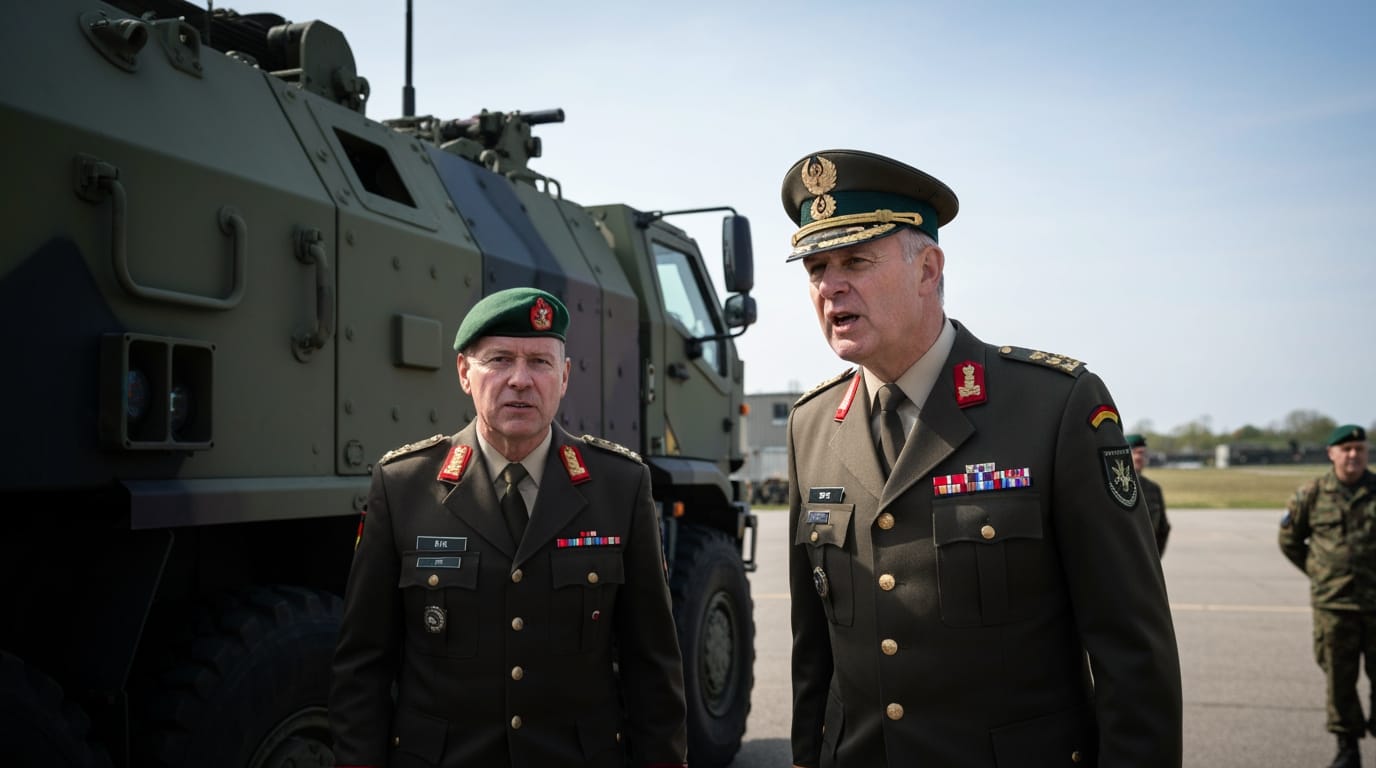
London and Berlin – February 16, 2026 – In an unprecedented joint appeal, the top military commanders of the United Kingdom and Germany have issued a stark warning, calling for a rapid and substantial rearmament across Europe to counter an escalating threat from Russia. Air Chief Marshal Sir Richard Knighton, the UK's Chief of the Defence Staff, and General Carsten Breuer, Germany's Chief of Defense, emphasized a "moral case" for increased defense spending, asserting that "strength deters aggression, weakness invites it." Their joint statement, published in both the Guardian and Die Welt, underscores a profound shift in European security perceptions following Russia's invasion of Ukraine and recent intelligence assessments of a potential wider conflict.
The extraordinary intervention, coming on the heels of the annual Munich Security Conference, highlights a growing consensus among European defense leaders that the continent must fundamentally rethink its military posture and investment strategies. Both military chiefs stressed that Russia's military stance has "shifted decisively westward" and its forces are actively rearming and reorganizing, posing an increased risk to NATO member states. This call for a collective "step change" in European defense and security signals a departure from decades of post-Cold War "peace dividend" policies, where defense budgets were often reduced in favor of public services.
The Imperative for a Stronger Europe
The joint letter from Knighton and Breuer articulates a clear and present danger that necessitates a robust and immediate response. They assert that rearmament is not a call for war, but rather a "responsible action of nations determined to protect their people and preserve peace." This sentiment is echoed by assessments from other senior NATO officials, who estimate that Russia could rebuild its military forces to a level capable of launching an attack on NATO territory as early as 2029.
The military leaders underscored the critical importance of communicating this threat to the public, advocating for an "honest, continent-wide conversation" about the need for increased defense spending. They contend that a "whole-of-society defence" is essential, requiring resilient infrastructure, private sector involvement in research and development, and national institutions prepared to function under escalating threats. This comprehensive approach acknowledges that modern defense extends beyond uniformed personnel to encompass societal resilience and technological superiority.
Germany's Zeitenwende: A Historic Shift
Germany, historically cautious about military expansion since World War II, has embarked on a significant transformation in its defense policy, dubbed "Zeitenwende" (turning point) by Chancellor Olaf Scholz in February 2022. This initiative was launched in direct response to Russia's full-scale invasion of Ukraine, signaling an overhaul of the nation's defense strategy and a commitment to increased military investment.
As part of this historic shift, Germany pledged a €100 billion special fund to modernize its armed forces, the Bundeswehr, which had faced decades of underfinancing and equipment shortfalls. This fund is instrumental in enabling Germany to meet NATO's target of spending 2% of its Gross Domestic Product (GDP) on defense, a benchmark it achieved for the first time in 2024 since 1992. Looking ahead, Germany plans to substantially increase its defense budget, with projections suggesting it could surpass €152 billion by 2029, potentially reaching 3.5% of GDP. General Breuer has issued a directive mandating full rearmament of the Bundeswehr by 2029, focusing on modern weapons, increased ammunition stockpiles, and enhanced electronic warfare capabilities. Furthermore, Germany is permanently stationing a combat brigade of 4,000-5,000 troops on NATO's eastern flank, reinforcing its commitment to collective security.
The United Kingdom's Defense Resurgence
The United Kingdom is also undertaking a significant resurgence in its defense capabilities. Prime Minister Keir Starmer announced the largest increase in UK defense spending since the Cold War, committing to raise the defense budget to 2.5% of GDP by April 2027, with aspirations to reach 3% in the subsequent parliamentary term. Some reports indicate a target of 2.6% of GDP from 2027. Long-term ambitions project defense spending could reach 5% of GDP by 2035, encompassing traditional military outlays and a broader "whole of society" resilience budget.
The UK government is investing more than £400 million this financial year in long-range precision and hypersonic weapons, including joint development programs with European allies such as France, Germany, and Italy. These initiatives aim to enhance NATO deterrence and improve the UK's capability to engage high-value targets. Additionally, the UK is deploying a carrier strike group to patrol the Arctic, a move prompted by concerns over Russian and Chinese influence in the High North. General Sir Roly Walker, Chief of the British Army, has also highlighted the urgency, warning of a potential "flashpoint" in 2027-2028 due to Russian rearmament, China's posture toward Taiwan, and Iran's nuclear ambitions. He has called for doubling the UK's combat power within three years and tripling it by the end of the decade, emphasizing the need for an "internet of military things" to enhance detection and response capabilities.
Public Sentiment and the Path Forward
Despite the urgent appeals from military leaders and the evident geopolitical shifts, a significant challenge remains in securing full public backing for the necessary financial commitments. Polling in both Britain and Germany reveals a reluctance among voters to accept economic austerity, such as tax rises or spending cuts, to fund increased military expenditure. This hesitation persists even as majorities in both nations express concerns about the likelihood of a third world war within the next five years.
The joint statement from the UK and German defense chiefs serves as a crucial call to action, urging not only governments but also societies to acknowledge the evolving security landscape. Their emphasis on a "moral dimension" to rearmament attempts to frame increased military investment as a fundamental necessity for preserving peace and protecting national interests. As Europe grapples with heightened global instability, the decisions made regarding defense spending and strategic readiness will shape the continent's security for decades to come, demanding a careful balance between national priorities and collective defense.


