Europe's Economic Foundation Crumbles Under Persistent Drought, Driving Up Costs Across the Continent
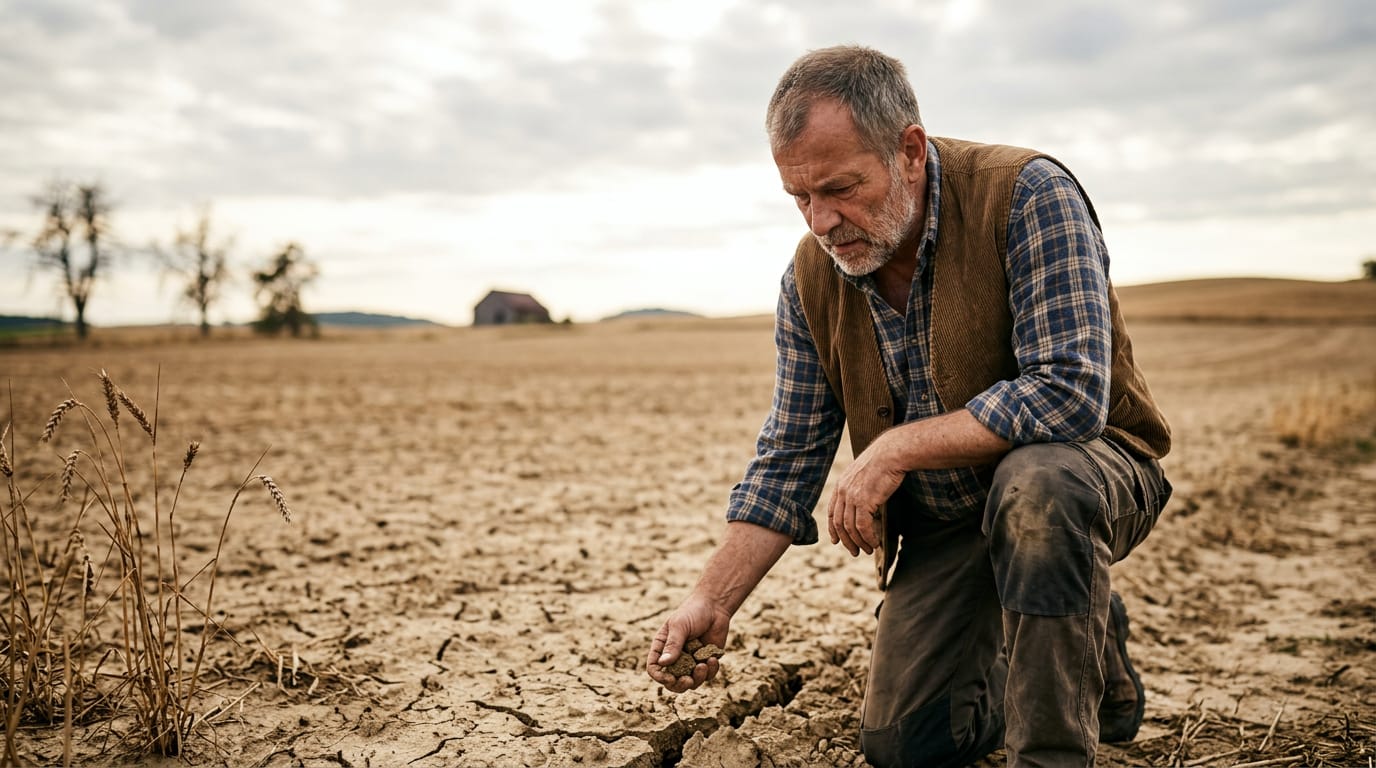
Europe, including its economic powerhouse Germany, faces an escalating crisis as prolonged and severe droughts exert immense pressure across multiple sectors, leading to significant economic losses and rising costs for businesses and consumers alike. The recurrent water scarcity, exacerbated by climate change, is disrupting critical supply chains, decimating agricultural yields, and straining energy production, underscoring a growing vulnerability in the continent's economic stability. Experts warn that the financial repercussions are already substantial, with projections indicating a drastic increase in costs if immediate and comprehensive adaptive measures are not implemented.
The Staggering Financial Toll of Water Scarcity
The economic impact of Europe's persistent drought conditions has reached hundreds of billions of euros, transforming what were once considered sporadic natural events into a chronic economic burden. The severe multi-year drought experienced across Europe from 2015 to 2018, for instance, is estimated to have cost the continent approximately €439 billion, significantly impacting GDP, investment, and employment for years following the events. More recently, the 2022 drought alone led to an estimated €203 billion reduction in the EU's GDP per capita growth, corresponding to a 1.35 percentage point decrease. Current assessments suggest direct losses from ongoing drought waves could exceed €50 billion, potentially escalating to around €180 billion when broader impacts such as wildfires and infrastructure disruptions are considered. Without aggressive climate action and adaptation strategies, annual drought losses across the EU and UK are projected to skyrocket from approximately €9 billion today to over €65 billion by 2100.
Rhine River's Retreat: A Chokehold on German Industry
Germany's industrial heartland, heavily reliant on its intricate network of inland waterways, is particularly vulnerable to the shrinking rivers. The Rhine, a vital artery for European freight, has repeatedly seen its water levels plummet to near-record lows, dramatically impeding navigation and driving up transport costs. At the crucial Kaub gauge, near Koblenz, levels have recently measured as low as 14 cm, slightly up from 5 cm earlier this week, but still critically low. Historically, a sustained period of 30 days with the Kaub gauge below 78 cm can lead to a 1% decrease in German industrial production. The Bundesbank has indicated that these low water levels are likely to temporarily impede Germany's economic growth, constraining industrial output and export growth due to limited transport routes and surging costs. The 2018 drought, for example, reduced Germany's GDP by 0.3 percentage points, and the current situation could have an even greater effect. Companies are forced to resort to more expensive and less efficient alternatives like rail and road, impacting supply chains and increasing inflationary pressures.
Agriculture Under Siege: Looming Food Price Hikes
The agricultural sector across Germany and wider Europe is facing severe challenges, translating directly into higher food prices for consumers. Persistent heatwaves and insufficient rainfall have led to widespread crop failures, reduced yields, and increased operational costs for farmers. In Germany alone, an estimated 3 million metric tons of grain and rapeseed have been lost since mid-June, resulting in approximately €600 million in revenue shortfalls. The German Farmers' Association forecasts a 7% decline in the country's grain harvest compared to last year. Across the EU and UK, wheat production is projected to fall by 24% this year, costing producers around €2 billion.
Beyond crop production, livestock farmers are grappling with feed shortages and rising costs, sometimes forcing them to sell animals prematurely. This confluence of factors places significant upward pressure on food prices. For instance, German food prices have already risen by over 36% since 2020, with poultry, dairy, eggs, fats, oils, and sugar seeing particularly strong increases. While some officials do not anticipate immediate sharp price increases, the cumulative effect of diminished harvests and higher production expenses is expected to be felt by consumers in the coming months.
Energy and Industry: Ripple Effects and Vulnerabilities
The drought's influence extends deeply into Europe's energy sector and broader industrial landscape. Low river levels directly reduce the capacity for hydropower generation, forcing countries to seek alternative, often more costly, energy sources. Furthermore, the availability of water for cooling systems crucial to nuclear and thermal power plants is compromised, leading to reduced operations or shutdowns in some instances. This strain on energy supply contributes to increased energy prices and heightened grid instability across the continent. While record solar power output has provided some stabilization during recent heatwaves, the underlying vulnerability remains.
Industries beyond agriculture and energy are also feeling the pinch. Manufacturing and construction sectors are particularly sensitive to consistent water availability and reliable supply chains. Delays in raw material transport and increased logistics costs due to river disruptions can halt production lines, creating cascading effects throughout the economy. Even data centers, integral to the digital economy, face mounting challenges as over a third of Europe's facilities are located in regions experiencing high water stress.
Adapting to a Climate-Altered Reality
The escalating economic costs associated with droughts highlight the urgent need for robust adaptation and mitigation strategies. European governments and the EU are actively monitoring the situation, supporting measures such as multi-risk insurance, drought adaptation projects, and investments in innovative irrigation techniques. Germany has temporarily eased truck driving bans to facilitate agricultural logistics in response to the crisis.
However, the scientific community underscores that these events are intrinsically linked to climate change, which is intensifying the frequency, severity, and duration of droughts, particularly in Southern and Western Europe. Limiting global warming to 1.5°C, coupled with aggressive adaptation, could significantly reduce the projected future economic losses. The current situation serves as a stark reminder that water scarcity is no longer a transient issue but a structural challenge that demands sustained investment in resilient infrastructure and climate-smart policies to safeguard Europe's economic future.