Europe's Energy Crossroads: Can Small Modular Reactors Power a Sustainable Future?

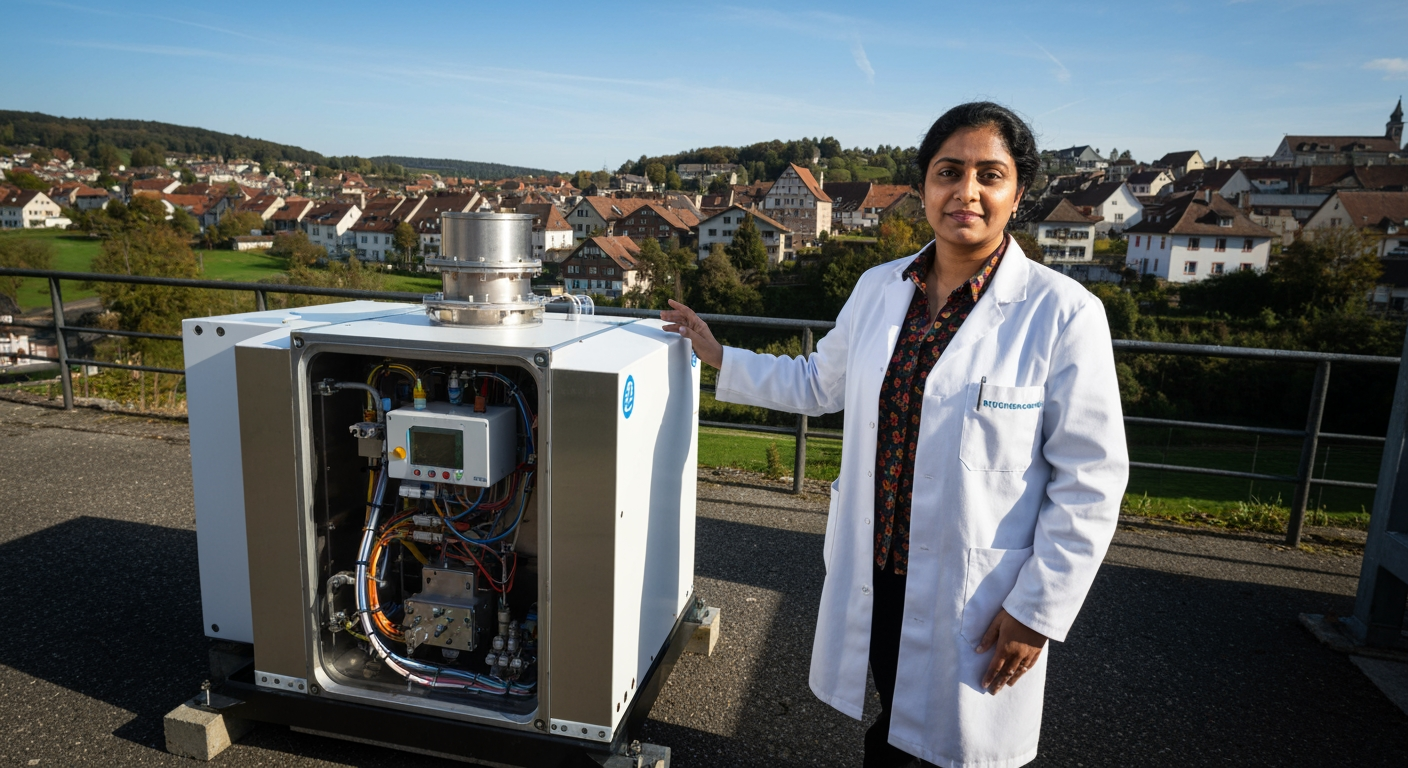
BRUSSELS — Europe faces a profound energy challenge, grappling with the dual imperatives of decarbonization and securing reliable power in a volatile geopolitical landscape. As the continent strives to reduce its reliance on fossil fuels and meet ambitious climate targets, a new generation of nuclear technology — Small Modular Reactors (SMRs) — is emerging as a potential, albeit debated, solution to these intricate energy woes. These compact nuclear power plants promise enhanced safety, flexible deployment, and a path to energy independence, yet they face significant hurdles in cost, regulation, and public acceptance, leaving a complex question mark over their ultimate role in Europe's energy mix.
Europe's Urgent Quest for Energy Stability
The continent's energy vulnerabilities have been starkly exposed in recent years, underscored by geopolitical tensions and the escalating urgency of climate change. Europe remains heavily dependent on imported fossil fuels, creating susceptibility to price volatility and supply disruptions. This reliance not only undermines energy security but also directly conflicts with the European Union's ambitious goal of achieving climate neutrality by 2050. The current energy crisis has prompted a renewed focus on diversifying energy sources and accelerating the transition to clean, homegrown power. Amidst this backdrop, the concept of nuclear energy, once viewed with skepticism by some, is experiencing a resurgence, with SMRs at the forefront of the discussion.
The Modular Promise: Advantages of SMR Technology
Small Modular Reactors represent a significant evolution in nuclear technology. Unlike their conventional predecessors, SMRs are designed to be smaller in size and power output, typically generating less than 300 MWe per unit. Their most distinguishing feature is modularity, allowing components to be factory-fabricated and then transported for assembly at a chosen site. This approach promises several key advantages.
Proponents highlight improved safety features, often incorporating passive safety systems that rely on natural forces like gravity and convection, thus minimizing the need for active intervention or external power in emergency situations. The modular design is also expected to lead to shorter construction schedules and potentially lower upfront investment costs compared to traditional large-scale nuclear power plants, reducing financial risk. Furthermore, SMRs offer considerable flexibility in their applications; beyond generating electricity, they can provide process heat for energy-intensive industries, district heating for urban areas, and even support the production of hydrogen and the desalination of water. This versatility positions SMRs as a potential tool for decarbonizing hard-to-abate sectors that are difficult to electrify. Crucially, SMRs are seen as a reliable, low-carbon, and dispatchable energy source that can complement the intermittency of renewable energy technologies like wind and solar, thereby enhancing grid stability.
Navigating the Hurdles: Costs, Regulation, and Competition
Despite the optimism surrounding SMRs, their widespread deployment in Europe faces considerable challenges. The economics of SMRs remain a significant point of contention. While they may offer lower capital costs per unit than large nuclear plants, current estimates suggest that SMRs are still substantially more expensive than utility-scale solar and wind power, particularly when measured by upfront construction costs and Levelized Cost of Electricity (LCOE). For instance, utility-scale solar can be built for approximately $1,150 to $1,600/kW, and onshore wind for $1,900 to $2,300/kW, whereas SMR capital costs can exceed $5,000/kW. The promise of cost reduction hinges on achieving economies of scale through serial production, which is yet to be realized as the technology is largely unproven at a commercial scale. Moreover, operating and maintenance costs for SMRs are anticipated to be higher than those for renewables, due to requirements for staffing, security, regulatory compliance, and nuclear fuel.
Regulatory complexities present another formidable barrier. Licensing processes across EU member states are often fragmented and can be lengthy and expensive, creating uncertainty for investors and delaying final investment decisions. The need for harmonized regulatory frameworks and streamlined approval processes is frequently highlighted as essential for SMR deployment to accelerate. Public perception and the long-standing issue of radioactive waste management also remain critical considerations. While SMRs are designed with enhanced safety features and are expected to produce less waste heat, the fundamental challenge of disposing of radioactive waste persists. Some critics argue that SMRs could even generate 2-30 times more radioactive waste than conventional plants per unit of energy.
Furthermore, the timeline for deployment is a practical concern. While the first SMR projects in Europe are targeted for the early 2030s, scaling up to contribute meaningfully to Europe's energy needs will take many years, if not decades. Some experts argue that SMRs, still being in advanced design stages with no licensed units operating in OECD countries, are an "expensive and risky distraction" from rapidly deploying already mature and cheaper renewable energy capacity. Germany's Federal Ministry for the Environment, for example, has expressed caution, stating that SMRs are unlikely to make significant contributions to energy security or climate protection in the short term.
Europe's Strategic Push: Investment and National Ambitions
Despite these challenges, the European Union is actively pursuing SMR technology as a strategic industrial project. In March 2026, the European Commission adopted a comprehensive strategy aimed at accelerating the development and deployment of SMRs across the continent. This initiative seeks to bring the first operational SMRs online in Europe by the early 2030s, with preliminary assessments suggesting that total SMR capacity in the EU could reach between 17 GW and 53 GW by 2050.
To facilitate this, the Commission has committed to mobilizing up to €200 million from the EU Emissions Trading System (ETS) by 2028 to support innovative nuclear technologies, including SMRs. This funding is intended to de-risk investments and encourage private capital flow into the sector. A key component of the EU's strategy is the European Industrial Alliance on SMRs, established in 2024, which brings together industry, research institutions, and public authorities to coordinate efforts and develop a resilient European supply chain.
Several European nations are also individually advancing their SMR ambitions. France, a long-standing nuclear power, is a strong advocate for including nuclear energy in Europe's decarbonization strategy and plans to build new reactors. Central and Eastern European countries, such as Poland, Romania, Czechia, Slovenia, and Bulgaria, are particularly active, driven by the need to diversify from carbon-intensive energy sources and enhance energy independence. Romania, for example, has a strategic partnership with a US nuclear company to build an SMR facility, aiming for operation by 2029. The United Kingdom is also expanding its nuclear capacity with SMRs as a key part of its strategy.
A Complex Equation for a Decarbonized Future
The question of whether Small Modular Reactors can solve Europe's energy woes is not easily answered with a simple yes or no. SMRs offer a compelling vision of a future with secure, low-carbon, and flexible energy, capable of complementing intermittent renewables and addressing the needs of hard-to-decarbonize sectors. The strategic push from the European Commission and individual member states underscores a growing recognition of nuclear power's potential role in achieving climate targets and bolstering energy independence.
However, significant economic, regulatory, and technical hurdles remain. The current cost disadvantage compared to renewables, the absence of commercial-scale deployment, and the complexities of waste management and licensing demand careful consideration and substantial investment to overcome. SMRs are not a panacea but rather a potential piece of a much larger, intricate energy puzzle. A truly resilient and decarbonized European energy system will likely integrate a diverse portfolio of technologies, with renewables forming the backbone, supported by reliable, dispatchable sources like SMRs, along with robust energy storage and modernized grids. The path forward requires sustained political will, coordinated regulatory action, and ongoing innovation to balance immediate energy needs with long-term climate and security objectives.
Sources
- cepa.org
- defence24.com
- nstopenresearch.org
- theconservative.online
- iai.it
- nucnet.org
- europa.eu
- europeanrelations.com
- europa.eu
- medium.com
- linklaters.com
- aa.com.tr
- fundalib.org
- sustainability-directory.com
- larkscientific.org
- rethinkingsecurity.org.uk
- nucnet.org
- eureporter.co
- sciencebusiness.net
- enlit.world
- table.media
- pinsentmasons.com
- europa.eu
- trendingtopics.eu
- bakermckenzie.com
Related Articles


The Regulatory Maze: Why Taming Social Media Harms Remains an Elusive Quest
The digital public square, once heralded as a beacon of connection and information, has increasingly become a battleground rife with misinformation, hate speech, cyberbullying, and threats to mental health. Despite...


Gamescom 2026: Industry Thrives Amid Record Success, Grapples with AI's Transformative Power
COLOGNE, GERMANY – Gamescom 2026, the world's largest video game trade fair, concluded its latest edition with resounding success, demonstrating the enduring vitality and economic strength of the global gaming industry....

Volkswagen's Defining Moment: Restructuring Talks Poise to Reshape German Automotive Landscape
Wolfsburg, Germany – Europe's largest automaker, Volkswagen, stands at a critical juncture, facing what its CEO, Oliver Blume, has termed a "more than critical" situation. Intense internal discussions, dubbed "crunch...