Europe's Green Surge vs. America's Fossil Fuel Might: A Global Energy Showdown

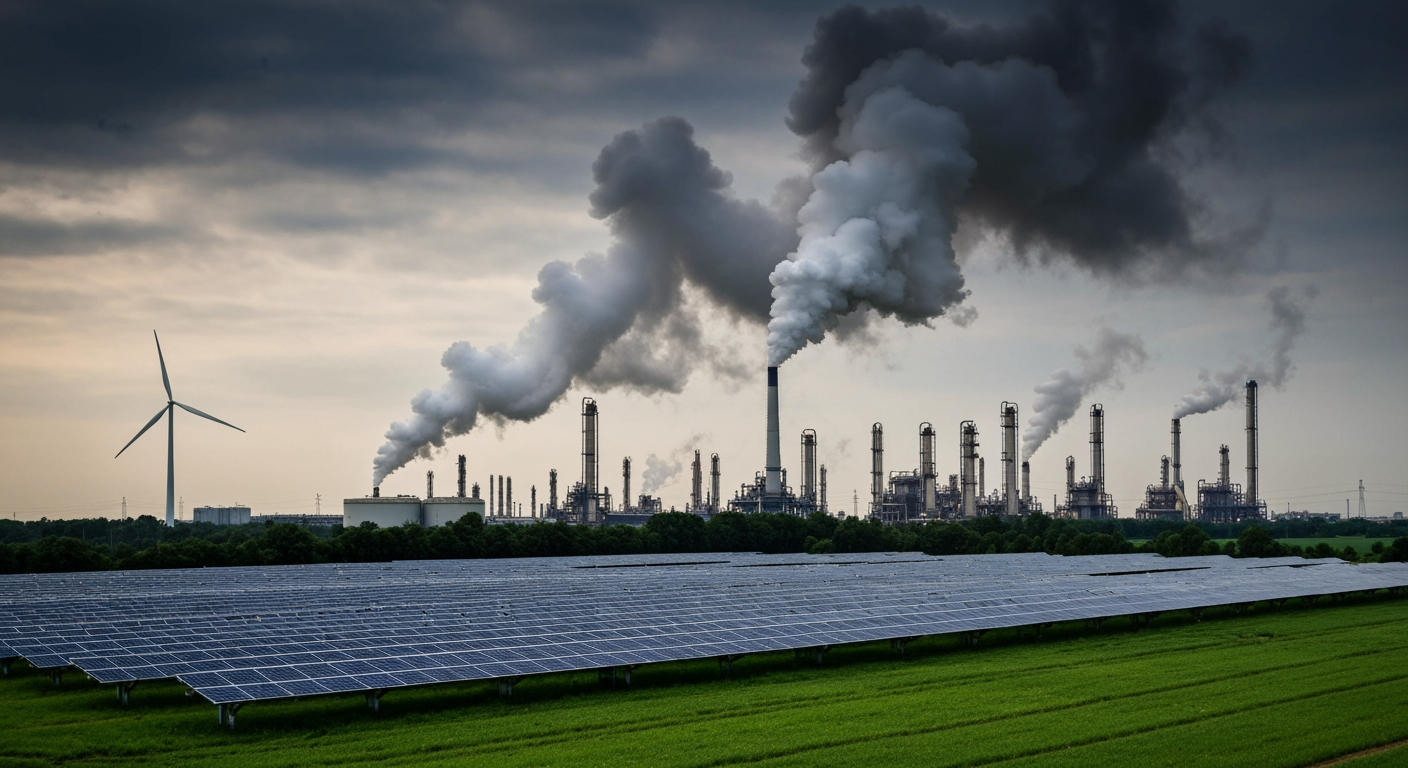
The global energy landscape is undergoing a profound transformation, marked by two fundamentally different approaches to power generation and economic development. On one side, the European Union is vigorously pursuing an ambitious clean energy transition, aiming for climate neutrality and energy independence through renewables. On the other, the United States, a powerhouse of oil and natural gas production, continues to leverage its vast fossil fuel resources to maintain energy dominance. This divergence sets the stage for a critical question: Can Europe's rapidly expanding renewable sector ultimately outmuscle America's established oil and gas industry in shaping future global energy dynamics? The trajectories of these two economic giants carry significant implications for environmental targets, geopolitical stability, and industrial competitiveness worldwide.
Europe's Ambitious Green Transformation
Driven by a dual imperative of combating climate change and enhancing energy security, particularly after recent geopolitical events, the European Union has embarked on a comprehensive and accelerated shift toward renewable energy sources. The bloc's overarching goal, enshrined in the European Green Deal, is to achieve climate neutrality by 2050. Intermediate targets are equally ambitious, with a binding commitment to increase the share of renewables in its energy mix to at least 42.5%, and aspiring to 45%, by 2030. This strategic pivot gained significant momentum with the REPowerEU plan, designed to swiftly reduce reliance on Russian fossil fuels and further accelerate the clean energy transition.
Significant progress is already evident in Europe's electricity sector. In 2024, renewable sources generated a record 47% of the European Union's electricity, demonstrating a marked shift away from traditional fossil fuels. Notably, solar power generation surpassed coal for the first time, and wind energy produced more electricity than gas for the second consecutive year. When combined with nuclear power, low-carbon sources accounted for approximately 71% of the EU's electricity in 2024. This momentum is backed by substantial financial commitments, with an estimated €260 billion in additional annual investment required from both public and private sectors to meet the 2030 climate and energy targets. The EU has also allocated at least 30% of its long-term budget and the Next Generation EU instrument to climate action. Policies under the REPowerEU plan aim to deploy over 600 GW of solar photovoltaic capacity by 2030 and double the deployment rate of individual heat pumps. The transition is projected to create 3.5 million jobs by 2030 across various renewable energy sectors.
America's Sustained Fossil Fuel Power
In stark contrast to Europe's green trajectory, the United States has solidified its position as the world's leading producer of oil and natural gas. This dominance is largely attributed to technological advancements such as hydraulic fracturing and horizontal drilling, which have unlocked vast shale resources. In December 2024, US oil production averaged 13.4 million barrels per day, while natural gas production reached 128.8 billion cubic feet per day. The nation has also become a net exporter of oil and petroleum products since August 2021, with crude oil exports setting a new record in 2024, exceeding an annual average of 4.1 million barrels per day. Europe has emerged as a significant destination for these US crude oil exports, particularly after Europe's ban on seaborne crude oil imports from Russia in late 2022.
US energy policy, particularly under recent administrations, has often emphasized "energy dominance," prioritizing increased domestic fossil fuel production and exports. This approach aims to secure domestic energy needs, lower consumer prices, and enhance geopolitical leverage. While the Biden administration has also focused on clean energy investments and emissions reductions, it has simultaneously overseen record-high oil and gas production, reflecting a complex interplay of energy priorities. The consistent growth in liquefied natural gas (LNG) exports since 2016 further underscores America's role in global fossil fuel markets, driven by international demand and expanded infrastructure.
Divergent Paths, Shared Hurdles
Both the EU's renewable acceleration and the US's fossil fuel entrenchment face distinct yet formidable challenges. For Europe, the rapid scaling of renewables encounters obstacles such as the intermittency of sources like wind and solar, necessitating significant investments in energy storage solutions and grid modernization. The European Investment Bank estimates a need for €1 trillion for grid upgrades by 2030 to accommodate a renewables-heavy energy system. Supply chain vulnerabilities, particularly a heavy reliance on Chinese suppliers for solar panels, and a shortage of skilled professionals also pose considerable hurdles. Additionally, lengthy permitting processes and grid connection bottlenecks impede the swift deployment of new projects.
The US oil and gas industry, despite its current strength, confronts long-term sustainability questions. Projections indicate a potential decline in US oil and gas production by approximately 1.7 million barrels of oil equivalent per day between 2035 and 2040, even as low-carbon energies expand globally. Maintaining current production levels requires continuous innovation and significant investment to offset natural declines in existing reserves. The industry also grapples with increasing environmental regulations, volatile market prices influenced by geopolitical events, and challenges in attracting a new generation of skilled workers amidst a global shift away from fossil fuels.
Geopolitical and Economic Repercussions
The diverging energy strategies of the EU and the US carry profound geopolitical and economic implications. For the EU, the energy transition is not merely an environmental goal but a geopolitical necessity aimed at strengthening energy security and strategic autonomy. Reducing dependence on imported fossil fuels mitigates exposure to volatile international markets and hostile energy suppliers. However, this shift introduces new geopolitical challenges, notably competition for critical minerals essential for clean energy technologies and questions of control over these supply chains. Economically, the Green Deal is framed as a new growth model, promoting green re-industrialization and fostering innovation.
The United States, by contrast, views its fossil fuel dominance as a source of national leverage and a tool to influence global energy markets. Continued robust oil and gas production allows the US to meet domestic demand and supply allies, potentially limiting price spikes and offering strategic flexibility. However, as the world increasingly moves towards decarbonization, the long-term economic viability and geopolitical influence derived from fossil fuels could be challenged. The global energy transition pushes oil and gas companies to adapt to stricter environmental standards and invest in cleaner technologies to remain competitive.
The Future of Energy Leadership
The race between European renewables and US oil and gas represents a critical juncture in global energy. The EU is making significant strides in decoupling economic growth from emissions, having reduced greenhouse gas emissions by 32.5% since 1990 while growing its economy by nearly 70%. Its commitment to achieving 70% renewable electricity by 2030 will necessitate doubling wind power installations and sustaining record solar capacity expansion. Meanwhile, the US electricity sector still derives approximately 60% of its power from coal and gas, with only about 21% from renewables, highlighting a substantial difference in energy mixes.
Ultimately, the question of whether EU renewables can "outmuscle" US oil and gas is not about a simple zero-sum game, but rather about which energy paradigm will prove more resilient, sustainable, and influential in the coming decades. Europe is investing heavily in a future powered by indigenous clean energy, aiming for self-sufficiency and climate leadership, though facing significant infrastructure and supply chain hurdles. The US maintains a powerful position in conventional energy, providing stability in a volatile market while navigating the pressures of a global transition. Both regions are engaged in complex, multi-faceted energy transformations, each with the potential to redefine their economic strength and geopolitical standing in a rapidly evolving world.
Related Articles


Global Waters Under Threat: Can the World's Declining Lakes Be Restored?
Lakes around the world, vital reservoirs of freshwater and biodiversity, are shrinking at an alarming rate, posing significant environmental, economic, and human health crises. More than half of the planet's largest...


Urban Canopies: Cities' Green Guardians Battling the Heat, Yet Facing Their Own Fight for Survival
As global temperatures continue their relentless climb, cities worldwide are grappling with an escalating "urban heat island" effect, transforming concrete jungles into oppressive ovens. Amidst this challenge, urban...