Desert Sun: The Promise and Paradox of Powering the World from Arid Lands
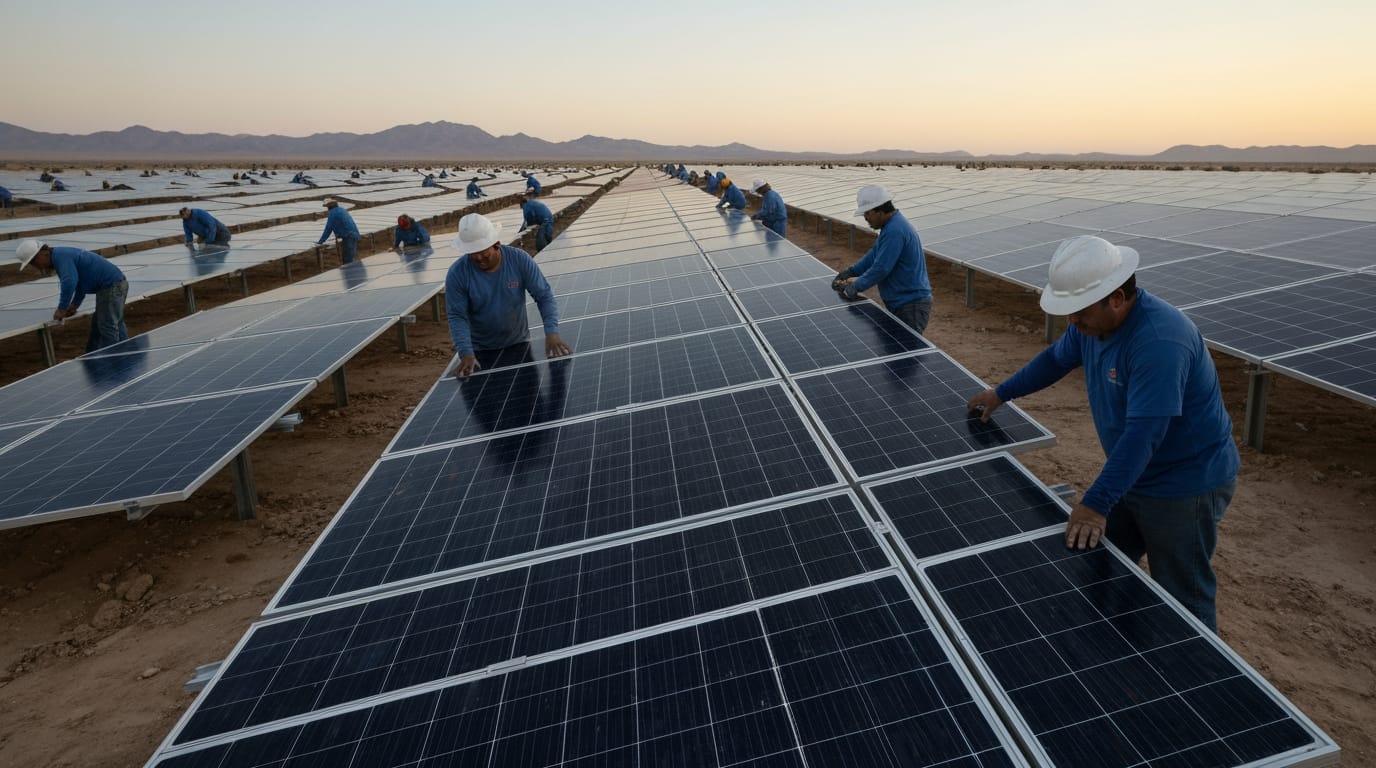
The world's deserts, once viewed as barren frontiers, are increasingly being eyed as critical battlegrounds in the global fight against climate change. With vast, uninhabited expanses bathed in relentless sunlight, these arid regions present an unparalleled opportunity to harness solar energy on an enormous scale, potentially transforming the global energy landscape. Yet, this promise comes intertwined with a complex paradox: the very conditions that make deserts ideal for solar power also present formidable environmental, engineering, and socio-economic challenges, complicating the clean energy transition.
The Irresistible Lure of the Sun-Drenched Sands
The appeal of desert solar is undeniably powerful, rooted in fundamental geographic and climatic advantages. Deserts receive some of the highest solar irradiance on Earth, with regions like the Sahara basking in 10 to 13 hours of sunlight daily, translating to intense solar radiation often ranging from 2,500 to 2,800 kilowatt-hours per square meter annually. This far surpasses the levels seen in many temperate regions, making deserts natural powerhouses for photovoltaic (PV) and concentrated solar power (CSP) technologies.
Beyond abundant sun, deserts offer immense, relatively flat land that is often considered unsuitable for residential or agricultural development, making it prime real estate for utility-scale solar farms. Projects such as India's Bhadla Solar Park, spanning 22 square miles with over 10 million PV panels, and California's 3,900-acre Desert Sunlight Solar Farm, illustrate the potential for massive installations capable of generating gigawatts of clean electricity. Proponents highlight that covering just 1.2% of the Sahara Desert with solar panels could theoretically generate enough energy to meet the world's entire electricity demand. Such large-scale development is also seen as a catalyst for local job creation and economic growth, particularly in developing regions of Africa and India seeking to expand energy access and industrial consumption.
Engineering Against the Elements: A Harsh Reality
Despite the inherent advantages, deploying solar technology in deserts is far from straightforward. The very environment offering plentiful sunshine simultaneously imposes severe operational and logistical hurdles. High ambient temperatures, often exceeding 45°C, significantly degrade the efficiency of solar panels. For every degree Celsius above 25°C, panel efficiency can drop by 0.3% to 0.5%, leading to substantial performance losses (10-25%) during peak generation hours. Prolonged exposure to such extreme heat also accelerates material degradation, potentially shortening a panel's lifespan by 4 to 8 years.
Dust and sandstorms pose another persistent threat. A thin layer of dust can reduce energy yield by 15% to 30% if not regularly cleaned, while abrasive sand particles, propelled by high winds, can permanently damage anti-reflective coatings and glass surfaces, reducing long-term efficiency. The scarcity of water in arid regions complicates the traditional, water-intensive cleaning methods, necessitating expensive dry-cleaning techniques or advanced robotic systems.
Furthermore, desert locations are typically remote, far removed from urban and industrial centers where electricity is consumed. This geographical disconnect necessitates the construction of extensive and costly transmission infrastructure. Long-distance power lines are expensive to install and maintain, contributing significantly to overall project costs. For instance, some estimates suggest that transmission-related expenses can increase direct costs by 3% to 33%, with the Noor Ouarzazate complex in Morocco allocating approximately 12% of its budget solely to grid connection. The absence of existing infrastructure like roads and storage facilities further inflates construction and maintenance expenses, while harsh working conditions make it difficult and costly to attract and house labor.
The Environmental Footprint: A Localized Cost
The expansion of desert solar, while aimed at mitigating global climate change, introduces its own set of environmental challenges at the local level. Large-scale solar installations require vast tracts of land, leading to habitat fragmentation and the displacement of desert wildlife, including endangered species like the desert tortoise, Mojave fringe-toed lizards, and bighorn sheep. The construction process can disrupt fragile desert soil crusts, which are vital for preventing erosion and supporting plant life, with regeneration potentially taking decades. The removal of ancient, carbon-sequestering plants, such as Mojave yuccas and creosote bushes, can release millennia of stored carbon back into the atmosphere, creating a localized environmental setback to the broader climate goal.
Beyond direct habitat impact, solar farms can alter local microclimates. The darker surfaces of solar panels absorb more solar radiation than the naturally reflective desert soil, leading to increased ambient temperatures. Studies indicate that PV plants can raise daytime air temperatures by 0.7°C to 3°C and nighttime temperatures by 0.1°C. This localized warming can have broader meteorological consequences, potentially influencing regional weather patterns and even rainfall in distant areas, such as causing droughts in the Amazon. Water usage for panel cleaning and other operations, though reduced by modern techniques, remains a concern in already water-stressed regions, sometimes leading to the drying up of local wells and contributing to water conflicts. Community opposition and "Not In My Backyard" (NIMBY) sentiments often arise due to concerns over environmental damage, dust, noise, and perceived impacts on property values and local livelihoods.
Forging a Sustainable Path Forward
Addressing the paradox of desert solar requires a multi-faceted approach, integrating advanced technological innovation with thoughtful environmental stewardship and community engagement. Significant advancements are being made in developing solar panels specifically engineered for harsh desert conditions, featuring enhanced thermal tolerance, robust protective layers against sand abrasion, and materials designed for minimal degradation. Innovations in cleaning technology, such as dust-resistant coatings and water-free robotic cleaning systems utilizing pressurized air, are crucial for maintaining efficiency in arid environments. Remote monitoring via IoT and cloud services also enables optimized operations without constant human presence.
Ecological integration strategies are also gaining traction. Strategic placement of native, drought-resistant vegetation can serve as natural windbreaks, reduce dust accumulation, and provide shading and cooling through evapotranspiration, while also creating vital wildlife corridors. Advanced drip irrigation and rainwater harvesting systems are being explored to minimize water consumption. Intriguingly, some recent research suggests that large solar farms might even positively influence local ecosystems, fostering vegetation growth and generating localized rainfall by creating thermal updrafts that induce cloud formation, potentially "greening" portions of the desert.
However, the success of desert solar projects ultimately hinges on comprehensive environmental impact assessments and adaptive management strategies that prioritize both energy generation and ecological preservation. Overcoming "non-technical risks" such as interconnection bottlenecks, complex water rights, and community opposition is proving as critical as technological prowess.
The vision of deserts as global powerhouses remains compelling, offering a critical pathway to a carbon-free future. The journey, however, demands more than just harnessing sunlight; it requires navigating a delicate balance between immense promise and inherent paradox, ensuring that the pursuit of clean energy does not inadvertently create new environmental and social burdens. With continued innovation, careful planning, and a commitment to sustainable development, desert solar can fulfill its potential as a cornerstone of the world's energy transition.