Europe's Lifelines Falter: Continent Grapples with Drying Rivers Amid Climate Crisis

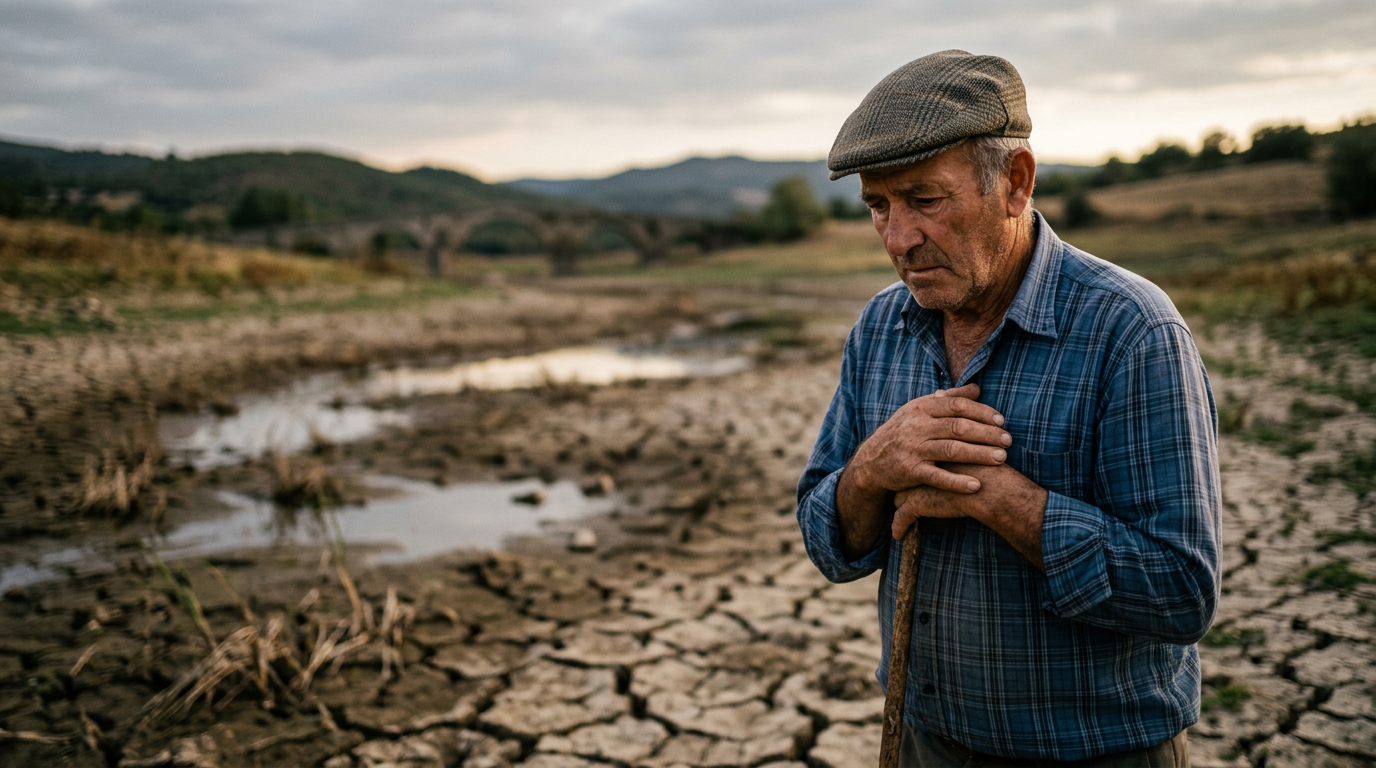
Europe's vital rivers, the historical arteries of its economy and ecosystems, are in critical condition, with many experiencing unprecedented low water levels. A confluence of severe heatwaves, prolonged droughts, and historical water mismanagement, intensified by climate change, has left major waterways like the Rhine and Danube struggling, triggering cascading crises across industry, energy, and agriculture. The situation demands urgent, comprehensive strategies to safeguard the continent's water security and mitigate the long-term impacts of a rapidly changing climate.
The Alarming Decline of Europe's Waterways
The scale of Europe's water crisis is stark, with significant portions of the continent experiencing water scarcity. On average, approximately 30% of the European Union's territory and 34% of its population are affected by water scarcity conditions annually. In 2023, 28% of EU land and 32% of its population faced such conditions during at least one season, even with a relative increase in rainfall that year. Southern Europe faces perpetual water stress, impacting up to 70% of its population seasonally. Despite a 14% reduction in water abstraction across the EU between 2000 and 2023, the overall area affected by water scarcity has not decreased, with the situation intensifying since 2010.
Iconic rivers like the Rhine and the Danube, crucial for industry and trade, have repeatedly reached record low levels. The Rhine, a key commercial waterway, saw water levels at Kaub, a vital chokepoint, plummet to 25 centimeters, nearing the lowest recorded level since 1880. Similarly, the Danube, Europe's second-longest river, has registered record lows in countries like Hungary, with Budapest seeing levels as low as 4 inches. These dramatic reductions are visible even from space, revealing vast stretches of exposed riverbeds and sandbars normally submerged.
The primary driver behind this escalating crisis is climate change, manifesting as more frequent and intense heatwaves and prolonged droughts across the continent. Reduced snow and glacier runoff from the Alps, a critical water source in late summer for rivers like the Rhine, further exacerbates the problem. Additionally, scientists point to a weakened European jet stream contributing to sustained hot, dry periods. Beyond climate impacts, centuries of human activity, including damming, dredging, diverting, and polluting rivers, have weakened Europe's freshwater ecosystems, making them more vulnerable to drought conditions. This historical mismanagement has significantly degraded the natural resilience of these vital waterways.
Economic and Environmental Fallout
The diminishing flow of Europe's rivers carries severe economic and environmental repercussions. The commercial navigation sector has been particularly hard hit. On the Rhine and Danube, barges are compelled to reduce their cargo loads by as much as 80% to navigate shallow waters, leading to a surge in freight costs and significant disruptions to supply chains. This has impacted industries from chemicals to oil products, with companies like BASF in Germany having to scale back production due to limited river access for transport. Economists estimate that low Rhine water levels could reduce Germany's third-quarter GDP by 0.1 to 0.2 percent, highlighting the substantial economic pain caused by dwindling rivers.
The energy sector also faces immense challenges. Rivers are essential for cooling thermal power plants and generating hydropower. Low water levels have forced nuclear power plants, such as Hungary's Paks facility and Romania's Cernavodă plant, to reduce output or shut down completely due to insufficient cooling water. For instance, Hungary's Paks plant, which supplies nearly half of the country's electricity, operated at less than 50% capacity and faced a complete shutdown, triggering concerns about an energy crisis. Austria has also seen its run-of-river hydropower plants generate 30% less electricity than usual.
Agriculture, a major consumer of freshwater, is under immense pressure. Droughts directly lead to crop losses and threaten food security, especially in southern Europe where agriculture places significant demands on water resources. The drying of rivers also has profound ecological consequences, threatening biodiversity, degrading water quality, and disrupting fragile wetland ecosystems across the continent.
Forging a Path Forward: Water Management Strategies
Addressing Europe's drying rivers requires a multi-pronged approach encompassing demand-side management, infrastructure improvements, and nature-based solutions. A core focus must be on enhancing water efficiency across all sectors.
In agriculture, which accounts for a substantial portion of water abstraction, significant savings are achievable. Modern techniques such as drip irrigation and micro-sprinklers deliver water directly to plant roots, minimizing waste from evaporation and runoff. Studies indicate drip irrigation can reduce water consumption by up to 60% while improving yields. Rainwater harvesting, the cultivation of drought-resistant crops, and the use of soil moisture sensors for precise irrigation scheduling are also critical. The potential for water savings in irrigated agriculture alone is estimated to be up to 20% of total water abstraction, with individual measures like switching to drip irrigation offering 10-40% savings.
For industrial and public use, strategies include reducing losses and leakages in water distribution systems, implementing water-saving technologies in buildings, and increasing wastewater reuse. The European Commission has set an EU-wide target to enhance water efficiency by at least 10% by 2030, encouraging Member States to set their own ambitious targets. Investments in robust water storage techniques, such as strategically placed reservoirs, are also vital to secure supplies during dry periods. While desalination and advanced wastewater recycling offer alternative water sources, their energy requirements and potential environmental impacts necessitate careful consideration.
Nature-based solutions (NbS) are gaining recognition as a cost-effective and environmentally beneficial approach. These involve restoring natural ecosystems like wetlands, floodplains, and riparian zones, reforesting riverbanks, and promoting river naturalization. Such measures not only help retain water in landscapes and replenish groundwater but also enhance biodiversity, improve water quality, and mitigate flood risks. For instance, healthy wetlands can filter pollution and buffer floodwaters, while riparian vegetation helps keep water bodies cool and sequester carbon.
Policy, Governance, and Cross-Border Cooperation
Effective policy frameworks and robust governance are indispensable for navigating Europe's water crisis. The EU Water Framework Directive plays a pivotal role, aiming for the sustainable use and long-term protection of available water resources, ensuring a good quantitative status of groundwater, and achieving good ecological status for surface waters. River restoration efforts are also supported by the European Green Deal and broader EU climate adaptation policies. The recently introduced European Water Resilience Strategy aims to restore and protect the water cycle, foster a water-smart economy, and ensure access to clean and affordable water.
Crucially, given that over 60% of Europe's freshwater resources are shared across national borders, transboundary cooperation is paramount. Initiatives like the Joint Cooperation programme on Applied scientific Research (JCAR) foster long-term partnerships among European knowledge institutes to improve integrated planning and management of regional transboundary river basins, specifically addressing flood and drought management. Sharing meteorological and hydrological data, establishing early warning systems, and coordinated water policies among EU countries are essential for regional solidarity and effective drought preparedness.
Technological advancements offer powerful tools for smart water management. Investments in artificial intelligence (AI) solutions, sensors for real-time monitoring of water quality and quantity, and advanced analytical software can optimize resource use and provide precise planning for irrigation and other water demands. These innovations are vital for creating a truly water-smart continent.
Securing Europe's Water Future
Europe's drying rivers represent a profound and multifaceted challenge, demanding immediate and sustained action. The confluence of climate change, historic mismanagement, and increasing demand has pushed the continent's vital waterways to their limits, threatening economic stability, energy security, and ecological integrity. While the impacts are far-reaching, a clear path forward is emerging, rooted in a combination of technological innovation, policy reform, and a renewed commitment to nature.
By prioritizing water efficiency in agriculture and industry, investing in resilient infrastructure, and embracing nature-based solutions to restore natural water cycles, Europe can build greater resilience against future droughts and heatwaves. Furthermore, robust transboundary cooperation and the full implementation of existing and new EU water policies are crucial for coordinating efforts across a continent defined by shared water resources. The future of Europe's rivers, and the well-being of its people and ecosystems, hinges on the collective will to adapt, innovate, and restore these essential lifelines.
Sources
- hpacenter.org
- europa.eu
- emwis.org
- europa.eu
- insurancejournal.com
- kvia.com
- theweek.com
- japantimes.co.jp
- europa.eu
- europa.eu
- genesiswatertech.com
- wwf.eu
- theguardian.com
- insideclimatenews.org
- ecologic.eu
- taste-europe.asia
- ewra.net
- preventionweb.net
- europa.eu
- therrc.co.uk
- freshwaterblog.net
- iurc.eu
- ecrr.org
- europa.eu
- internationalwaterlaw.org
- netherlandsandyou.nl
- gwpo-gwp.org
Related Articles

Record-Shattering Summer of 2023 Signals New Climate Reality, Defying Claims of Normalcy
GENEVA, SWITZERLAND – The summer of 2023 was anything but "normal," marked by an unprecedented cascade of extreme weather events and record-breaking temperatures across the globe, according to leading international...

Global Eco-Innovations Highlight Path to Sustainable Future
Across the globe, innovative approaches to environmental challenges are demonstrating tangible successes, offering a beacon of hope in the ongoing fight against climate change. From high-tech indoor farming in the...


Global Green Shoots: Hungary Embraces Solar, Marmots Stage Comeback, and Rome Reinvents Urban Living
In a world grappling with persistent environmental challenges, recent developments across Europe and North America offer a compelling narrative of progress, innovation, and resilience. From Hungary's unexpected ascent...