Europe's Quest for Defense Self-Reliance Intensifies Amidst Global Power Shifts
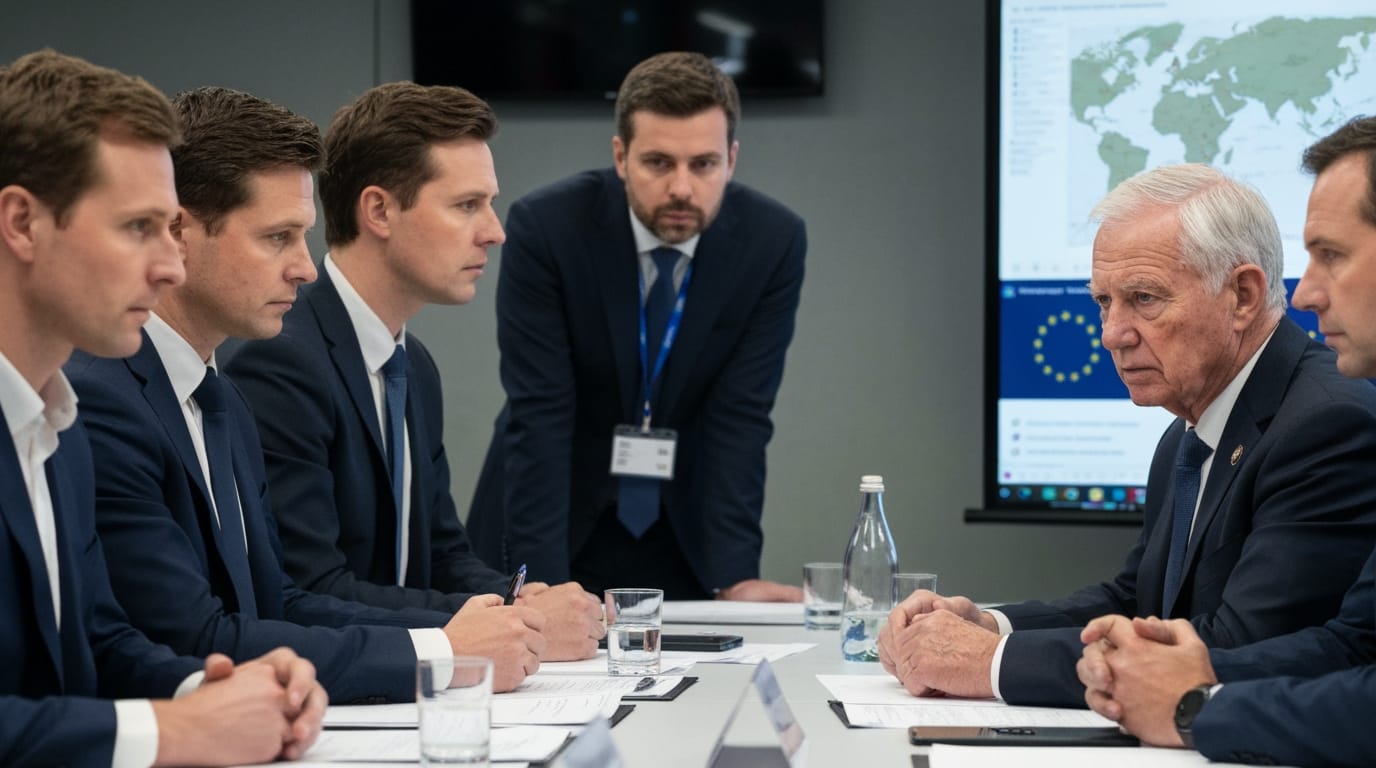
Brussels, Belgium – The European Union is embarking on an ambitious and costly transformation of its defense capabilities, spurred by a volatile geopolitical landscape and a growing realization of its deep reliance on external powers, predominantly the United States and, to a lesser extent, the burgeoning military might of China. This push for "strategic autonomy" signifies a fundamental shift in European security policy, aiming to foster an independent capacity to protect its interests and respond to threats without overwhelming dependence on allies.
The war in Ukraine, raging on Europe's doorstep, served as a stark catalyst, exposing critical vulnerabilities and underscoring the urgency for the bloc to develop its own robust defense industrial base. Compounding these concerns are statements from prominent U.S. political figures, which have intensified discussions regarding the reliability of collective defense guarantees, particularly NATO's Article 5. Europe finds itself in a precarious bind, where its economic prosperity is closely tied to Chinese supply chains, while its security has historically been deeply intertwined with the United States.
The Imperative of Autonomy: Responding to a Changing World
For decades, many European nations benefited from a "peace dividend" following the Cold War, leading to a decline in defense spending and a reliance on the U.S. for advanced military capabilities. This era saw European defense policy largely relegated to the periphery. However, Russia's full-scale invasion of Ukraine in 2022 fundamentally altered this perspective, moving security and defense back to the forefront of European political discourse. The conflict highlighted Europe's shallow defense stocks and an industrial base ill-equipped to meet the demands of large-scale, high-intensity warfare.
The strategic autonomy agenda broadly seeks the Union's ability to act independently to protect its strategic interests and build its own capabilities and resilience in an increasingly unstable global environment. This encompasses not only military self-sufficiency but also extends to critical areas such as trade policy, energy security, and the cyber domain, signifying Europe's "geopolitical awakening." Estimates suggest that fully replacing existing U.S. military capabilities on the continent could require an investment of approximately $1 trillion, underscoring the scale of this undertaking.
A Shadow of Giants: US and Chinese Defense Dominance
The global defense sector continues to be dominated by the United States and, increasingly, China. The U.S. defense market, valued at $354.48 billion in 2026, leads the global aerospace and defense market, holding an estimated 45.2% share in 2025. This dominance extends to critical military technologies, intelligence-gathering capabilities, and logistical support, which European militaries have often integrated into their own structures. The reliance on U.S. satellite intelligence, airlift capacity, and command and control systems has become deeply embedded, with weapon systems interoperability often necessitating the purchase of American-designed or compatible technology.
Meanwhile, China has rapidly ascended as a major global defense power. In 2023, China ranked as the world's second-largest defense spender, with military expenditure reaching $296 billion, marking a 63% increase over the preceding decade and a 6% rise from 2022. The Chinese defense market is projected to grow to $472.17 million by 2035, driven by the nation's concerted efforts to enhance its military capabilities across air, sea, land, and cyber sectors, alongside a push for military production self-reliance. Leading Chinese defense firms have demonstrated significant growth, with some, like China Aviation Industry Corporation, experiencing revenue increases of 93% between 2007 and 2017. This dual dominance presents a complex challenge for the EU, navigating pressures from both superpowers. The U.S. 2026 National Defense Strategy explicitly mandates that allies take primary responsibility for their own defense, allowing Washington to prioritize homeland security and deterring China.
EU Initiatives and the Road Ahead
In response to these realities, the EU has significantly ramped up its collective defense spending and introduced several key initiatives aimed at fostering greater self-reliance. Total EU defense expenditure reached €227 billion in 2023, a substantial increase from €168 billion in 2019. In 2024, this figure climbed further to €343 billion, representing a 19% increase from the previous year, with projections indicating an additional €100 billion in spending by 2027.
At the heart of the EU's integration efforts is Permanent Structured Cooperation (PESCO), established in 2017. PESCO provides a framework for 26 participating Member States to jointly plan, develop, and invest in collaborative capability development. The initiative currently encompasses 74 projects, with 66 in the execution phase, designed to strengthen readiness, address capability gaps, and enhance the European Defence Technological and Industrial Base (EDTIB). The war in Ukraine has notably accelerated PESCO's momentum, expanding the number of projects from 61 to 68. These projects span diverse areas, from unmanned ground vehicles and maritime surveillance to cyber capabilities and integrated missile defense.
Complementing PESCO is the European Defence Fund (EDF), launched in 2021 with a budget of €7.3 billion for the 2021-2027 period. The EDF's primary objective is to reduce fragmentation in defense investment, promote interoperability among national armed forces, and strengthen the competitiveness of the European defense industry by supporting collaborative research and development projects. Since its inception, the European Commission has committed nearly €6.5 billion through the EDF, making it a significant global investor in defense R&D. The 2024 edition of the EDF mobilized €910 million, prioritizing areas such as force mobility, drone technology, and disruptive defense innovations.
Further cementing this strategic direction, the first-ever European Defence Industrial Strategy (EDIS) was put forth on March 5, 2024, outlining a long-term vision for achieving industrial readiness within the Union.
Persistent Hurdles and the Path Forward
Despite these concerted efforts and increased investments, the path to full European defense autonomy is fraught with challenges. The European defense sector is characterized by fragmentation, inefficiency, dependence on external suppliers, undercapitalization, and inflated costs. European armies, for instance, operate significantly more types of military systems than the U.S. (179 versus 33), leading to substantial interoperability and logistical difficulties, starkly highlighted during the Ukraine conflict. The cost of European defense equipment is also often higher; for example, NATO-standard 155mm artillery shells cost approximately $4,000 to manufacture, four times the cost of Russian 152mm shells.
Furthermore, the EU's investment in defense research and development remains considerably lower than that of the U.S., with the EU allocating €10.7 billion compared to the U.S.'s $140 billion in 2023. Obstacles also arise from deeply entrenched national interests, concerns over sovereignty, and a reluctance among Member States to fully cede industrial capabilities in favor of cross-border solutions. Notably, some reports indicate active lobbying by the U.S. against increased EU military cooperation, driven by concerns over potential revenue losses.
The pursuit of strategic autonomy, while challenging, is viewed by many as an essential step for the EU to assert its role on the global stage. It necessitates a paradigm shift towards more effective, collaborative, and European-centric defense spending and procurement. The collective ambition is to build a "European pillar" within NATO, ensuring that Europe can contribute more meaningfully to its own security and that of the broader alliance, rather than remaining a junior partner. However, success will hinge on overcoming deeply rooted structural issues and political divergences, demanding sustained commitment and a unified vision from all Member States.


