Doomsday Clock Ticks to 85 Seconds as US-Russia Nuclear Arms Treaty Expires
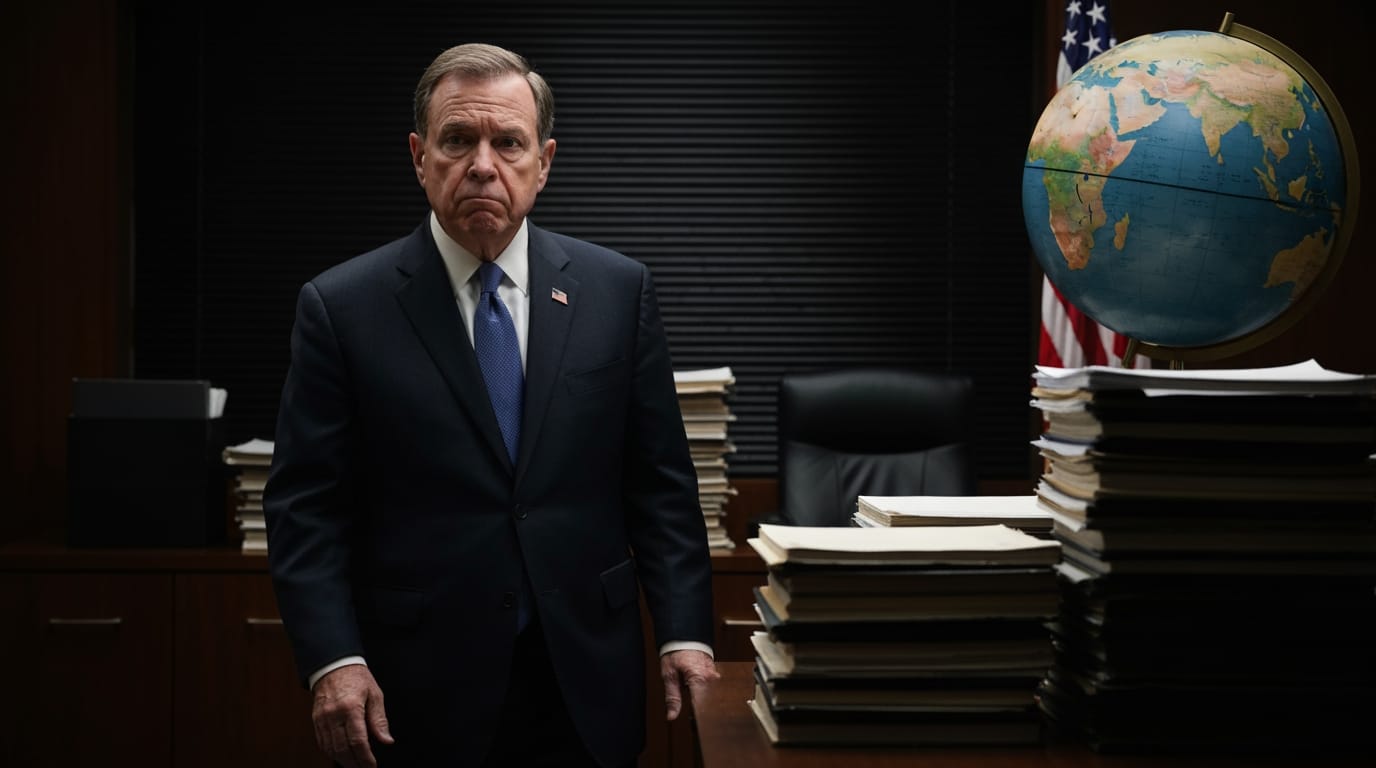
WASHINGTON D.C. – Humanity now stands at a precipice, with the symbolic Doomsday Clock ticking closer to midnight than ever before at a mere 85 seconds, a stark warning amplified by the imminent expiration of the New Strategic Arms Reduction Treaty (New START) between the United States and Russia. This week, the last remaining bilateral nuclear arms control agreement formally limiting the world's two largest nuclear arsenals ceased to be, heralding an era of unprecedented uncertainty and raising global anxieties about an unconstrained nuclear arms race.
The Bulletin of the Atomic Scientists, responsible for setting the iconic clock, recently advanced its hands by four seconds to 85 seconds to midnight on January 27, 2026, citing an "unprecedented surge in nuclear instability" alongside escalating climate change and the rapid, unchecked development of artificial intelligence. This grave pronouncement coincides with a critical juncture in international arms control, as the New START treaty, a cornerstone of strategic stability for over a decade, concludes its extended term, leaving a void in verifiable limits on U.S. and Russian strategic offensive weapons.
The Doomsday Clock: A Sobering Metaphor for Global Peril
Since its inception in 1947, the Doomsday Clock has served as a powerful metaphor, visually representing humanity's proximity to a global catastrophe, with midnight symbolizing annihilation. Created by the Bulletin of the Atomic Scientists in the shadow of the atomic age, its setting is determined annually by the organization's Science and Security Board, a body of 17 scientists and policy experts. Their assessment considers a complex interplay of existential threats, primarily focusing on nuclear weapons, climate change, and increasingly, disruptive technologies like artificial intelligence.
The decision to move the clock to 85 seconds to midnight – the closest it has ever been – reflects a profound "failure of leadership" in addressing these intertwined dangers. Nuclear concerns were paramount in the latest assessment, with the scientists noting a pervasive breakdown of diplomatic frameworks, increased threats of nuclear testing, and growing proliferation concerns. The aggressive behaviors of major nuclear powers, including the U.S., Russia, and China, were specifically cited as contributing factors to this heightened risk, creating a landscape where the threat of nuclear use is deemed "unsustainably and unacceptably high." The current setting signifies a dire warning that the window for securing a habitable future is rapidly closing.
New START: A Decades-Long Effort for Nuclear Restraint
The New Strategic Arms Reduction Treaty, signed on April 8, 2010, by then-Presidents Barack Obama and Dmitry Medvedev, and entering into force on February 5, 2011, represented the culmination of decades of efforts to control and reduce the strategic nuclear arsenals of the United States and Russia. The treaty imposed verifiable limits on both nations' deployed strategic offensive arms: 1,550 deployed strategic nuclear warheads, 800 deployed and non-deployed strategic launchers, and 700 deployed intercontinental ballistic missiles (ICBMs), submarine-launched ballistic missiles (SLBMs), and heavy bombers equipped for nuclear armaments.
Crucially, New START incorporated robust transparency and verification mechanisms. These included regular data exchanges, notifications of changes to strategic forces, and 18 on-site inspections per year. These measures provided vital insights into each other's nuclear forces, fostering predictability and reducing the risk of miscalculation or strategic surprise. The treaty, designed for a 10-year term, included an option for a single five-year extension. This option was exercised in February 2021 by the Biden administration, pushing the treaty's expiration to February 4, 2026. The extension was seen as critical to maintaining a measure of strategic stability, particularly after the previous U.S. administration had not pursued its renewal.
The Erosion and Eventual Expiration of a Critical Agreement
Despite its initial extension, New START faced significant challenges in recent years. In February 2023, Russia announced its suspension of participation in the treaty, citing hostile actions by the United States and the West's military support for Ukraine. While Moscow stated it would continue to observe the numerical limits of the treaty, this move effectively halted crucial on-site inspections and data exchanges. In response, the U.S. also ceased providing data, further eroding the treaty's transparency mechanisms.
This week marks a historic and perilous turning point: the expiration of New START. For the first time since the early 1970s, there are no legally binding limits on the strategic nuclear forces of the United States and Russia. This absence of a formal framework represents a significant break in over five decades of bilateral nuclear arms control, signaling a move away from nuclear restraint and making the world a more dangerous place. Experts universally decry this development, with one analyst stating that letting New START lapse "would erase decades of hard-won progress and only make the world less safe."
Global Implications and a New Arms Race
The expiration of New START carries profound implications for global security and stability. Without the treaty's constraints, the U.S. and Russia, which together possess approximately 90% of the world's nuclear weapons, could potentially expand their arsenals unchecked. Analysts warn that both countries could field hundreds of additional nuclear weapons within weeks and potentially double their deployed forces within a few years. Such an expansion would not only be destabilizing but also incredibly costly, potentially triggering a new, unconstrained nuclear arms race.
The absence of verification mechanisms, data exchanges, and confidence-building measures that were integral to New START will lead to a severe reduction in transparency and predictability regarding nuclear weapon numbers, operational status, and force posture. This increased opacity raises the risk of miscalculation, accidents, and unintended escalation, particularly in an already tense geopolitical environment exacerbated by conflicts such as the war in Ukraine. Nuclear force planning will likely default to worst-case assessments as reliable data becomes scarce and intelligence estimates become politicized.
Moreover, the collapse of New START is expected to have far-reaching effects on the broader non-proliferation regime. It is anticipated to erode the credibility of the 1968 Nuclear Non-Proliferation Treaty (NPT), whose core bargain relies on nuclear-weapon states making progress towards disarmament in exchange for non-nuclear-weapon states refraining from developing atomic weapons. A weakened NPT could fuel debates in countries like Japan, Poland, South Korea, and Ukraine about the merits of acquiring nuclear weapons, further complicating global efforts to prevent proliferation. Adding another layer of concern is China's rapid nuclear build-up, which could drive a renewed nuclear arms race involving three major powers, presenting a "two-tier deterrence environment" for U.S. defense planners.
An Uncertain Future for Arms Control
The path forward for nuclear arms control appears fraught with challenges. While Russia has reportedly offered to voluntarily abide by New START's provisions for another year if the U.S. reciprocates, official responses and concrete steps toward a new agreement remain uncertain. Negotiations for complex arms control treaties typically require years of patient and disciplined diplomacy, a stark contrast to the current geopolitical climate characterized by strained relations and a lack of trust between Washington and Moscow.
With the Doomsday Clock standing at its most perilous setting and the foundational New START treaty now expired, the world faces a heightened risk environment not seen in decades. The collective challenge for international leaders is to find pathways for renewed dialogue and build new frameworks that can mitigate these escalating dangers and pull humanity back from the brink of catastrophe. Without such efforts, the shadow of an unconstrained nuclear future looms large.


