Europol Delivers 'Massive Blow' to Organized Crime with Largest-Ever Synthetic Drug Network Bust
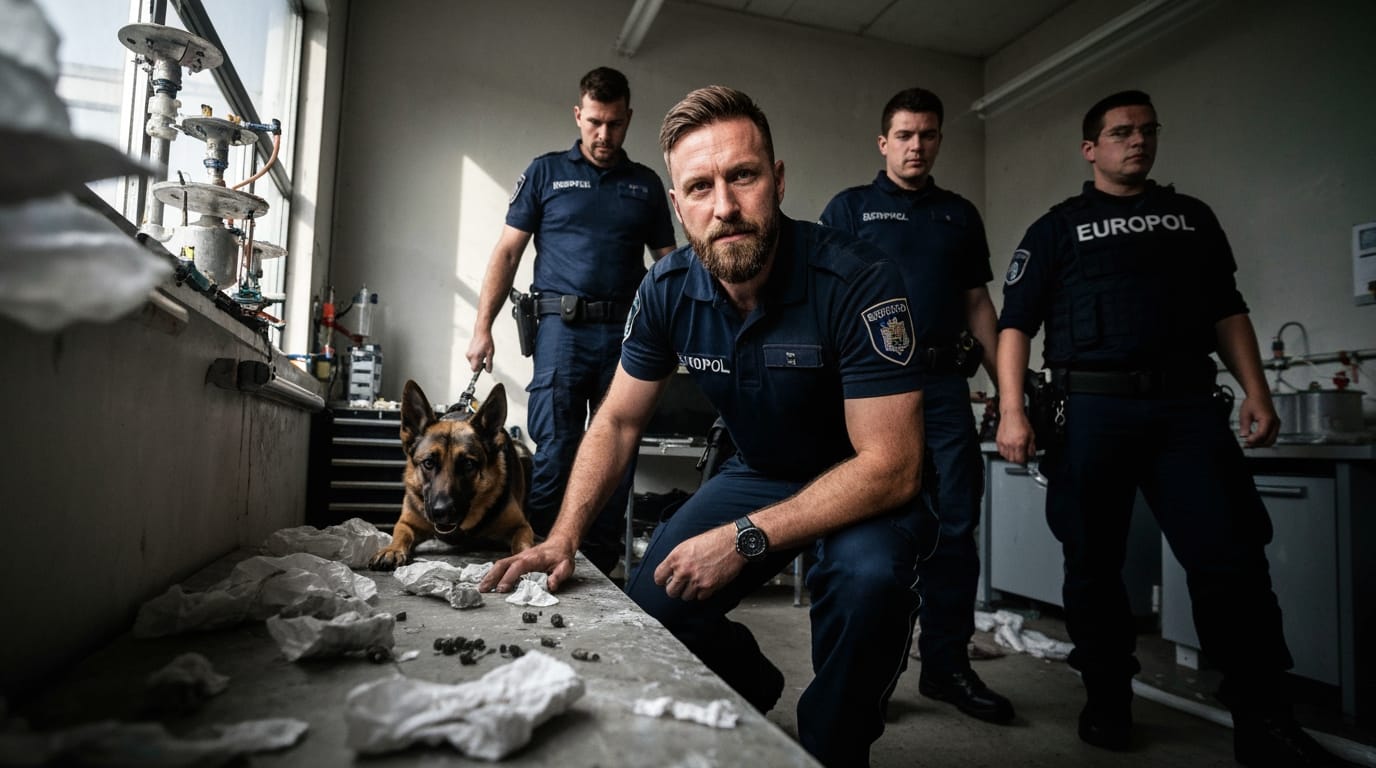
THE HAGUE, NETHERLANDS – European law enforcement agencies have dealt a monumental blow to organized crime with the dismantling of a massive synthetic drug production and distribution network, marking the "largest-ever operation" of its kind in Europe. Announced by Europol on Wednesday, the year-long investigation culminated in the arrest of over 85 individuals and the shutdown of 24 industrial-scale drug laboratories across multiple countries, significantly disrupting a criminal enterprise that generated billions in illicit profits and posed severe public health and environmental risks.
The sophisticated criminal network, which operated across Belgium, the Czech Republic, Germany, the Netherlands, Poland, and Spain, was responsible for the widespread production of dangerous synthetic drugs, including MDMA, amphetamine, and methamphetamine. Authorities seized an unprecedented 1,000 tons of precursor chemicals, preventing the creation of untold millions of drug doses and undermining a significant portion of Europe's illicit drug trade.
The Unveiling of a Vast Criminal Enterprise
The extensive operation, coordinated by Europol, began in 2024 when Polish police observed suspicious, large-scale imports of seemingly legal chemicals originating from China and India. These precursor chemicals, typically used in pharmaceutical manufacturing, were being acquired in quantities far exceeding legitimate industrial needs by seven front companies established in Poland. Investigations revealed a meticulously organized system where these chemicals were subsequently repackaged, often mislabeled, and distributed across the European Union to clandestine laboratories.
Europol's European Serious Organised Crime Centre Head, Andy Kraag, characterized the bust as an unparalleled success in the fight against synthetic drug production, stating it was "by far the largest-ever operation" his team had undertaken in this domain. He underscored the profound impact, describing it as a "massive blow" to organized crime groups specializing in synthetic drug trafficking. The criminal network's operational structure was complex, demonstrating high-level leadership coordination that linked various criminal factions across EU member states.
The coordinated raids, which saw 50 house searches conducted primarily in Poland (45), but also in Belgium (2), Germany (2), and the Netherlands (1), led to the apprehension of more than 85 individuals. Among those arrested were two suspected ringleaders from Poland, identified by Europol as "high-value targets." While the majority of those detained were Polish nationals, Belgian and Dutch citizens were also implicated in the expansive criminal activities.
Billions in Profits and a Trail of Toxic Waste
The financial scale of the dismantled network highlights the immense profitability driving such illicit operations. Polish police revealed that for every euro invested in drug production, traffickers reaped approximately 30 euros in profit. Overall, the illegal production and distribution of these synthetic drugs generated billions of euros in criminal proceeds across the EU. During specific actions within the broader operation, authorities in Poland seized significant assets, including €85,000 in cash, nine vehicles valued at approximately €1 million, and an estimated €2.5 million in real estate and other assets.
Beyond the immediate threat of drug proliferation and the vast financial gains for criminal syndicates, the operation also exposed the severe environmental damage inflicted by synthetic drug production. Authorities recovered over 120,000 liters (approximately 31,700 gallons) of highly toxic chemical waste, which criminals routinely dump into land or waterways. Kraag starkly summarized this destructive practice, saying, "Today, it's profit for criminals. Tomorrow, it's pollution." This dumping poses significant, long-term environmental hazards and cleanup challenges for affected communities.
The Broader Fight Against Synthetic Drugs
This major bust underscores Europol's sustained focus on combating synthetic drug trafficking, which has been identified as a priority crime area for the EU. Synthetic drug markets are characterized by increasing sophistication in production methods, nimble distribution networks, and a continuous diversification of substances, including new psychoactive substances (NPSs) often marketed as "legal highs." Europe itself serves as a significant hub for the industrial-scale production of synthetic drugs, catering to both domestic and international demand.
The fight against synthetic drugs extends beyond law enforcement actions to address related issues such as violence, corruption, and money laundering that are intrinsically linked to these criminal activities. Europol's strategy emphasizes targeting the entire supply chain, from precursor chemical procurement to final distribution, and disrupting the financial flows that sustain these criminal networks. The agency also champions cross-border collaboration, acknowledging that transnational organized crime requires a unified international response.
Despite this monumental success, Europol officials maintain that the battle is far from over. Kraag indicated that while this network represented one of the largest distributors, it was "not the only one," suggesting that further investigations and operations are actively underway. The agility of criminal networks, their ability to exploit legal business structures, and their strong leadership continue to present significant challenges to law enforcement across the continent.
Conclusion
The dismantling of this extensive synthetic drug production network represents a critical victory in the ongoing war against organized crime in Europe. By shutting down 24 labs, seizing vast quantities of chemicals, and arresting key figures, Europol and its partners have severely hampered the capacity of a major criminal enterprise. This operation not only safeguards public health by reducing the availability of dangerous drugs but also mitigates the environmental devastation caused by illicit chemical waste. While the success is considerable, it also serves as a stark reminder of the persistent and evolving threat posed by transnational criminal organizations and the continued necessity for robust international cooperation to protect European communities.


