External Hands Deepen Sudan's Crisis: Ethiopia, UAE Under Scrutiny for Fueling Conflict
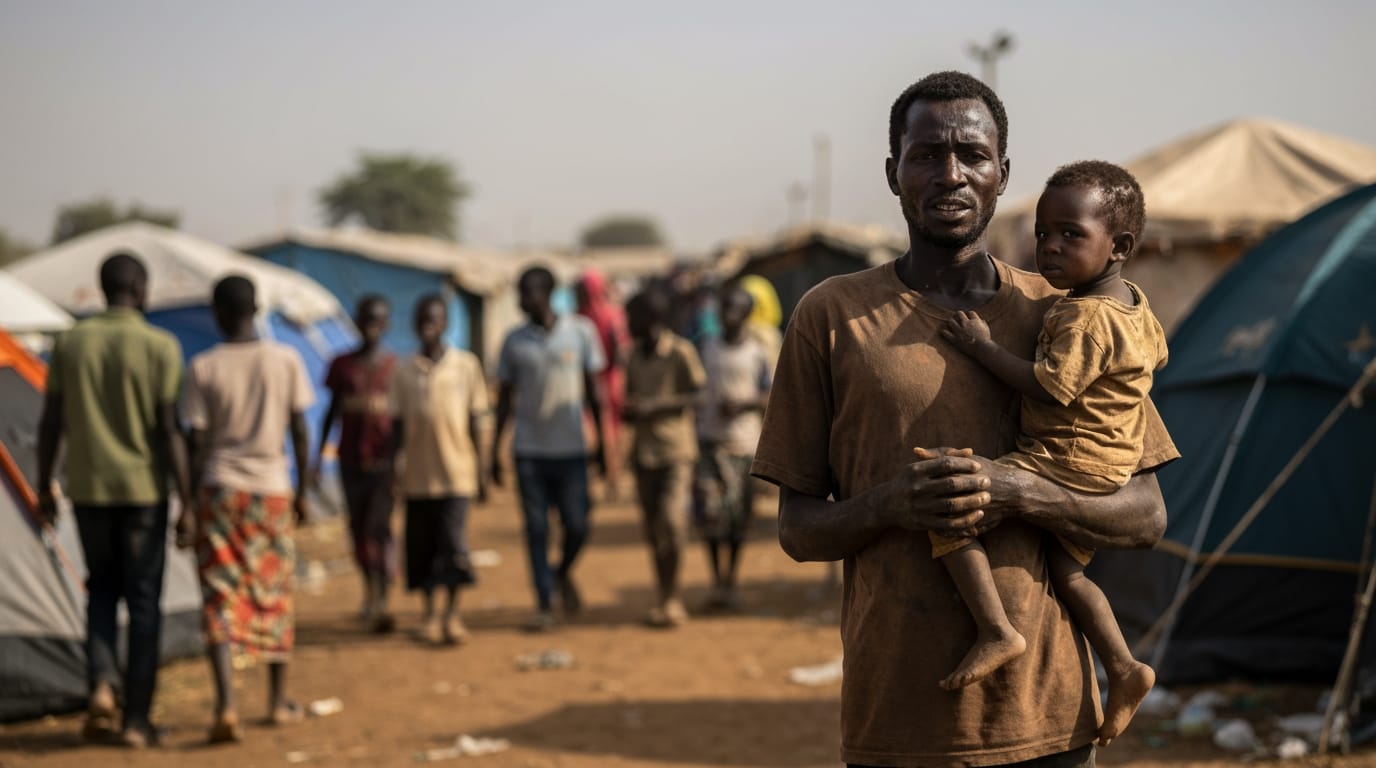
The devastating civil war in Sudan, which has torn the nation apart since April 2023, is increasingly recognized not merely as an internal power struggle but as a conflict profoundly shaped by external interventions. As millions face displacement and a humanitarian catastrophe of unprecedented scale, international focus is intensifying on the roles of regional powers, particularly Ethiopia and the United Arab Emirates (UAE), amidst mounting allegations of their involvement in prolonging and escalating the violence. Despite their public calls for peace, both nations are now facing scrutiny over reports suggesting material support to the warring factions, fundamentally altering the dynamics of a war that has claimed countless lives and pushed an entire region to the brink.
Sudan's Descent: A Humanitarian Catastrophe Fuelled by Conflict
The conflict began with a fierce power struggle between the Sudanese Armed Forces (SAF), led by General Abdel Fattah al-Burhan, and the paramilitary Rapid Support Forces (RSF), commanded by General Mohamed Hamdan Dagalo, widely known as Hemedti. What started as a dispute over the integration of forces quickly spiraled into a full-blown war, engulfing Khartoum and spreading rapidly across the country, most notably in the Darfur region. The humanitarian consequences have been catastrophic; by late 2025, an estimated 30.4 million people required urgent assistance, with over 12 million displaced from their homes, making it one of the world's largest humanitarian crises. Reports of widespread atrocities, including mass killings, sexual violence, and forced displacement, have become disturbingly common, particularly in areas seized by the RSF. This internal strife has transcended Sudan's borders, drawing in a complex web of regional and international actors whose varied interests and interventions are now widely seen as a primary driver of the conflict's intensity and duration.
The UAE's Alleged Role: Arming the RSF Amidst Denials
The United Arab Emirates has found itself at the center of allegations, accused of providing crucial military and financial support to the Rapid Support Forces, a claim the Emirati government consistently and vehemently denies. Pressure intensified on the UAE following a leaked confidential UN report that raised concerns over "multiple" flights originating from the UAE and landing at bases in Chad, with indications of deliberate attempts to avoid detection. These flights are suspected of facilitating arms smuggling across the border into Sudan, purportedly to aid the RSF.
Further corroborating these concerns, a bipartisan group of U.S. senators and various human rights organizations have increasingly pointed to the UAE as a key external actor fueling the conflict. Amnesty International and leaked UN Security Council documents reported the use of advanced Chinese-made weaponry and UAE-manufactured armored personnel carriers by the RSF, potentially violating a UN arms embargo on Sudan. Sudanese military officials claim to have captured such equipment, including drones and munitions, asserting they were supplied by the UAE. In April 2025, Sudan even accused the UAE of being "complicit in the genocide" at the International Court of Justice (ICJ), though the case was later dismissed due to jurisdictional issues.
The UAE has maintained that its activities in the region are focused solely on humanitarian aid and efforts to achieve a ceasefire, reiterating its stance as "not a party" to the conflict. Emirati officials also suggest that any past military cooperation was established before the war began in 2023. However, analysts speculate that the UAE's interest in Sudan may stem from its desire for access to the country's rich gold reserves and strategic Red Sea coastline, as well as its broader regional opposition to political Islamist movements, which it associates with elements of the SAF. This alleged support for the RSF also aligns with an intensifying regional rivalry between Saudi Arabia, which has reportedly backed the SAF, and the UAE, further transforming the Sudanese conflict into a proxy competition.
Ethiopia's Complex Stance: A Secret Training Ground for RSF?
Adding another layer of complexity to the international dimension of the Sudanese war are recent reports alleging Ethiopia's direct involvement. An investigation, drawing on information from Ethiopian officials, diplomats, and satellite imagery, suggests that Ethiopia is hosting a secret military training camp for thousands of RSF fighters in its western Benishangul-Gumuz region, near the Sudanese border. This development, if definitively confirmed, would mark the clearest evidence yet of Addis Ababa's direct role in the conflict, providing the RSF with a significant influx of fresh soldiers.
The same reports indicate that the construction of this camp, located in the Menge district, approximately 20 miles (32 km) from the border, was financed by the UAE, which also allegedly provided military trainers and logistical support. Satellite imagery reportedly shows rapid development at the site and nearby Asosa airport, where new hangars and infrastructure resembling a ground control station for unmanned aerial vehicles (UAVs) have been observed. Recruits at the camp are said to include not only Sudanese but also Ethiopians and individuals from South Sudan and other Sudanese rebel groups. Ethiopia's Chief of Defense Intelligence, General Getachew Gudina, is reportedly overseeing the project.
Despite a joint statement with the UAE calling for a ceasefire in Sudan, Ethiopia's public posture of neutrality appears to be increasingly challenged by these allegations. While Ethiopia has denied previous accusations of facilitating arms shipments to the RSF, the current claims, particularly those supported by satellite imagery and multiple sources, are difficult to dismiss. Ethiopia's historical involvement in Sudanese civil wars, often through proxy support, adds to the complexity of its current position. The strategic implications for Ethiopia are significant, as direct or indirect intervention risks exacerbating instability in its own volatile border regions and undermining its credibility as a regional mediator.
A Region in Peril: Broadening the Conflict's Reach
The alleged roles of the UAE and Ethiopia underscore a perilous trend: the Sudan civil war is not only devastating its own people but is also becoming a proxy battleground that threatens to destabilize the wider Horn of Africa. External military support has been crucial in enabling both the SAF and RSF to continue fighting, despite heavy losses, and stands in stark contrast to the underfunded humanitarian efforts. This influx of arms, funding, and training makes containment and resolution increasingly difficult, creating new fronts and channels for recruitment and weapons transportation.
The regionalization of the conflict means that neighboring states, already grappling with refugee flows and cross-border insecurity, face heightened risks of further instability. The ongoing Saudi-UAE rivalry, with each Gulf power reportedly backing opposing sides in Sudan, exemplifies how external agendas can profoundly shape and prolong internal conflicts. Without a fundamental shift in the behavior of these regional and international actors, moving away from proxy competition and toward coordinated, civilian-centered diplomacy, the prospects for peace in Sudan remain bleak.
The continuous flow of external support transforms the Sudanese conflict from a domestic crisis into a multifaceted regional entanglement, making a resolution more elusive. The international community faces the urgent challenge of addressing these external interventions to alleviate the immense suffering of the Sudanese people and prevent further destabilization of an already fragile region.