FAA Grounds Blue Origin's New Glenn After Orbital Setback, Mandates Thorough Investigation
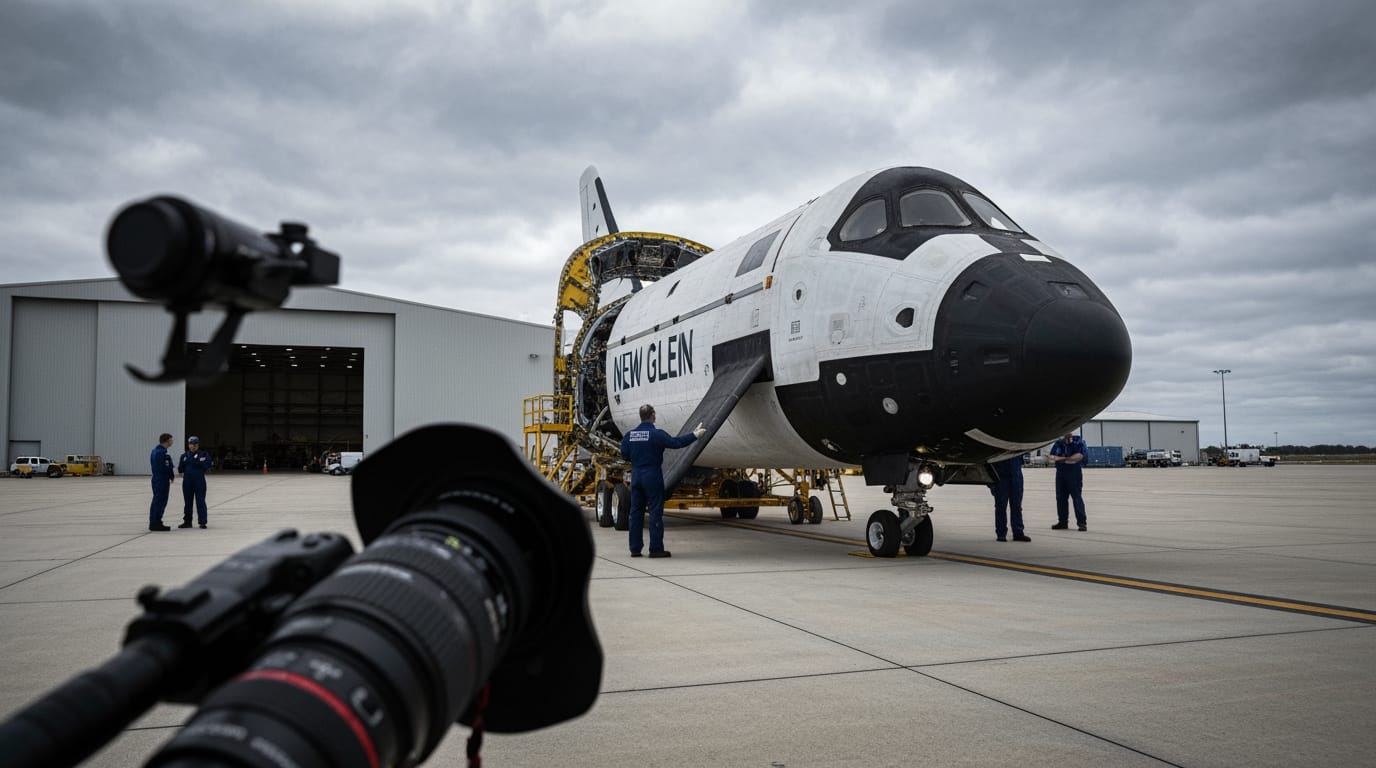
Cape Canaveral, Fla. – The Federal Aviation Administration (FAA) has grounded Blue Origin's New Glenn rocket program following an orbital anomaly during its third flight, designated NG-3, which launched on April 19, 2026. The incident resulted in the primary payload, AST SpaceMobile's BlueBird 7 satellite, being deployed into an unrecoverable, "off-nominal" orbit, effectively rendering it unusable and necessitating its de-orbiting. This setback, occurring on New Glenn's first commercial mission and its initial re-flight of a booster, triggers a mandatory mishap investigation by Blue Origin under strict FAA oversight, halting future launches until all safety concerns are addressed and approved by the regulatory body.
The Ill-Fated Ascent of NG-3
The New Glenn NG-3 mission lifted off from Cape Canaveral Space Force Station's Launch Complex 36 early Sunday morning, carrying the BlueBird 7 satellite designed to support a direct-to-device cellular broadband network. While the launch sequence initially appeared successful, and the rocket's first stage executed a flawless landing on Blue Origin's drone ship Jacklyn in the Atlantic Ocean, problems emerged with the second stage. Approximately an hour after the planned payload separation, Blue Origin confirmed that the satellite had been placed into an orbit too low to sustain operations with its onboard thrusters.
AST SpaceMobile subsequently announced the loss of the BlueBird 7 satellite, confirming it would be de-orbited. Blue Origin CEO David Limp indicated that preliminary assessments suggest one of the BE-3U engines powering the second stage did not produce sufficient thrust to achieve the intended orbital insertion. This malfunction marks a critical failure for the mission, despite the successful reusability demonstration of the first stage, which had previously flown on the NG-2 mission carrying NASA's ESCAPADE Mars probes in November 2025.
The FAA's Vigilant Oversight
The FAA, responsible for ensuring public safety in commercial space operations, promptly classified the orbital anomaly as a "mishap." This designation automatically mandates a comprehensive investigation led by Blue Origin, with the FAA actively involved in every step of the process. The agency has stated that New Glenn's return to flight is contingent upon the FAA's approval of Blue Origin's final report, which must identify the root cause of the malfunction and detail all corrective actions implemented. This rigorous oversight is designed to prevent similar incidents and uphold the integrity of commercial space launches.
Under federal law, the FAA has the authority to oversee, authorize, and regulate launches and re-entries by U.S. citizens or within the United States, balancing the encouragement of private sector space activities with paramount concerns for public health and safety, property protection, and national security. The regulatory framework, notably under Part 450, emphasizes performance-based standards and thorough mishap investigations. This process can often take several months, as seen in past investigations involving other launch providers, significantly impacting launch schedules. The FAA's mandate ensures that no further flights will occur until the safety of New Glenn is definitively proven.
A Significant Setback for Blue Origin's Ambitions
The grounding of New Glenn represents a substantial challenge for Jeff Bezos's Blue Origin, particularly as the company strives to establish its heavy-lift launch vehicle as a reliable contender in the competitive space industry. New Glenn, named after astronaut John Glenn, is a 98-meter-tall, two-stage rocket featuring a reusable first stage powered by seven BE-4 engines and an expendable second stage with two BE-3U engines. It is designed to carry substantial payloads, up to 45,000 kg to low Earth orbit, making it a direct competitor to rockets like SpaceX's Falcon 9/Heavy and United Launch Alliance's Vulcan Centaur.
The successful first-stage landing on NG-3 underscored Blue Origin's reusability capabilities, a technology it has perfected with its suborbital New Shepard rocket and demonstrated with New Glenn's previous flight. However, the failure of the upper stage overshadows this achievement and jeopardizes Blue Origin's aggressive launch cadence and its aspirations for future missions, including potential NASA contracts and the deployment of Amazon's Project Kuiper satellites. The delay will undoubtedly affect the company's timeline for certifying New Glenn for national security flights and securing additional commercial launches.
Broader Implications for AST SpaceMobile and the Space Industry
For AST SpaceMobile, the loss of BlueBird 7 is a considerable blow to its ambitious plan to deploy a constellation of satellites providing direct cellular broadband connectivity to standard smartphones. While the company stated that the cost of the satellite is expected to be covered by insurance, the incident impacts its aggressive deployment schedule, which aims for approximately 45 satellites in orbit by the end of 2026. AST SpaceMobile has stated it maintains agreements with multiple launch providers, not solely relying on Blue Origin, suggesting a strategy to mitigate future single-provider risks.
This incident also resonates across the burgeoning commercial space sector. While rapid innovation is a hallmark of the industry, the FAA's strict regulatory posture following anomalies reinforces the critical balance between speed and safety. Such investigations, though potentially delaying progress, are vital for maintaining public confidence and ensuring the long-term viability and safety of spaceflight. The outcome of Blue Origin's investigation and the FAA's subsequent approval will be closely watched by industry stakeholders, as it will inform future launch practices and regulatory expectations for all commercial space operators.
The grounding of New Glenn highlights the inherent risks and complexities of orbital spaceflight, even for experienced companies like Blue Origin. The mandated investigation is a critical step not only for identifying the specific technical failure but also for reinforcing the robust safety protocols necessary for the continued expansion of the commercial space frontier. While undoubtedly a setback, this process is fundamental to fostering a safe and reliable environment for future space exploration and commerce.