Failed Coup Attempt Plunges Benin into Uncertainty, Leader Still at Large After Deadly Clashes
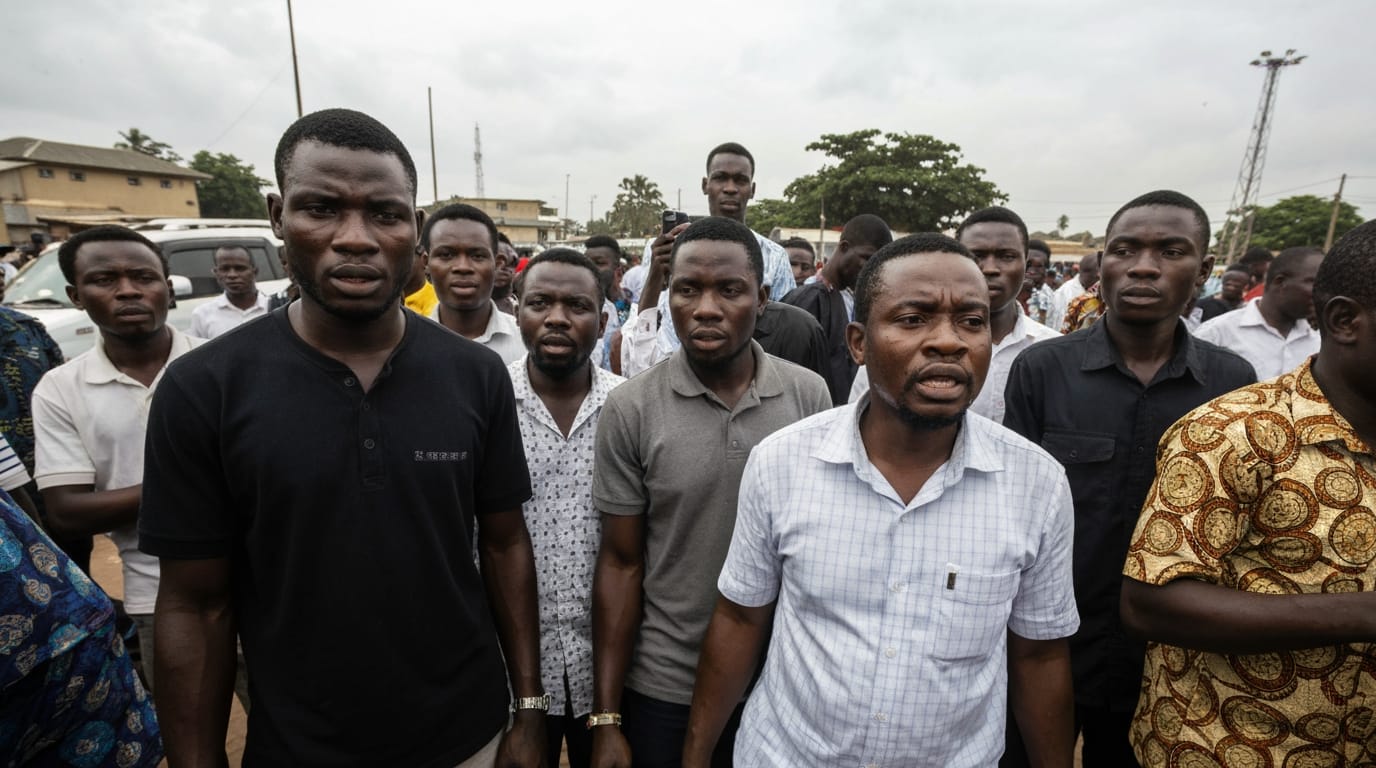
Cotonou, Benin - A swift, but deadly, coup attempt rocked the West African nation of Benin on Sunday, December 7, 2025, leaving several dead and the alleged ringleader, Lt. Col. Pascal Tigri, at large. The failed military takeover, orchestrated by a group calling themselves the "Committee for Refoundation," briefly seized the national television station before being decisively thwarted by loyalist forces with crucial support from regional allies. The incident marks a deeply troubling moment for a country once hailed as a beacon of democratic stability in a region increasingly plagued by military insurrections.
The audacious plot unfolded in the early hours of Sunday when soldiers led by Tigri stormed the state broadcaster, announcing the removal of President Patrice Talon, the dissolution of his government, and the suspension of state institutions. However, the mutiny was short-lived, with Benin's military, bolstered by aerial and ground support from Nigeria and a deployed standby force from the Economic Community of West African States (ECOWAS), swiftly regaining control. While President Talon has assured the nation that the situation is under control, the specter of instability looms, intensified by the unconfirmed fate of several hostages and the continued evasion of the coup's leader.
The Audacious Bid and Swift Retribution
The attempted coup began with a coordinated series of actions designed to incapacitate the government and its leadership. The self-proclaimed "Committee for Refoundation," fronted by Lt. Col. Pascal Tigri, broadcast their intentions from the national television station, signaling their intent to dismantle the existing political order. This move was accompanied by violent clashes at strategic locations, including President Patrice Talon's residence in Cotonou, and attempts to neutralize or kidnap senior military officers. Among the casualties were the wife of President Talon's military chief-of-staff, General Bertin Bada, who was killed, and General Bada himself, who was fatally wounded in a separate assault by the putschists. Two other senior military officers, Chief of Staff of the National Guard Faizou Gomina and Army Chief of Staff General Abou Issa, were abducted but later released in Tchaourou, over 350 kilometers from the capital.
The government's response was rapid and overwhelming. Loyal armed forces quickly moved to suppress the uprising. Within hours, the mutiny began to unravel as Benin's military, supported by a decisive intervention from Nigeria, launched attacks against the fleeing mutineers. Nigeria's involvement included both air and ground forces, with airstrikes reportedly used to target and immobilize armored vehicles belonging to the coup plotters. An ECOWAS standby force, comprising personnel from Nigeria, Ghana, Ivory Coast, and Sierra Leone, also played a role in stabilizing the situation and reinforcing loyalist positions. By Sunday afternoon, the coup had been foiled, and calm began to return to Cotonou, though a heavy military presence remained visible on the streets. President Talon later denounced the events as a "senseless adventure" and vowed to bring those responsible to justice.
Casualties Mount, Leader Remains Elusive
The short-lived insurrection left a tragic human toll, with authorities confirming "casualties on both sides" – among government forces and the mutinous soldiers. While specific numbers have not been officially disclosed, the death of General Bada's wife and the fatal wounding of the General himself underscore the gravity of the violence. The government has stated that an investigation is underway to determine the full extent of the damage and to identify all perpetrators and their sponsors.
Amidst the arrests of at least a dozen soldiers involved in the plot, a significant loose end persists: the whereabouts of Lt. Col. Pascal Tigri, the alleged leader of the failed coup. Tigri, a former member of President Talon's protection detail and a commander of a National Guard battalion between 2023 and 2025, remains on the run. His continued evasion presents a security challenge for the Beninese government and leaves open questions about potential future threats or attempts to destabilize the nation. The fate of any remaining hostages, beyond the two senior officers already released, also remains unclear.
West Africa's Troubled Landscape and Regional Resolve
This attempted coup in Benin is not an isolated incident but rather the latest in a troubling wave of military takeovers that have swept across West Africa since 2020. The region has witnessed more than 10 successful or attempted coups in the past five years, with countries like Mali, Burkina Faso, Niger, Guinea, Gabon, and Guinea-Bissau experiencing similar upheavals. This trend has raised significant concerns about the erosion of democratic gains and the future of constitutional governance in the sub-region.
The swift and decisive intervention by ECOWAS and particularly Nigeria highlights a growing regional commitment to counter unconstitutional changes of government. Nigerian President Bola Tinubu played a critical role, dispatching fighter jets and ground troops to support Benin's loyalist forces at President Talon's request. This intervention signals a robust stance by Nigeria, which, according to analysts, has a strategic interest in preventing hostile regimes from encircling its borders, especially given its ongoing security challenges. The United Nations Secretary-General António Guterres also condemned the coup attempt, emphasizing the broader threat it poses to regional stability.
Beneath the Surface: Unrest in a 'Stable' Democracy
Benin, traditionally lauded for its peaceful transitions of power since returning to multi-party democracy in 1991, has shown increasing signs of political strain in recent years. Critics point to what they perceive as a democratic backsliding under President Patrice Talon, particularly after constitutional changes and tightened eligibility criteria for elections effectively marginalized opposition figures. Allegations of previous coup plots, with associated arrests and lengthy sentences for those involved in alleged 2024 conspiracies, indicate a simmering discontent beneath the surface of apparent stability.
Furthermore, growing insecurity in northern Benin, primarily due to the spillover of jihadist groups from neighboring countries like Niger and Burkina Faso, has placed significant pressure on the military. Reports suggest discontent within the armed forces, stemming from heavy losses incurred while fighting militants with often inadequate equipment. Analysts indicate that such conditions can foster dissatisfaction among soldiers, potentially turning their focus from external threats to internal political grievances. The coup plotters themselves reportedly cited insecurity in the north as a justification for their attempted putsch. These intertwined factors—political tensions, alleged democratic erosion, and military dissatisfaction arising from the fight against terrorism—likely contributed to the volatile environment that culminated in Sunday's failed coup.
The failed coup in Benin, though quickly suppressed, serves as a stark reminder of the fragile state of democracy in West Africa. The search for Lt. Col. Pascal Tigri continues, symbolizing the unresolved questions and lingering threats to Benin's stability. While the strong regional response from ECOWAS and Nigeria signals a collective determination to uphold constitutional order, the underlying grievances and regional instability that fuel such events remain a profound challenge. The international community watches closely as Benin navigates the aftermath of this violent episode, hoping to restore full confidence in its democratic institutions and prevent further descent into the instability that has gripped many of its neighbors.


