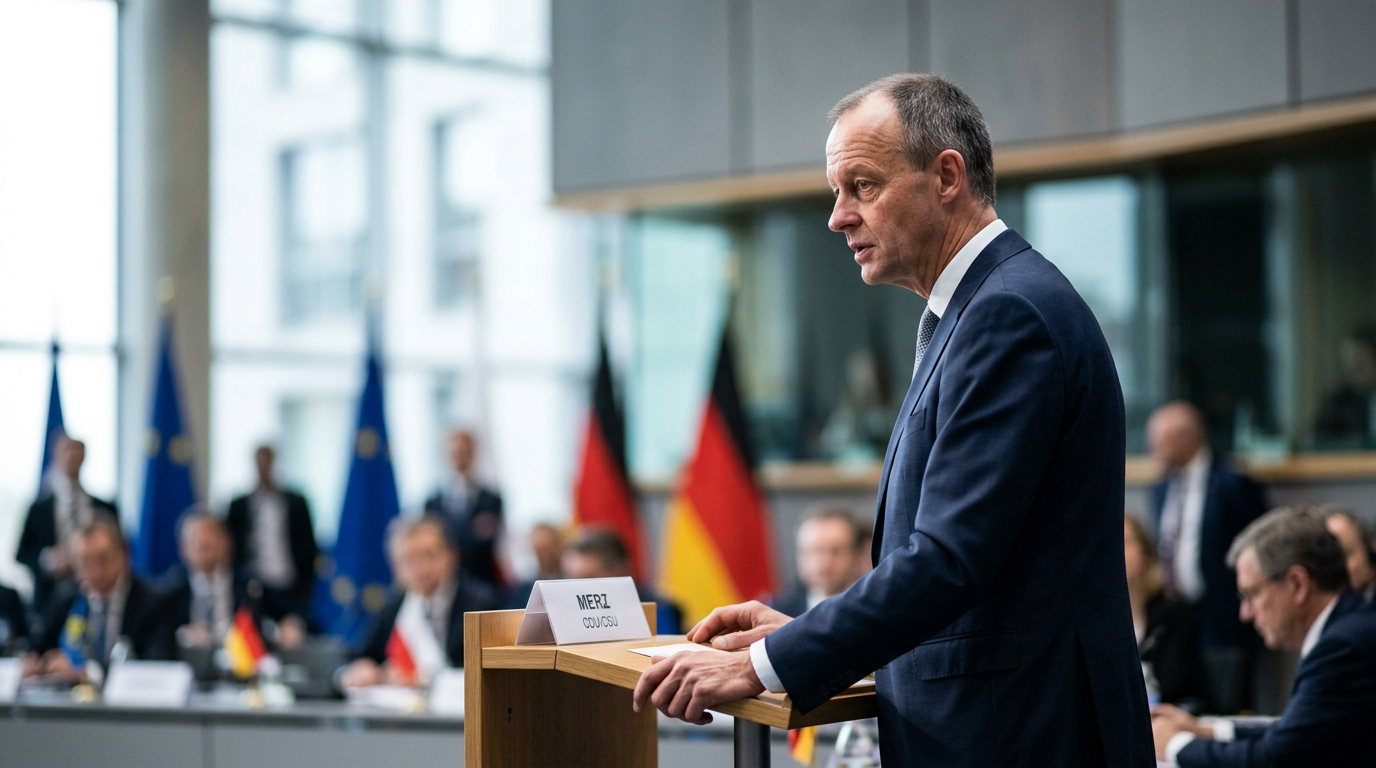
Far-Right AfD Poised for Historic Gains in German State Elections Amid Public Discontent

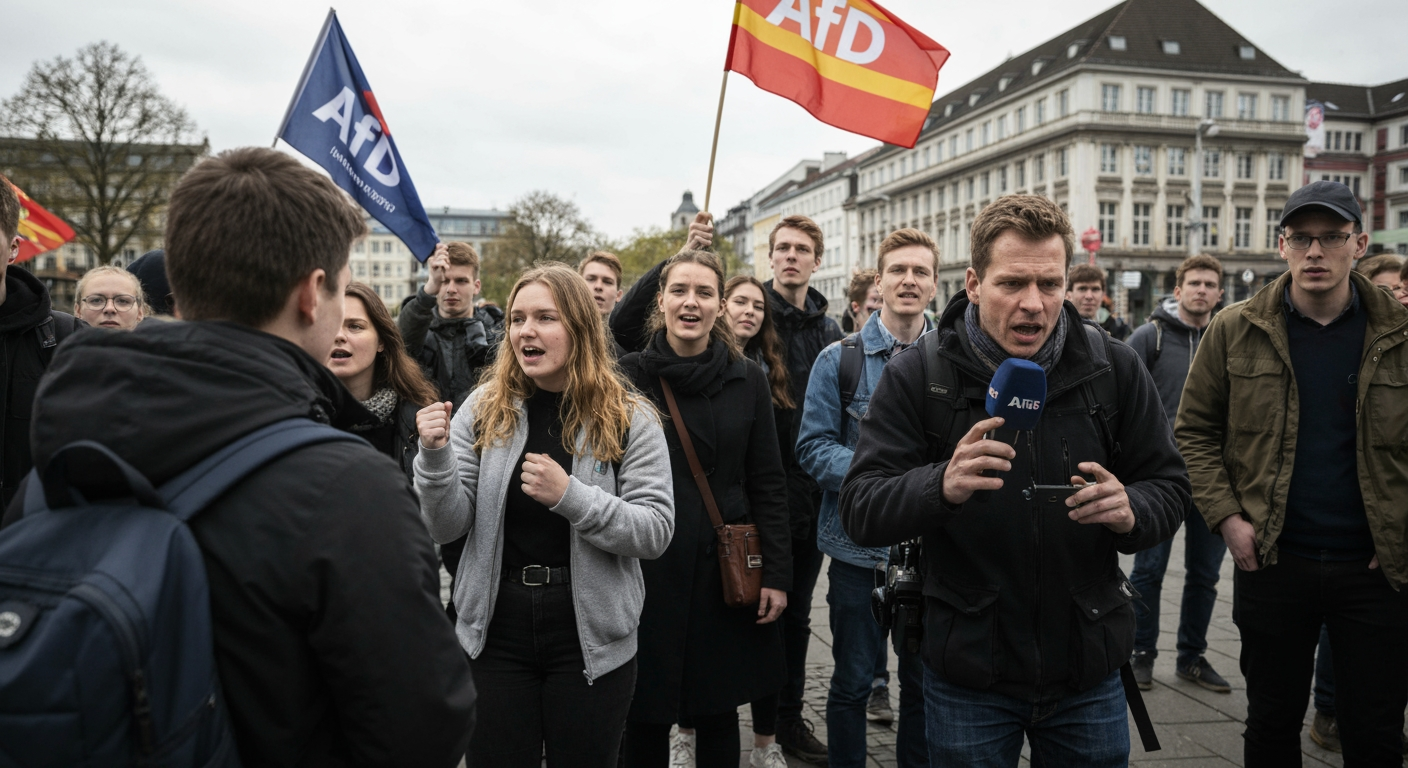
Germany's political landscape is bracing for a seismic shift as the far-right Alternative for Germany (AfD) party registers unprecedented polling numbers, soaring to 37-40% in key eastern states ahead of upcoming 2026 state elections. This dramatic surge places the AfD in a position to potentially lead state governments for the first time in post-war German history, signaling a profound challenge to the nation's traditional political order and sparking widespread concern among mainstream parties.
The remarkable rise of the AfD, often described as an anti-establishment and nationalist movement, reflects deep-seated frustrations within the German electorate. Economic anxieties, a persistent debate over immigration policy, and widespread dissatisfaction with the current federal government have converged to propel the party to levels previously unimaginable for a far-right entity. As Germany navigates a period of economic stagnation and geopolitical uncertainty, the AfD has effectively capitalized on public discontent, presenting itself as the voice of a frustrated populace.
The Eastern Stronghold: A New Political Frontier
The most striking aspect of the AfD's current strength is its dominance in the eastern German states of Saxony-Anhalt and Mecklenburg-Vorpommern, both scheduled for state parliamentary elections in September 2026. Recent polls indicate the AfD's support hovering around the 39-40% mark in these regions, positioning it as the leading political force, significantly ahead of traditional parties like the Christian Democratic Union (CDU). This is a stark contrast to national polling, where the AfD typically garners around 25-27% of the hypothetical vote, placing it either as the most popular party nationwide or in a virtual tie with the CDU.
These figures in the former East Germany underscore a persistent socio-economic divide that has characterized the region since reunification in 1990. States like Saxony-Anhalt, which has the lowest per capita GDP and has experienced steady population decline, have proven particularly fertile ground for the AfD's message. Many residents in these areas feel their specific needs have been overlooked, fostering a sense of resentment and a receptiveness to the AfD's Eurosceptic and nationalist rhetoric. While state elections in Baden-Württemberg and Rhineland-Palatinate in March 2026 are also on the horizon, with the AfD polling around 20% there, the eastern states represent the party's strongest and most immediate path to governmental power.
Unpacking the AfD's Broadened Appeal
The AfD's escalating popularity can be attributed to a confluence of factors that extend beyond its traditional base. Economic concerns loom large, with Germany having experienced two consecutive years of GDP contraction and facing elevated energy costs and inflation. A striking 57% of AfD supporters believe that children growing up today will be poorer than their parents, highlighting a profound economic pessimism that the party effectively taps into.
Immigration remains a cornerstone of the AfD's platform and a significant driver of its support. The party's strong anti-immigration stance, including calls for mass deportations, resonates with a substantial portion of the electorate, who view recent immigration as a negative for Germany. This issue has become particularly salient in public discourse, with 85% of AfD voters considering immigration one of the most important issues facing the country.
Furthermore, widespread dissatisfaction with Germany's federal coalition government has provided a crucial opening for the AfD. The current ruling alliance has been plagued by internal disputes and is perceived as struggling to address pressing issues effectively. The AfD adeptly exploits this perceived weakness, reinforcing the narrative that mainstream parties are incapable of solving the nation's problems. This anti-establishment sentiment, coupled with strategic use of social media platforms like TikTok and Instagram, has allowed the AfD to broaden its reach, even attracting younger voters. The party has also gained traction by criticizing the government's net-zero transition and its ban on gas boilers, appealing to climate-skeptic voters.
Implications for German Democracy
The prospect of the AfD leading a state government carries significant implications for Germany's democratic institutions. For 13 years since its founding, the party has largely operated in opposition, with mainstream parties maintaining a "firewall" – a pledge not to partner or work with the AfD. A victory in a state election, particularly with such high polling numbers, would severely test this established political convention. If the AfD were to gain control of a state, it would "massively challenge the institutional framework of consensus democracy in Germany," according to political scientists.
Such a development would not only bestow a significant stamp of legitimacy on the party but also exert immense pressure on the CDU to reconsider its steadfast refusal to engage with the AfD. While all other major parties have ruled out forming coalitions with the AfD, consistent high polling results could force a reevaluation of this strategy, potentially eroding the firewall that has historically kept extremist parties from power.
The AfD's growing influence also raises concerns about the direction of German society. Classified as a "right-wing extremist organization" by Germany's Federal Office for the Protection of the Constitution (BfV) in May 2025, the party's rhetoric and organizational structures are reportedly becoming increasingly radicalized. This classification, which allows authorities expanded powers to monitor its activities, has paradoxically done little to stem its rise. Experts warn that increased political influence at the state and federal levels could intensify this trend, potentially making democratic procedures unviable.
National Ripple Effects and Beyond
The outcomes of the 2026 state elections are expected to have profound ripple effects on Germany's national political landscape. A strong showing by the AfD could further destabilize the fragile federal coalition, with some AfD leaders openly hoping for an early collapse of the national government before the next federal elections in 2029. Weak performance by mainstream parties at the state level could be exploited by populist formations, further undermining federal cohesion.
Beyond governmental structures, the AfD's increasing clout is already shaping policy debates. The party's anti-immigration stance is expected to intensify pressure on any CDU-led government to tighten migration and asylum laws. Its skepticism towards climate policies also threatens to impede Germany's energy transition progress, especially at the local level where many renewable energy projects are implemented. The party's rise also presents a challenge to efforts to attract urgently needed skilled workers from abroad, particularly in regions where the AfD is strongest.
The growing support for the AfD also highlights a broader shift in voter trust. A key distinction of AfD supporters is their significantly lower trust in mainstream media compared to other voters. This skepticism aligns with the party's use of disinformation campaigns and "dystopic narratives," which political scientists argue must be countered with facts and credible visions for the future by other parties.
A Turning Point for Germany
The unprecedented polling figures for the Alternative for Germany party in the lead-up to the 2026 state elections mark a critical juncture in the country's political evolution. The potential for the AfD to assume governmental responsibility in eastern states represents a significant departure from Germany's post-war political norms, challenging the efficacy of the "firewall" strategy and forcing a difficult reckoning for established parties. As the nation grapples with economic uncertainties, social divisions, and a changing geopolitical order, the AfD's surge underscores a growing demand for political alternatives, however radical they may appear. The response of Germany's democratic institutions and the ability of mainstream parties to address the underlying causes of this discontent will determine the trajectory of German politics for years to come.
Related Articles

Ratko Mladić, "Butcher of Bosnia" and Convicted War Criminal, Dies at 84
THE HAGUE, Netherlands – Ratko Mladić, the former Bosnian Serb military commander known as the "Butcher of Bosnia" and convicted of genocide, war crimes, and crimes against humanity, has died at the age of 84. Serbian...


Long-Awaited 9/11 Mastermind Trial Set for 2028, Decades After Attacks
GUANTANAMO BAY, Cuba – Nearly a quarter-century after the devastating terror attacks of September 11, 2001, a military judge has finally set a trial date for Khalid Sheikh Mohammed, the alleged mastermind behind the...