International Coalition Pledges $7 Billion for Gaza Reconstruction Amidst Inaugural 'Board of Peace' Meeting
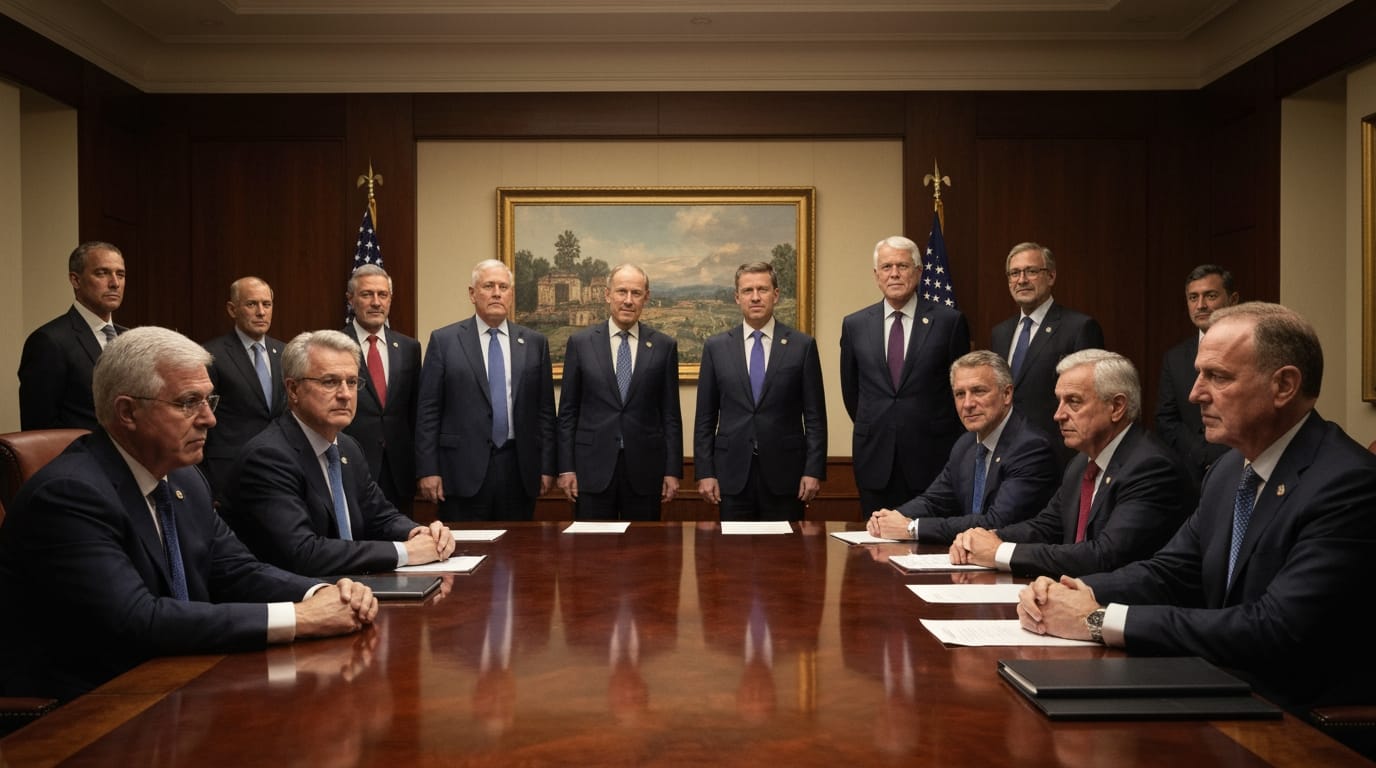
WASHINGTON – A coalition of nine nations, convened by former U.S. President Donald Trump, pledged a combined $7 billion toward a relief and reconstruction package for Gaza on Thursday, marking the inaugural meeting of his ambitious "Board of Peace." The substantial financial commitment arrives as part of a broader, multi-faceted initiative aimed at stabilizing the war-ravaged Palestinian territory following two years of conflict and establishing a framework for future global conflict resolution.
The announcement was made during the board's first gathering, attended by representatives from nearly 50 countries, with observers from a dozen more. This financial pledge is earmarked for addressing the immediate humanitarian crisis and initiating long-term rebuilding efforts in Gaza, a region facing immense challenges after extensive devastation.
The Genesis of the Board of Peace and its Expanding Mandate
The "Board of Peace" (BoP) initiative originated from President Trump's comprehensive 20-point peace plan, initially presented in late 2025 with the goal of ending the protracted conflict in Gaza. Its formal establishment included a charter-signing ceremony at the World Economic Forum in Davos earlier this year. While initially focused on the complex post-conflict landscape of Gaza, the board's mandate has since expanded significantly, with President Trump expressing a vision for it to address other global conflicts and potentially serve as an alternative to existing international bodies like the United Nations.
The United Nations Security Council, in a resolution passed in November following a ceasefire between Israel and Hamas, endorsed the overall plan, granting the BoP a mandate to operate in Gaza through the end of 2027. President Trump serves as the permanent chairman of the board, which includes a founding Executive Board comprising prominent figures such as U.S. Secretary of State Marco Rubio, his son-in-law Jared Kushner, former U.K. Prime Minister Tony Blair, and billionaire financier Marc Rowan. This high-profile composition underscores the ambitious scope and political weight behind the new organization.
The $7 Billion Pledge: A Drop in the Ocean for Gaza's Reconstruction
The $7 billion pledged for Gaza relief came from nine nations: Kazakhstan, Azerbaijan, the United Arab Emirates, Morocco, Bahrain, Qatar, Saudi Arabia, Uzbekistan, and Kuwait. Additionally, the United States announced a separate pledge of $10 billion to the Board of Peace, though the specific allocation of these funds was not detailed at the time of the announcement.
While these figures represent a substantial inflow of capital, experts estimate the full reconstruction of Gaza after two years of intense warfare will require an estimated $70 billion. This disparity highlights the immense scale of the rebuilding challenge ahead. Marc Rowan, a member of the Board of Peace's executive committee, provided a glimpse into the reconstruction blueprint, particularly for Rafah. Initial plans include building 100,000 homes for 500,000 residents, approximately a quarter of Gaza's population, along with $5 billion in infrastructure development. Rowan further articulated a long-term vision for 400,000 new homes to accommodate the entire Gazan population, supported by $30 billion in infrastructure projects, emphasizing that the core challenge is "not a problem of money or collateral...This is a problem of peace." The pledged funds are intended to address immediate humanitarian needs such as food, medical supplies, and shelter, as well as finance these longer-term housing and infrastructure projects. A portion of the funds will also support the international stabilization force and local police training.
Establishing Security and Governance: An International Effort
A crucial component of the Board of Peace's strategy for Gaza involves the deployment of an International Stabilization Force (ISF) to maintain order and facilitate reconstruction. Five nations have committed troops to this effort: Indonesia, Morocco, Kazakhstan, Kosovo, and Albania. In a complementary move, Egypt and Jordan have pledged to train local police forces, indicating a regional commitment to restoring law enforcement capabilities in the territory.
The ISF will be led by Major General Jasper Jeffers, with plans calling for a contingent of 20,000 soldiers and 12,000 police personnel. Initial deployments are slated for Rafah, a key population center where early reconstruction efforts are expected to concentrate. A significant prerequisite for the deployment of this international force is the disarmament of Hamas. However, Hamas has consistently rejected disarmament without a full Israeli withdrawal from Gaza and the establishment of a Palestinian-led governance structure, creating a complex hurdle for the board's security objectives.
Regarding governance, the Board of Peace envisions a "technocratic administration for Gaza," overseen by international experts rather than elected officials. This administrative model includes a Palestinian technocratic committee, the National Committee for the Administration of Gaza (NCAG), tasked with managing day-to-day operations and public services under the supervision of the Board of Peace. A dedicated "Gaza Executive Board" has also been established to ensure effective governance and service delivery. Despite these plans, the NCAG remains in Cairo and has not yet been able to enter Gaza, with a high-ranking Board of Peace representative acknowledging that current conditions would make their entry an "embarrassment." Further complicating matters, Israel has reportedly expanded its buffer zone within Gaza, and the Rafah crossing, a critical conduit for aid and movement, largely remains closed.
Geopolitical Undercurrents and Critical Perspectives
The Board of Peace initiative, while generating significant financial pledges, also operates within a complex geopolitical landscape, drawing both support and scrutiny. Notably, the board includes Israel as a member but lacks formal Palestinian representation, a point that has fueled criticism. Critics argue that reconstruction efforts, particularly without significant Palestinian leadership and participation, risk being perceived as "recolonization" rather than genuine rebuilding. Organizations like DAWN have emphasized that reconstruction must be "Palestinian-led, by and for Palestinians," warning against the perception of Gaza as merely an "investment project for billionaires."
Concerns have also been raised about the expanded remit of the Board of Peace and its potential to undermine the traditional role of the United Nations in global diplomacy and conflict resolution. President Trump's statements suggesting the board could tackle conflicts beyond Gaza have amplified these anxieties among some international observers.
Furthermore, the inaugural meeting took place amidst heightened tensions between the United States and Iran, characterized by a substantial U.S. military buildup in the Middle East. This broader regional instability adds another layer of complexity to the Board of Peace's mission in Gaza. While some countries, particularly in the Middle East and Central Asia, have embraced the initiative, several major European allies, including the United Kingdom, France, and Germany, have either declined or paused their participation. Their reservations often stem from concerns about the board's structure, its relationship with existing international frameworks, and the involvement of certain controversial actors.
The effectiveness of the Board of Peace and its substantial financial pledges in truly bringing enduring peace and stability to Gaza will depend heavily on navigating these profound political and logistical challenges. The core questions of Hamas disarmament, Israeli troop withdrawal, and ensuring an unimpeded flow of humanitarian aid and reconstruction materials remain central to the board's ability to achieve its ambitious goals. The path ahead for Gaza's recovery, despite the new international commitment, appears fraught with complexities that extend far beyond financial resources.


