UN Investigators Warn of "Hallmarks of Genocide" in Sudan's El Fasher Amidst Deepening Crisis
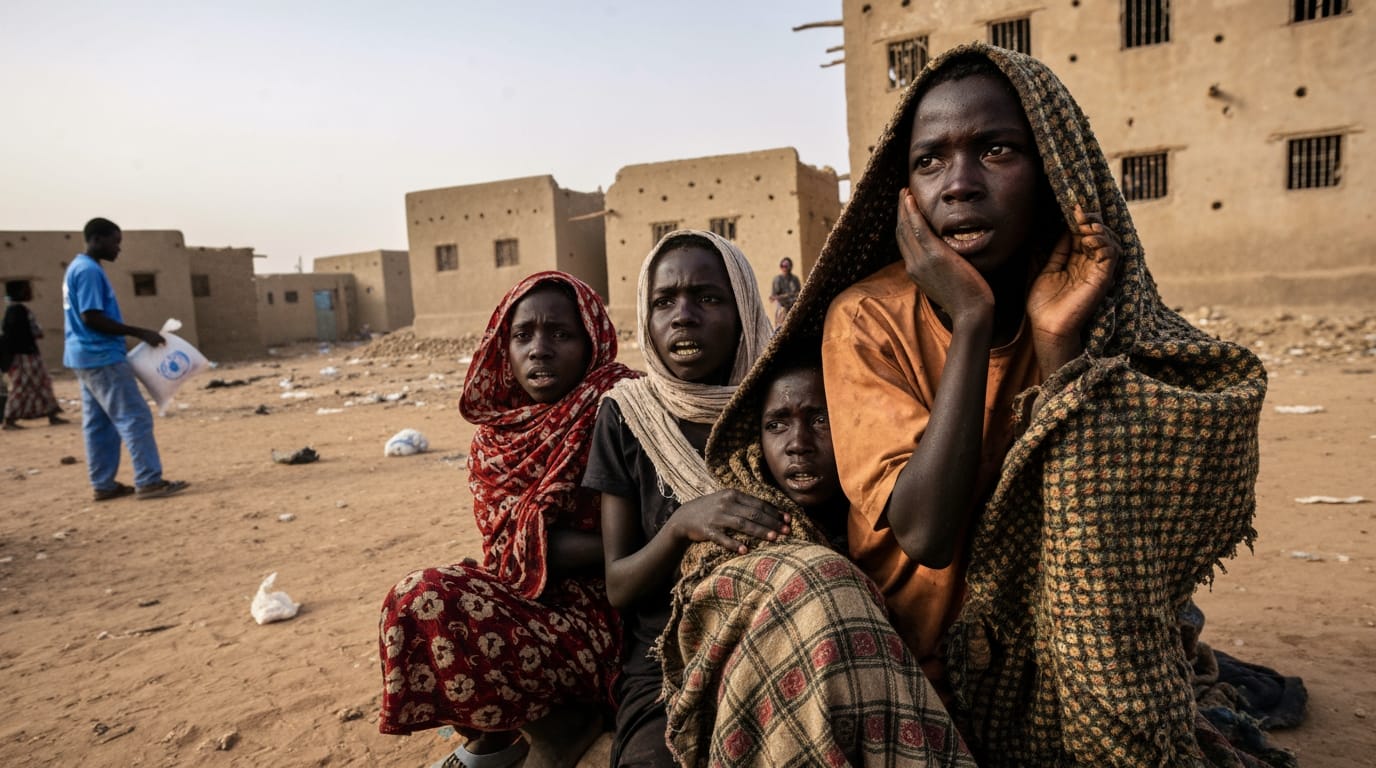
EL FASHER, Sudan – A United Nations investigation has concluded that the violent seizure of El Fasher, the capital of North Darfur, by the paramilitary Rapid Support Forces (RSF) in late October 2025 bears the "hallmarks of genocide," signaling a grave escalation in Sudan's ongoing conflict and raising urgent concerns about the fate of non-Arab communities in the region. The findings, released by the Independent International Fact-Finding Mission for Sudan, detail a systematic campaign of ethnically targeted killings, widespread sexual violence, and other atrocities that evoke painful memories of past genocides in Darfur.
The dire assessment comes amidst a catastrophic humanitarian crisis in Sudan, where millions face displacement, starvation, and rampant disease, underscoring the international community's struggle to halt a brutal war that erupted in April 2023. The UN's stark warning compels renewed scrutiny of the conflict's trajectory and the urgent need for robust protective measures for civilians caught in the crossfire.
A City Under Siege: El Fasher's Fall and the UN's Alarm
For 18 months, El Fasher endured a relentless siege, gradually cutting off its civilian population from essential supplies like food, water, medical care, and humanitarian assistance. This protracted deprivation systematically weakened residents, leaving many unable to flee when the final assault came in late October 2025. When the RSF overran the city, the last remaining stronghold of the Sudanese Armed Forces (SAF) in Darfur, what followed were "three days of absolute horror," according to the UN report.
The investigation found that the events in and around El Fasher pointed to "acts of genocide by the RSF," with evidence establishing at least three underlying acts: "killing members of a protected ethnic group; causing serious bodily and mental harm; and deliberately inflicting conditions of life calculated to bring about the group's physical destruction in whole or in part." Mohamad Chande Othman, Chairman of the mission, stated that the "scale, coordination, and public endorsement of the operation by senior RSF leadership demonstrate that the crimes committed in and around El Fasher were not random excesses of war," but rather "formed part of a planned and organized operation that bears the defining characteristics of genocide."
Eyewitness testimonies cited indiscriminate shootings, mass executions, and roads "filled with the bodies of men, women and children." Particularly alarming were reports of widespread sexual violence targeting women and girls from non-Arab communities, especially the Zaghawa and Fur, immediately following the takeover. Women and girls, some as young as seven and others pregnant, were subjected to rape. The report also documented arbitrary detention, torture, cruel treatment, extortion, and enforced disappearances. Perpetrator rhetoric explicitly calling for the elimination of non-Arab communities was cited as evidence of genocidal intent.
Echoes of the Past: Darfur's Traumatic History Resurfaces
The UN's recent declaration resonates deeply with Darfur's grim history, a region that has previously witnessed systematic atrocities and calls of genocide. The current RSF originated from the Janjaweed militias, which gained notoriety for their role in the Darfur conflict in the early 2000s. During that period, the Sudanese government and Janjaweed militias carried out mass atrocities against the Fur, Zaghawa, and Masalit communities, resulting in an estimated 300,000 civilian deaths and the displacement of 2.7 million people between 2003 and 2008. The United States declared these actions a genocide in 2004.
The renewed targeting of non-Arab communities, particularly the Zaghawa and Fur in El Fasher, mirrors these historical patterns, raising fears of a "second Darfur genocide." Since the broader conflict between the SAF and RSF began in April 2023, Darfur has once again become a focal point of intense violence and ethnic targeting. The US Secretary of State determined in January 2025 that the RSF committed genocide in Darfur, following a December 2023 determination of war crimes, crimes against humanity, and ethnic cleansing by the RSF and allied militias.
The systematic violence extends beyond El Fasher, with earlier patterns of attacks on other non-Arab communities across Sudan now being aggravated on a "far more lethal scale."
A Spreading Calamity: Humanitarian Crisis and Regional Destabilization
The atrocities in El Fasher are a stark illustration of the broader humanitarian catastrophe gripping Sudan. The conflict, nearing its second anniversary, has created the world's largest displacement and hunger crisis. Over 24.6 million people are facing acute food insecurity, with famine now confirmed in El Fasher and other regions. The healthcare system has largely collapsed, with over 70% of facilities in conflict zones non-functional, and cholera has spread to all 18 states.
More than 12 million people have been displaced, with approximately 9.5 million internally displaced and over 3 million seeking refuge in neighboring countries. The United Nations recently confirmed that over 6,000 people were killed in the three days following the RSF's seizure of El Fasher, though some estimates suggest the overall death toll across the conflict could exceed 150,000. The scale of sexual and gender-based violence is particularly alarming, with 87% of identified perpetrators attributed to the RSF.
The conflict's expansion has also led to the siege of other cities, such as Kadugli and Dilling, where civilians are trapped and facing famine conditions. The fighting has destabilized neighboring states, heightening regional insecurity and posing immense challenges for humanitarian aid delivery, which remains severely restricted across much of the country.
International Response and the Call for Accountability
The UN's explicit warning has intensified calls for immediate and decisive international action. The UN Special Adviser on Genocide Prevention, Chaloka Beyani, raised concerns over the "massive violations of international human rights law" and "direct attacks on civilians," emphasizing that the "threshold is about to be crossed." The International Criminal Court (ICC) has expressed profound alarm, confirming its ongoing investigation into alleged war crimes committed since April 2023 and signaling its intent to preserve evidence for future prosecutions.
Despite these urgent warnings and the appalling scale of human suffering, the international response has been criticized as insufficient. While some diplomatic efforts have been made, including sanctions on RSF leaders and calls for ceasefires, effective intervention remains elusive. The UN Human Rights Chief, Volker Türk, lamented that the atrocities in El Fasher were "foreseen and preventable – but they were not prevented," and expressed fears that "abominable atrocities such as summary executions, rape and ethnically motivated violence are continuing within the city."
The ongoing crisis in El Fasher and across Sudan serves as a stark reminder of the urgent need for a robust and coordinated international strategy to protect civilians, ensure unimpeded humanitarian access, and hold perpetrators accountable for the gravest crimes under international law. Without sustained pressure and concrete action, the "hallmarks of genocide" observed in El Fasher threaten to define an even darker chapter in Sudan's already tragic history.


