Federal Judge Blocks Trump Order Barring NPR, PBS Funding, Citing First Amendment Violations
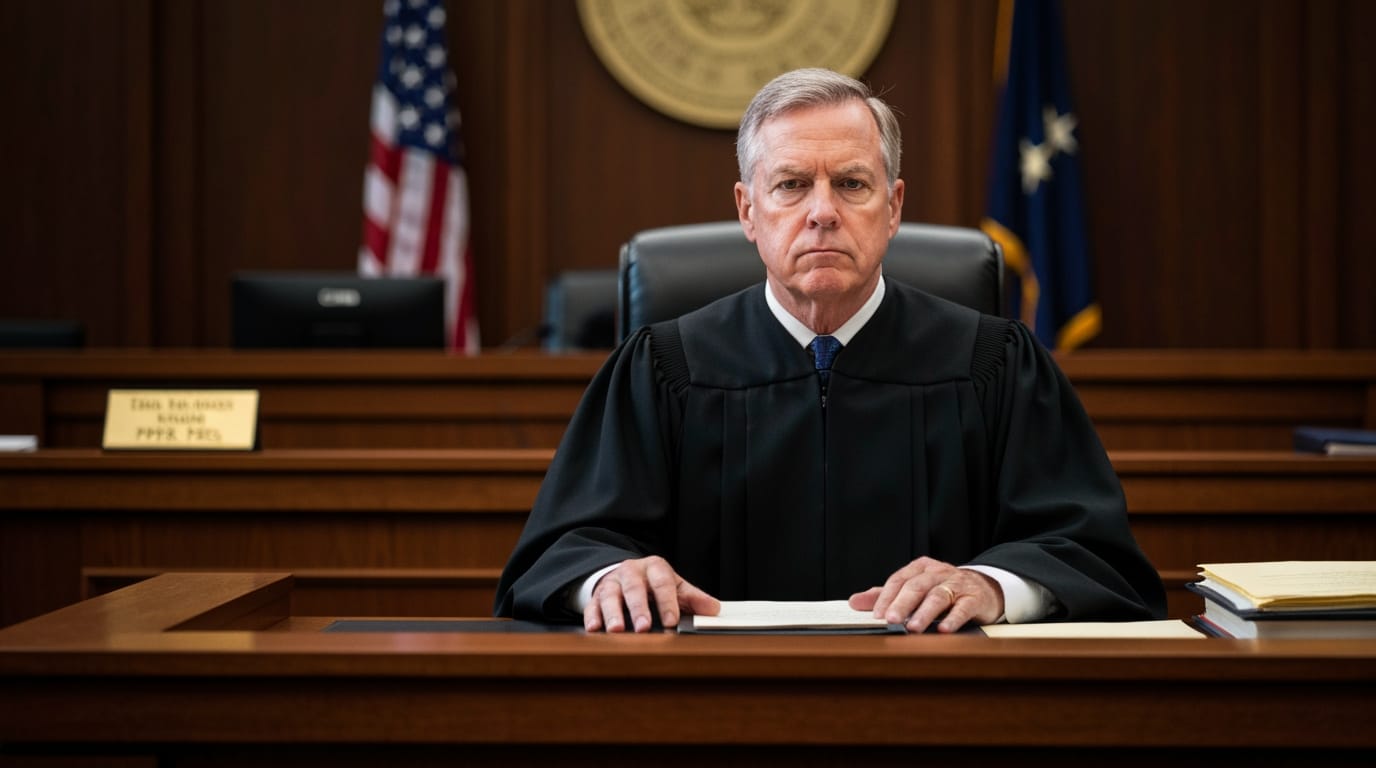
Washington D.C. — A federal judge has ruled that a Trump administration executive order aimed at barring federal funding for National Public Radio (NPR) and the Public Broadcasting Service (PBS) is unconstitutional, citing violations of the First Amendment. The decision, handed down Tuesday by U.S. District Judge Randolph D. Moss, issues a permanent injunction preventing the government from implementing the directive, marking a significant victory for public broadcasting organizations.
The ruling underscores the principle that the government cannot use its financial leverage to penalize or suppress speech it disfavors. While the direct financial impact of the decision remains somewhat uncertain due to prior congressional actions, the court's stance reaffirms critical protections for media independence and free expression.
Judicial Scrutiny and Constitutional Upholding
Judge Randolph D. Moss, an appointee of former President Barack Obama, delivered a sharp rebuke to the executive order, declaring it "unlawful and unenforceable." In his 62-page order, Moss stated that the First Amendment draws a clear line at government attempts to use power, including the "power of the purse," to "punish or suppress disfavored expression." The judge specifically highlighted that the Trump order "singles out two speakers and, on the basis of their speech, bars them from all federally funded programs," which he deemed as impermissible viewpoint discrimination and retaliation. This interpretation aligns with long-standing legal precedents protecting free speech from government interference, particularly when financial punitive measures are involved. The court's decision was a direct response to lawsuits filed by NPR, PBS, and several public radio affiliates, including Aspen Public Radio, Colorado Public Radio, and KSUT Public Radio.
The Executive Order: "Ending Taxpayer Subsidies for Bias Media"
The challenged executive order, titled "Ending Taxpayer Subsidies for Bias Media," was issued in May 2025 by the Trump administration. It accused NPR and PBS of presenting an "ideological bias" and failing to offer a "fair, accurate, or unbiased portrayal of current events to taxpaying citizens." The order explicitly stated that the specific viewpoints promoted by NPR and PBS were irrelevant; what mattered, according to the administration, was the perceived lack of impartiality. This directive called upon federal agencies to cease "any direct or indirect funding" to both organizations. The administration's move was part of a broader, multi-pronged effort to curtail public broadcasting, which it viewed as politically aligned against its agenda. Public media executives, in turn, argued that the lawsuits were not only about funding but also about defending the fundamental principle that the government should not use its power to punish speech.
Broader Context of Public Broadcasting Funding
Federal funding for public broadcasting in the United States typically flows through the Corporation for Public Broadcasting (CPB), an independent non-profit organization established by Congress. The CPB distributes grants to public radio and television stations across the country, supporting educational programming, news, and cultural content. While the federal contribution represents a relatively small percentage of the total operating budgets for many public media outlets, it is often critical for smaller stations and provides a vital baseline for attracting additional local and private funding.
The judge's ruling comes after significant shifts in the landscape of public broadcasting funding. Last summer, congressional Republicans, citing similar concerns to those expressed in the executive order, rescinded federal support that had previously been allocated for public media, leading to the dissolution of the CPB in February. This congressional action had already largely preempted the direct financial impact of the executive order on CPB-distributed funds. However, Judge Moss's ruling maintains its relevance because the executive order was not limited to CPB funding; it sought to block "all federally funded programs" for NPR and PBS. This broader scope meant that other federal grants, such as those from the Department of Education for educational programming, could still be impacted. For instance, the Department of Education had already scrapped $23 million in funding for educational TV shows, a move tied to Trump's executive order that Judge Moss has now deemed unlawful.
Reactions and Future Implications
The decision was met with enthusiasm by public broadcasting organizations. PBS issued a statement expressing that it was "thrilled with today's decision declaring the executive order unconstitutional," reiterating that the order constituted "textbook unconstitutional viewpoint discrimination and retaliation." NPR's lawyer, Theodore Boutrous, echoed this sentiment, asserting that the ruling prevents the government from enforcing an executive order targeting NPR and PBS based on the President's disapproval of their news reporting.
Conversely, the White House signaled strong disagreement and a potential appeal. White House spokesperson Abigail Jackson described the ruling as "ridiculous" and accused Judge Moss of being an "activist judge attempting to undermine the law." Jackson argued that NPR and PBS have no inherent right to taxpayer funds and highlighted that Congress had already voted to defund them, asserting that the Trump administration anticipates "ultimate victory on the issue."
The long-term implications of this ruling remain to be fully seen. While the immediate financial relief for NPR and PBS, particularly concerning CPB funds, is limited due to prior congressional action and the CPB's dissolution, the legal precedent set by Judge Moss's decision is substantial. It fortifies the legal framework against governmental attempts to defund media outlets based on perceived biases, regardless of whether those outlets receive direct federal appropriations. The ruling serves as a powerful affirmation of First Amendment protections for a free and independent press, signaling that the "power of the purse" cannot be wielded as a weapon against disfavored speech. It also leaves open the possibility for NPR and PBS to pursue other federal grants without the threat of the now-blocked executive order.
Conclusion: A Stand for Press Freedom
In an era of heightened political polarization and scrutiny of media, Judge Moss's ruling provides a robust defense of press freedom and the constitutional limitations on executive power. By definitively blocking the Trump administration's executive order, the court has sent a clear message: the government cannot selectively deny funding to media organizations based on the content or perceived viewpoint of their reporting. This decision ensures that public broadcasting, despite ongoing political and financial challenges, continues to operate under the protective umbrella of the First Amendment, preserving its ability to deliver independent, fact-based journalism and educational content to communities across the United States. The legal battle over the future of public media funding may continue, but this ruling establishes a critical barrier against government overreach into journalistic independence.