Senegal Enacts Harsher Penalties for Same-Sex Relations, Drawing International Condemnation
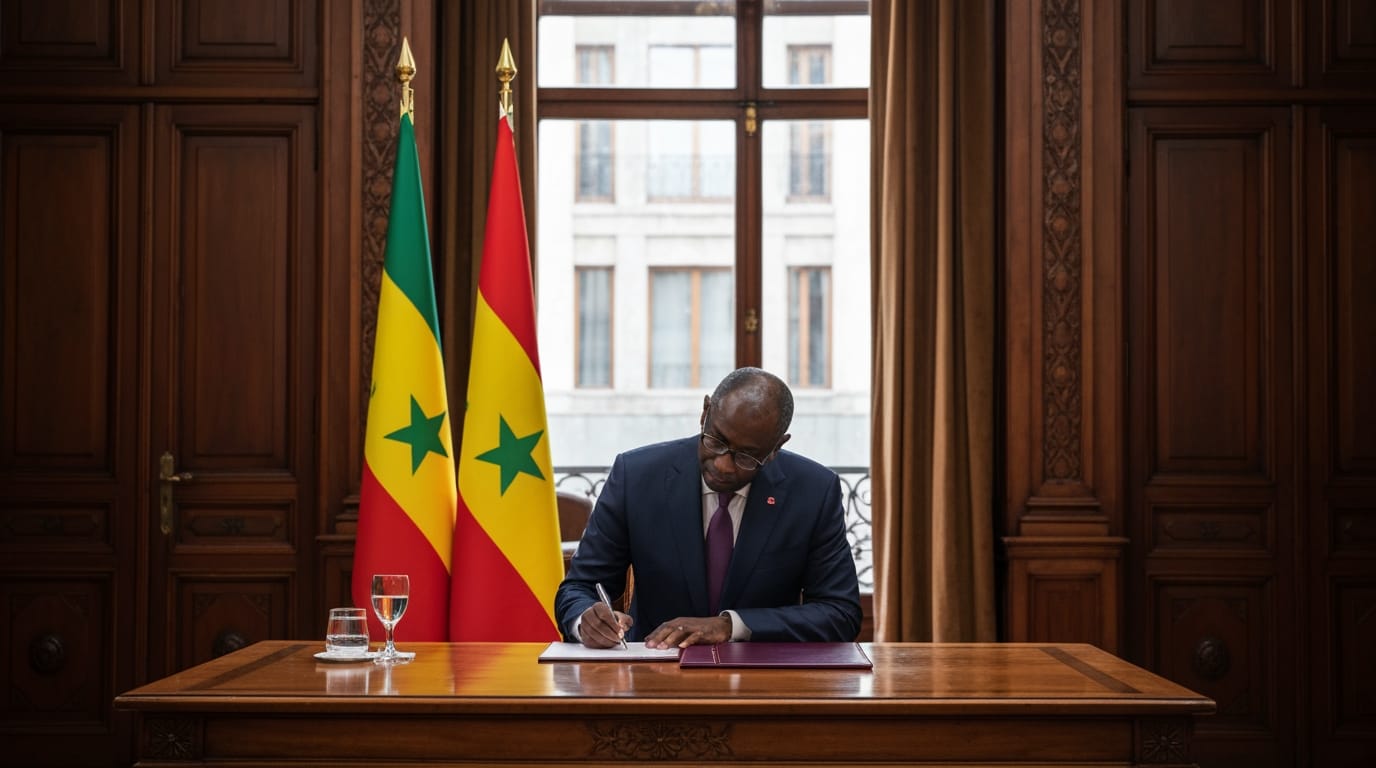
DAKAR, Senegal — In a move that has intensified concerns among human rights advocates worldwide, Senegalese President Bassirou Diomaye Faye on Monday, March 31, 2026, signed into law legislation significantly increasing penalties for same-sex relations and criminalizing the "promotion" or "financing" of homosexuality. The new provisions, which garnered near-unanimous support in the parliament, double the maximum prison sentence for "unnatural acts" from five to ten years and impose substantially higher fines, marking a stark escalation in the West African nation's stance against its LGBTQ+ community.
The presidential assent solidifies a legislative push that has been a cornerstone promise of the current administration, led by President Faye and Prime Minister Ousmane Sonko, since they came to power in 2024. While same-sex sexual activity was already illegal under Article 319 of Senegal's Penal Code, which previously prescribed imprisonment of one to five years and fines, the new law represents a dramatic toughening of enforcement and scope. Human rights organizations have swiftly denounced the development, warning of its severe implications for the safety, dignity, and fundamental freedoms of LGBTQ+ individuals in Senegal.
Intensified Crackdown and Expanded Criminalization
The updated legislation replaces the previous maximum penalty of five years with a new range of five to ten years imprisonment for those convicted of "unnatural acts." Fines have also seen a dramatic increase, now reaching up to 10 million CFA francs, equivalent to approximately $17,609 to $18,000. Critically, the law broadens the definition of "acts against nature" to explicitly include homosexuality, bisexuality, "transsexuality," zoophilia, and necrophilia. Furthermore, it criminalizes the "promotion" or "financing" of homosexuality, a provision seen by critics as a direct threat to organizations and individuals supporting sexual and gender minorities. This measure could severely curtail the operations of local and international groups working on public health initiatives, including HIV prevention, within the LGBTQ+ community.
Adding to the severity, judges are now explicitly barred from granting suspended sentences or reducing penalties below the newly established minimums, ensuring that convictions carry significant custodial terms. The law also includes a clause to punish those who make unsubstantiated accusations of homosexual acts, a provision lawmakers claim is intended to prevent malicious allegations, though activists fear it could be arbitrarily applied. The overwhelming parliamentary support, with 135 votes in favor, none opposed, and three abstentions, underscores a strong national consensus on the issue. During parliamentary debates, some lawmakers expressed extreme views, with one MP declaring, "Homosexuals will no longer breathe in this country," illustrating the fervent sentiment driving this legislative change.
Deep-Seated Social and Political Underpinnings
The newly enacted law reflects deeply entrenched societal attitudes in Senegal, a predominantly Muslim nation where conservative religious values hold significant sway. A 2013 Pew Global Attitudes Project indicated that 97% of Senegalese residents believe homosexuality is a way of life that society should not accept, a figure that remained unchanged from 2007. This strong public sentiment has translated into consistent political pressure for stricter laws against same-sex relations. Indeed, hostility towards LGBTQ+ individuals has intensified in recent years, with previous unsuccessful attempts to increase penalties occurring in 2022 and 2024.
The current administration campaigned on a platform that included strengthening Islamic identity and social values, making the toughening of anti-LGBTQ+ laws a key promise. Prime Minister Ousmane Sonko notably presented the bill himself, emphasizing its importance to his government's agenda. The period leading up to the law's passage saw rallies organized by groups promoting Islamic values, alongside increased police crackdowns and arrests of individuals suspected of same-sex conduct. In October 2023, a particularly graphic incident occurred in Kaolack, where a mob exhumed and burned the body of a man believed to be gay, highlighting the extreme level of hostility faced by the community. Recent reports also cite the arrest of 12 men in February 2026 on charges including "acts against nature" and alleged intentional HIV transmission, further illustrating the climate of fear.
International Outcry and Human Rights Concerns
The signing of the law has drawn sharp criticism from the international community. United Nations Human Rights Chief Volker Türk had urged President Faye not to sign the bill, describing it as "deeply concerning" and a clear violation of fundamental human rights. Türk emphasized that the law "flies in the face of the sacrosanct human rights we all enjoy: the rights to respect, dignity, privacy, equality and freedoms of expression, association and peaceful assembly," rights guaranteed under the Universal Declaration of Human Rights and other international treaties to which Senegal is a party.
Human rights organizations such as Human Rights Watch and SafePlace International have echoed these concerns, warning that the expanded criminalization risks undermining internationally recognized human rights protections. They argue that such laws heighten the risk of violence, discrimination, and create significant barriers for individuals seeking protection or accessing essential services. The chilling effect on community organizing and support networks is expected to be severe, potentially leading to increased fear, self-censorship, and reduced access to healthcare, including HIV prevention.
The Senegalese government has historically rejected recommendations to repeal Article 319, maintaining that it targets "unnatural acts" rather than homosexuality itself. However, the explicit definitions in the new law make this distinction increasingly difficult to uphold. Senegal joins a growing number of African countries that have recently toughened anti-LGBTQ+ legislation, a trend that has seen penalties ranging from lengthy prison sentences to the death penalty in some nations like Uganda and Mauritania. Reports have also indicated the involvement of a U.S.-based "pro-family" group, MassResistance, in advising Senegalese activists on advancing the legislation, raising questions about external influences on domestic policy.
A Challenging Future for Senegal's LGBTQ+ Community
The enactment of this law fundamentally alters the legal and social landscape for LGBTQ+ individuals in Senegal, pushing an already marginalized community further into the shadows. The doubling of prison terms, the substantial increase in fines, and the criminalization of any form of "promotion" or "financing" create a hostile environment that severely restricts personal freedom and expression. The legislation not only punishes same-sex acts but also aims to dismantle any support structures, legal or informal, that might exist for the LGBTQ+ community. This move aligns Senegal with a broader African trend of increased legal persecution, signaling a challenging and uncertain future for those whose identities and relationships fall outside the state-sanctioned norm. The international community's response will likely continue to emphasize human rights violations, while locally, activists and individuals will face heightened risks in their daily lives and advocacy efforts.


