Supreme Court Sends Colorado's Conversion Therapy Ban Back to Lower Courts, Citing Free Speech Concerns
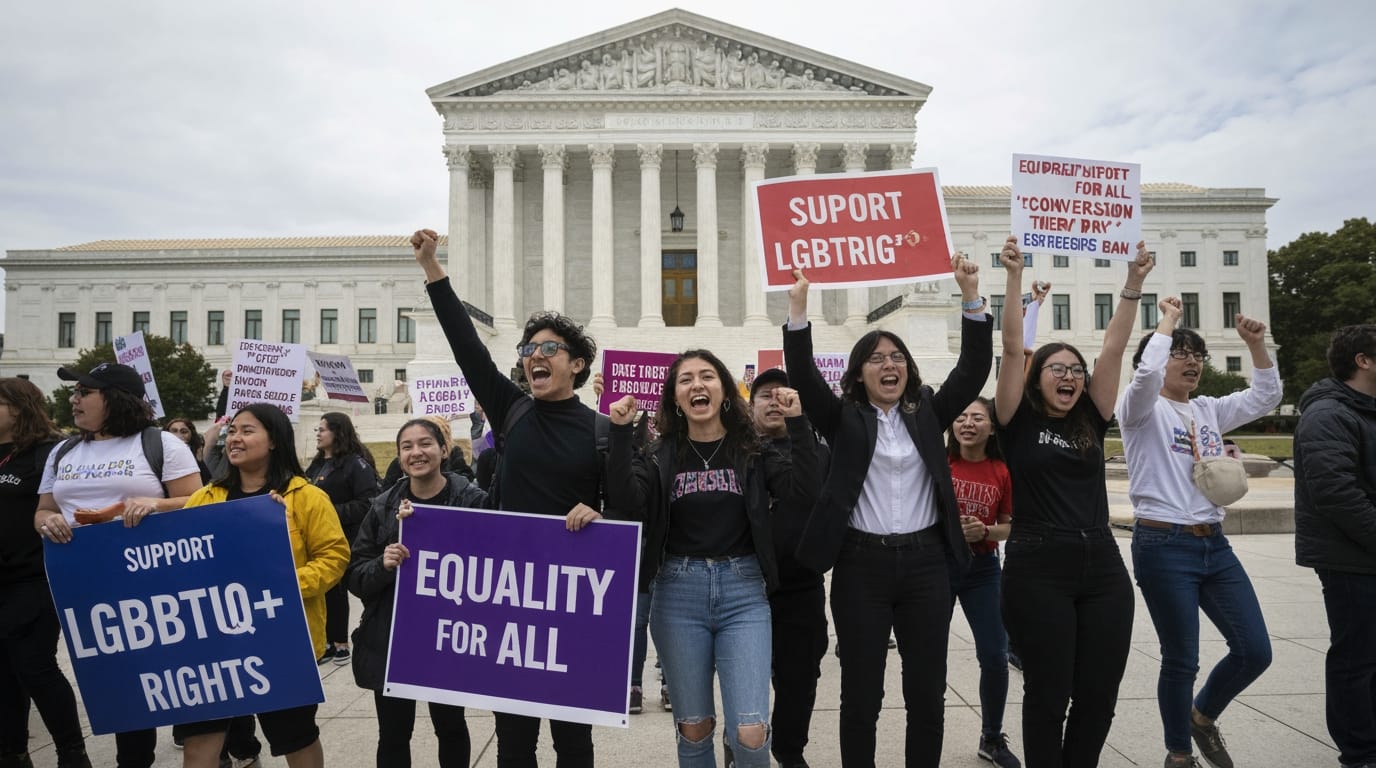
Washington D.C. — The U.S. Supreme Court delivered a significant ruling today, largely siding with a Christian counselor who challenged Colorado's 2019 ban on "conversion therapy" for minors. In an 8-1 decision, the high court stopped short of outright striking down the state law but reversed an appellate court's judgment, remanding the case for re-evaluation under a far more rigorous legal standard. This move casts considerable doubt on the future of similar bans in nearly 30 states and signals a judicial emphasis on First Amendment protections in therapeutic contexts.
First Amendment Scrutiny Heightened for Therapeutic Speech
The Court's majority opinion, penned by Justice Neil Gorsuch, found that Colorado's Minor Conversion Therapy Law, as applied to talk therapy, impermissibly regulates speech based on its viewpoint. The justices concluded that the lower courts, specifically the U.S. Court of Appeals for the 10th Circuit, had "erred by failing to apply sufficiently rigorous First Amendment scrutiny" when assessing the law's constitutionality. This directive requires the lower courts to apply "strict scrutiny," a demanding legal test that few laws survive, to determine if the ban violates free speech rights.
Justice Gorsuch articulated the majority's position, writing that Colorado's law "censors speech based on viewpoint" and "prescribes what views she may and may not express." He further emphasized that "the First Amendment stands as a shield against any effort to enforce orthodoxy in thought or speech in this country," underscoring the Court's concern about governmental attempts to dictate the content of therapeutic conversations. While the ruling does not explicitly dismantle Colorado's ban, its instructions to the lower courts strongly imply that the law, in its current form, is unlikely to withstand renewed constitutional challenge.
Colorado's Protective Measure Faces Legal Headwinds
The case, Chiles v. Salazar, originated from a challenge brought by Kaley Chiles, a licensed counselor in Colorado. Chiles, represented by the conservative legal group Alliance Defending Freedom, argued that the 2019 Colorado law infringed upon her First Amendment right to free speech. She maintained that her counseling approach, described as "faith-informed," aimed to assist clients with their "stated desires and objectives in counseling, which sometimes includes clients seeking to reduce or eliminate unwanted sexual attractions, change sexual behaviors, or grow in the experience of harmony with one's physical body."
Colorado's Minor Conversion Therapy Law was enacted with the intention of protecting LGBTQ+ minors from practices widely considered harmful and ineffective. The law prohibited licensed mental health professionals from engaging in any practice or treatment that attempts to change an individual's sexual orientation or gender identity, including talk therapy. Violators faced substantial penalties, including fines up to $5,000 and potential suspension or revocation of their counseling license. Notably, Colorado state officials indicated that no one had been sanctioned under the law prior to this Supreme Court ruling. The state argued that its law regulated professional conduct—the provision of healthcare—and only incidentally affected speech, a power traditionally held by states to protect public health and safety.
The medical and psychological communities overwhelmingly condemn "conversion therapy" as a pseudoscientific practice lacking credible evidence of efficacy and posing significant risks to mental health. Major medical associations advocate against its use, citing studies that link the practice to increased rates of depression, post-traumatic stress disorder, and suicidal ideation among LGBTQ+ youth.
Dissent and Broad Implications for State Protections
Justice Ketanji Brown Jackson issued a lone dissent, expressing grave concerns about the majority's interpretation. She argued that the Court's decision "opens a dangerous can of worms" and could significantly impair states' long-standing ability to regulate medical care. Justice Jackson emphasized that "bedrock First Amendment principles have far less salience when the speakers are medical professionals and their treatment-related speech is being restricted incidentally to the State's regulation of the provision of medical care." Her dissent highlighted the potential for the ruling to undermine regulatory frameworks designed to protect patients from harmful practices merely because those practices involve speech.
The immediate impact of this ruling extends beyond Colorado. At least 23 other states, along with Washington D.C., have enacted similar bans or restrictions on conversion therapy for minors. Legal experts and LGBTQ+ advocacy groups fear that the Supreme Court's decision will encourage further challenges to these state laws, potentially leading to their invalidation. The Alliance Defending Freedom, which represented Chiles, has indicated its intent to pursue challenges in other states. While the ruling specifically addressed talk therapy and did not challenge the state's power to regulate "aversive physical interventions" sometimes associated with conversion therapy, critics argue that it effectively creates a loophole for practices deemed harmful by medical professionals.
A Contentious Debate with Far-Reaching Consequences
This Supreme Court decision reignites a contentious debate surrounding the intersection of free speech, religious liberty, and the protection of vulnerable populations. Advocates for LGBTQ+ rights voiced strong condemnation, asserting that the ruling prioritizes abstract free speech doctrines over the documented harms of conversion therapy. They emphasize that the decision could leave LGBTQ+ youth more susceptible to practices that medical authorities universally reject.
Conversely, proponents of the ruling hail it as a victory for counselors and families seeking diverse therapeutic options consistent with their beliefs. They contend that the state's ban restricted the ability of counselors to provide faith-informed guidance, thereby limiting parental and individual choice in mental health care. The Court's ruling underscores the enduring tension between governmental efforts to safeguard public welfare and the fundamental constitutional right to freedom of speech. This ongoing legal and ethical battle is poised to continue in lower courts and state legislatures across the nation, shaping the landscape of LGBTQ+ youth protections and therapeutic practices for years to come.
The decision arrives amidst a broader trend where the Supreme Court has increasingly considered cases at the intersection of religious freedom and LGBTQ+ rights, often siding with plaintiffs raising First Amendment objections to state and local measures. This ruling marks another pivotal moment in that evolving legal narrative, leaving states and mental health professionals to grapple with its complex implications for policy and practice.


