Federal Reserve Stands Firm: Rates Unchanged Amidst Political Pressure
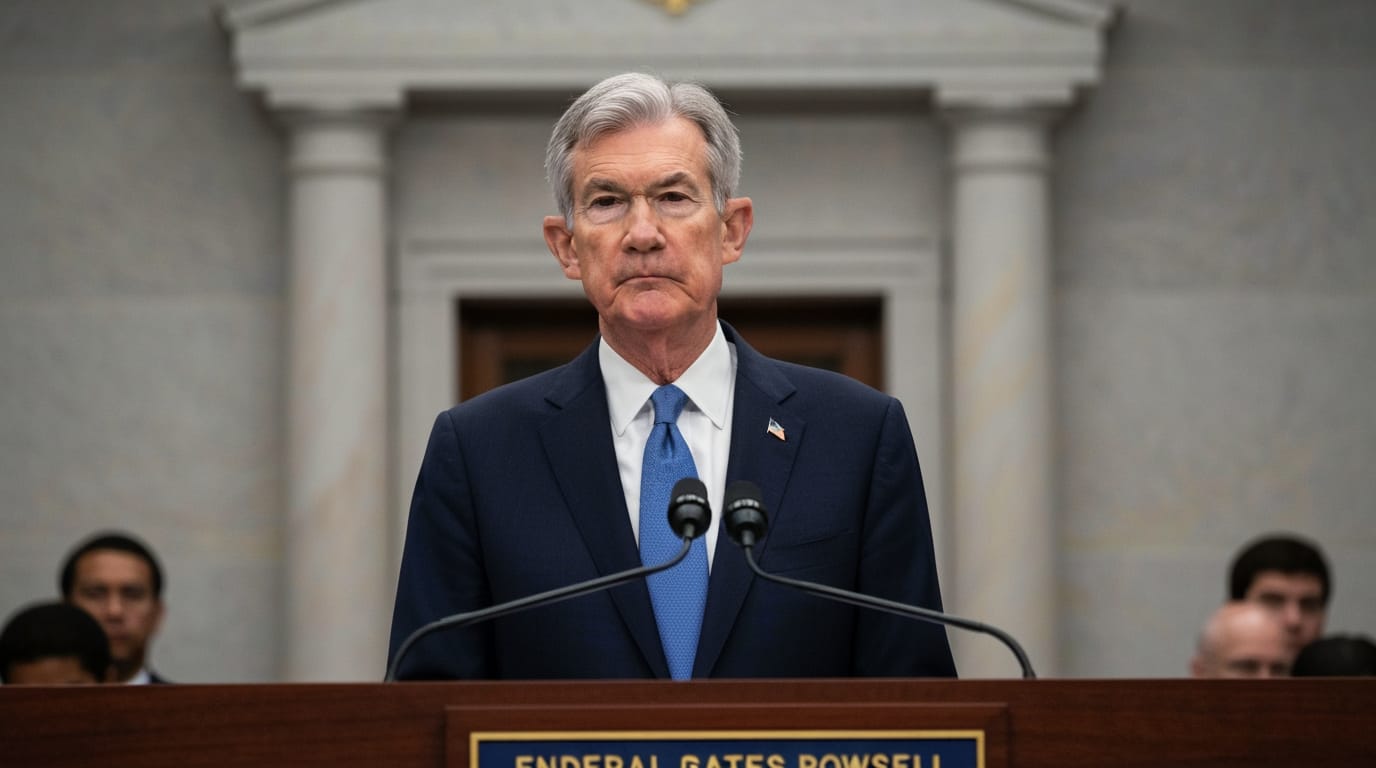
Washington, D.C. - The U.S. Federal Reserve announced Wednesday its decision to keep the benchmark federal funds rate steady in the range of 3.5% to 3.75%, a move that holds borrowing costs at a multiyear high following three consecutive rate cuts in late 2025. This decision, widely anticipated by financial markets, was made despite explicit and public pressure from former President Donald Trump, who has consistently advocated for lower interest rates. The central bank's resolve underscores its commitment to an independent monetary policy, a principle often challenged by political considerations.
The Fed's Deliberate Hold
The Federal Open Market Committee (FOMC), the Fed's monetary policy-setting body, voted 10-2 to maintain the current interest rate target. Governors Stephen Miran and Christopher Waller were the dissenting voices, arguing for an additional quarter-point reduction. The majority's rationale centered on a mixed economic picture: while economic activity has been expanding at a solid pace and the unemployment rate has shown signs of stabilization at 4.4%, job gains have remained low and inflation continues to be somewhat elevated, staying above the Fed's long-term target of 2%.
Policymakers acknowledged lingering uncertainty about the economic outlook and reiterated that future adjustments to the federal funds rate would be carefully assessed based on incoming data, the evolving economic landscape, and the balance of risks. This cautious approach signals a desire to avoid premature moves that could either reignite inflationary pressures or stifle economic growth. Former Cleveland Fed President Loretta Mester indicated that the Fed is well-positioned to observe how the economy develops, noting that the labor market has stabilized, necessitating a somewhat restrictive policy to guide inflation back to the 2% target.
Trump's Persistent Calls for Lower Rates
The Federal Reserve's latest decision unfolded against a backdrop of sustained and outspoken criticism from Donald Trump. Throughout his previous term and leading up to the present, Trump has repeatedly and publicly pressed Fed Chair Jerome Powell to reduce interest rates, contending that higher rates disadvantage the U.S. economy and impede household finances. He has characterized Powell as "stupid" and asserted that the Fed's reluctance to lower rates has cost the nation "hundreds of billions of dollars."
Trump has also expressed his belief that his "voice should be heard" in the Fed's interest rate deliberations, suggesting a more direct role for the executive branch in monetary policy. This stance contrasts sharply with traditional norms that emphasize the central bank's operational independence. The pressure has extended beyond rhetoric, with a Department of Justice investigation into Powell regarding renovations at the Fed's offices. Powell has publicly stated his view that this probe serves as a pretext to undermine the Fed's crucial independence.
Historically, U.S. presidents, including Richard Nixon and Lyndon B. Johnson, have sought to influence the Federal Reserve's actions. Nixon, in particular, successfully pressured the central bank to maintain low rates before the 1972 election, a move widely believed to have contributed to subsequent inflationary periods. However, the transparency and intensity of Trump's criticisms have been described as unprecedented.
The Bedrock of Central Bank Independence
The Federal Reserve's ability to make monetary policy decisions free from political interference is widely considered essential for long-term economic stability. This independence shields the central bank from pressures that might prioritize short-term political gains over the nation's broader economic health. A politically independent central bank can undertake difficult, even unpopular, actions necessary to achieve its dual mandate of maximum employment and price stability, as exemplified by Paul Volcker's tenure in combating stagflation.
Economists and financial observers consistently highlight that central bank independence bolsters credibility and fosters confidence in financial markets. Conversely, concerns about a politicized Fed could lead to higher inflation, increased long-term interest rates, and a diminished trust among global investors in the stability of the U.S. economy and the dollar. Research consistently suggests that economies with more independent central banks tend to experience lower and less volatile inflation rates.
Market Reaction and Economic Horizon
Financial markets largely factored in the Fed's decision to hold rates, with market experts expecting no change in the federal funds rate at this meeting. Despite the maintained higher borrowing costs, the stock market has shown resilience, with the S&P 500 recording a 1.5% gain year-to-date and hovering near its all-time high. Strategists at Goldman Sachs project further growth for the S&P 500 in 2026. However, some Federal Reserve officials, including Chair Powell, have cautioned investors that current stock valuations are elevated by historical standards.
Looking ahead, investors are betting on the Federal Reserve initiating two rate cuts in 2026, with the first potentially occurring in June. Fed policymakers, however, currently foresee only one rate cut for the year, indicating a more conservative outlook within the central bank itself. The divergence between market expectations and the Fed's internal projections underscores the ongoing uncertainty surrounding the economic trajectory and the path of monetary policy.
Upholding a Critical Mandate
The Federal Reserve's decision to maintain interest rates, despite significant political pressure, marks a continuation of its efforts to navigate a complex economic landscape while steadfastly adhering to its institutional independence. This commitment is viewed by many as vital for maintaining the long-term health and stability of the U.S. economy. As the central bank continues to monitor key economic indicators, the delicate balance between managing inflation, fostering employment, and resisting external influence will remain a focal point for policymakers and observers alike. Future decisions will undoubtedly hinge on how economic data evolves, further testing the Fed's resolve in its critical role.


