FIFA President Gianni Infantino Advocates for Russia's Return to International Football Amidst Fierce Opposition
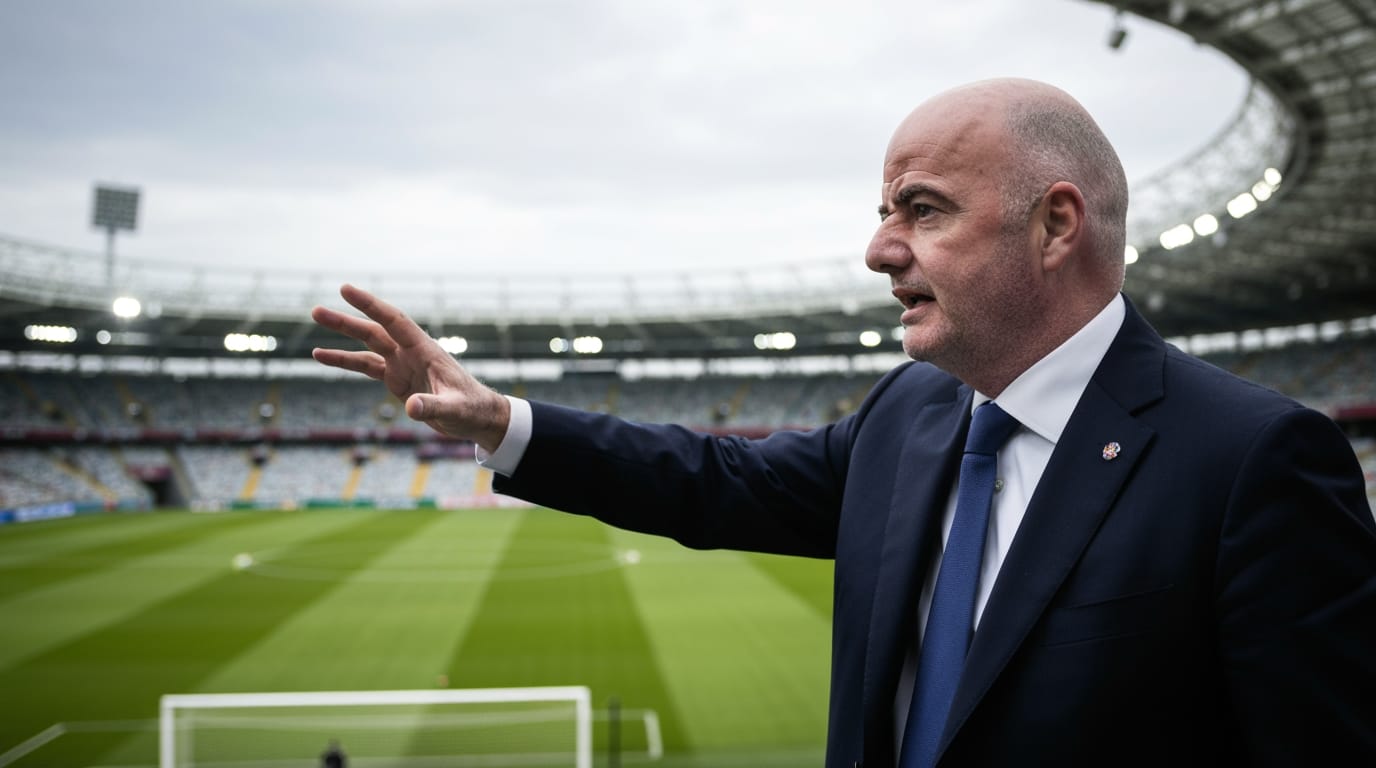
FIFA President Gianni Infantino has reignited a contentious debate within the global football community by advocating for the reintegration of Russia into international competitions. His recent statements, suggesting that the current ban has been counterproductive and has only fostered "frustration and hatred," have drawn immediate and sharp criticism, particularly from Ukrainian officials, who underscore the ongoing human cost of the conflict in their nation. This stance places FIFA at the center of a complex geopolitical and ethical quandary, challenging the organization's role in balancing sports diplomacy with international sanctions.
The Call for Reintegration: A Quest for Unity or a Policy Shift?
Infantino's push for Russia's return signals a potential pivot from the unified front presented by global football bodies following the 2022 invasion of Ukraine. In recent interviews, Infantino expressed a belief that the exclusion of Russian teams, particularly youth categories, has yielded no positive outcomes. He suggested that allowing "girls and boys from Russia" to participate in football events across Europe could contribute to peace and understanding. The FIFA president also articulated a broader philosophical position, proposing that the organization should codify rules to prevent the banning of any nation from football due to the actions of its political leaders. This perspective emphasizes the importance of maintaining open ties and using football as a bridge, even amidst international discord.
The FIFA chief's remarks are not entirely unprecedented, as he has previously voiced similar sentiments, including at the 2024 UEFA Congress in Belgrade. This consistent advocacy suggests a deliberate effort to shift the narrative surrounding Russia's exclusion. However, these comments emerged as the organization also defended its decision to award a peace prize to former United States President Donald Trump, further highlighting Infantino's often controversial diplomatic approaches within the sporting world.
The Origin of the Ban: A Response to International Aggression
The initial decision to suspend all Russian clubs and national teams from international football was made jointly by FIFA and UEFA in February 2022, shortly after Russia's full-scale invasion of Ukraine. This unprecedented move effectively removed Russia from major competitions, including qualification for the 2022 World Cup in Qatar and subsequent tournaments such as the 2026 World Cup qualifiers. The ban came amidst considerable international pressure, with numerous national federations, including those of England, Poland, and Sweden, threatening to boycott matches against Russia if the country remained in competition.
The Court of Arbitration for Sport (CAS) upheld FIFA and UEFA's decision, dismissing appeals from the Football Union of Russia (FUR). The governing bodies maintained that the continued aggression in Ukraine necessitated a severe penalty, building on the precedent of previous sanctions against Russian athletes for state-sponsored doping. The suspension demonstrated a rare instance of global sports organizations taking a decisive stand on a major geopolitical conflict, aligning with broader international sanctions against Russia.
Ukrainian Outcry: The Human Cost of Conflict
Infantino's suggestion of lifting the ban has been met with immediate and profound indignation from Ukrainian officials. Matvii Bidnyi, Ukraine's sports minister, publicly dismissed Infantino's remarks as "irresponsible" and "infantile," asserting that they "detach football from the reality in which children are being killed." This sentiment was echoed even more forcefully by Ukrainian Foreign Minister Andrii Sybiha, who labeled Infantino a "moral degenerate" and poignantly noted that "679 Ukrainian girls and boys will never be able to play football – Russia killed them." Sybiha's critique drew a stark historical parallel, suggesting that future generations might view such attempts at normalization as a "shame reminiscent of the 1936 Olympics."
These reactions highlight the deep emotional and moral chasm between Infantino's call for sporting reconciliation and the lived reality of those directly affected by the conflict. For Ukraine, the idea of reintegrating Russian teams while the war continues is seen not as a path to peace, but as a tacit legitimization of aggression and a betrayal of victims.
Navigating Football's Geopolitical Landscape: A Difficult Path Ahead
Despite Infantino's statements, the path to Russia's full return to international football remains fraught with significant obstacles. Currently, Russian teams are largely confined to playing international friendlies, a stark contrast to their previous involvement in global and continental tournaments. UEFA President Aleksander Ceferin has consistently maintained that Russia's reinstatement is contingent on the cessation of the war in Ukraine.
This condition underscores the broader political consensus within European football, which Infantino's stance seemingly challenges. A previous attempt by UEFA in 2023 to readmit Russian Under-17 teams was quickly abandoned following widespread protests and threats of boycotts from over a dozen national federations. This incident demonstrated the powerful resistance that any move towards lifting the ban is likely to encounter. Reports indicate that the FIFA Council currently has no plans to vote on Russia's reinstatement, anticipating strong opposition from several European countries. This suggests that while Infantino may advocate for a change in policy, the practical implementation faces significant headwinds from within the footballing world itself, reflecting the continued geopolitical sensitivities surrounding the conflict.
Conclusion: A Divisive Vision for Football's Future
Gianni Infantino's renewed advocacy for Russia's return to international football has thrust FIFA into a highly charged debate, exposing the deep divisions between the principle of sporting universality and the harsh realities of global conflict. While Infantino champions a vision of football as a unifying force, asserting that exclusion has failed to achieve its objectives, his position faces vehement opposition from those who view such a move as morally compromising and prematurely dismissive of ongoing atrocities.
The future of Russia's participation in international football remains tied not only to the internal politics of global sports organizations but, more significantly, to the resolution of the conflict in Ukraine. Until a broader political consensus emerges or the conflict abates, FIFA is likely to remain caught between its stated ideals of unity and the complex, often contradictory, demands of geopolitical realities, ensuring that this issue will continue to be a focal point of discussion and contention in the coming years.