FIFA President Infantino Under Scrutiny for Close Ties to Donald Trump Amid Ethics Complaint
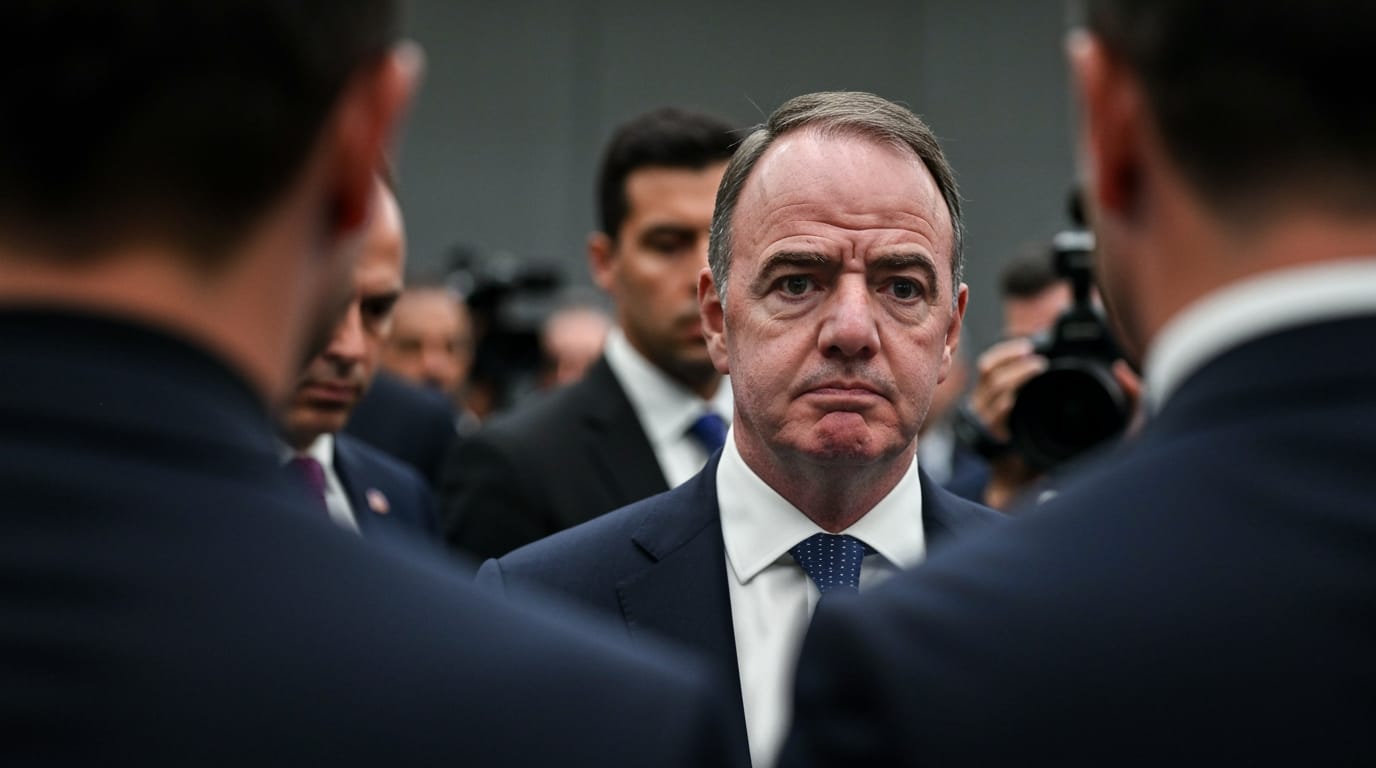
FIFA President Gianni Infantino is facing mounting pressure and an official ethics complaint following his increasingly close public relationship with former U.S. President Donald Trump, culminating in the controversial awarding of an inaugural FIFA Peace Prize to Trump. Critics allege that Infantino's actions breach FIFA's strict rules on political neutrality, raising questions about the organization's integrity and the future of global football governance.
The controversy has ignited significant debate within football circles and among human rights advocates, who contend that Infantino's overt support for a political leader with a divisive global reputation undermines the sport's stated commitment to impartiality. The timing of these developments, ahead of the 2026 World Cup co-hosted by the United States, has further amplified concerns regarding FIFA's motivations and leadership.
A Relationship Under the Spotlight
The public association between Gianni Infantino and Donald Trump has developed markedly over recent years. Their initial interactions trace back to early 2017, when Infantino reportedly called Trump to discuss the World Cup. This was followed by a visit to the White House in August 2018, shortly after the joint U.S.-Canada-Mexico bid was awarded the 2026 World Cup. During this visit, Infantino presented Trump with a soccer ball and a personalized jersey, and Trump famously joked with a red card.
Since then, their relationship appears to have deepened considerably, characterized by frequent phone calls, rounds of golf, and Infantino accompanying Trump on international trips, including visits to the Gulf. Trump has reportedly referred to Infantino as "Johnny," a sign of their apparent camaraderie.
Infantino's public endorsements of Trump have also been notable. Following Trump's inauguration, Infantino posted on Instagram, declaring, "Together we will make not only America great again, but also the entire world." He later praised Trump at an American Business Forum, stating, "We should all support what [Mr Trump is] doing because I think it's looking good." Additionally, Infantino used his Instagram account to express that Trump "definitely deserves" the Nobel Peace Prize.
FIFA has defended these interactions, asserting that it is part of the president's role to maintain strong relationships with the leaders of host nations, particularly with the 2026 World Cup — an event projected to generate over $9 billion in revenue — on the horizon. This imperative to ensure the success and protection of such a massive tournament is viewed by some as a driving force behind Infantino's aggressive courtship of Trump's support. The establishment of a FIFA office in Trump Tower in New York further underscores this connection. This contrasts sharply with Infantino's reportedly cooler relationship with Trump's predecessor, Joe Biden.
The Peace Prize and the Ethics Storm
The growing alliance reached a critical point with the creation and awarding of the inaugural FIFA Peace Prize to Donald Trump at the 2026 World Cup draw ceremony held on December 5, 2025, at the Kennedy Center in Washington D.C. Infantino lauded Trump for his "exceptional and extraordinary actions to promote peace and unity around the world," while Trump reciprocated, calling the award "truly one of the great honors of my life."
However, the prize itself has become a flashpoint for criticism. Reports indicate that the FIFA Peace Prize was a recent invention, seemingly tailored for Trump, and its creation and awarding were undertaken without the consultation or approval of FIFA's council members or vice presidents.
In response, FairSquare, a non-profit advocacy group dedicated to promoting accountability in sports, filed a five-count ethics complaint against Infantino. The complaint alleges that Infantino has committed "repeated breaches" of Article 15 of FIFA's Code of Ethics, which mandates political neutrality for the governing body and its representatives. Specific allegations include publicly lobbying for Trump's Nobel Peace Prize, endorsing Trump's foreign policy during the Peace Prize award ceremony, encouraging support for Trump's political agenda, and making a politically charged Instagram post after Trump's inauguration. FairSquare argues that the unilateral creation and awarding of the Peace Prize itself constitutes a fundamental breach of neutrality and exceeds Infantino's authority.
The backlash extends beyond advocacy groups. European football officials have privately expressed unease, with some delegates from UEFA walking out of a FIFA Congress in Paraguay after Infantino's late arrival, attributed to his travel with Trump. These officials accused Infantino of prioritizing "private political interests" and described his conduct as disrespectful.
FIFA's Neutrality and a Troubled History
FIFA's Code of Ethics explicitly outlines stringent requirements for political neutrality, stating that the organization "remains neutral in matters of politics and religion" and "requires that all persons bound by the code remain politically neutral… in dealings with government institutions."
Despite these stated principles, FIFA has a complex and often controversial history concerning its entanglement with political regimes. The awarding of World Cups to countries with questionable human rights records, such as the 2018 tournament in Russia and the 2022 event in Qatar, has frequently drawn accusations of "sportswashing." Infantino himself drew criticism for defending Qatar's human rights record, claiming to "feel Qatari, Arab, African, gay, disabled, and like a migrant worker" in a controversial speech before the 2022 World Cup. He has also maintained documented relationships with other prominent political figures, including Russian President Vladimir Putin and Saudi Crown Prince Mohammed bin Salman.
Infantino assumed the FIFA presidency in 2016, following the corruption scandal that led to the downfall of his predecessor, Sepp Blatter. He pledged to restore FIFA's reputation and financial stability. However, critics now argue that his tenure has seen a continuation of political entanglements, further embedding FIFA in global power struggles rather than upholding its supposed neutrality.
Implications for Leadership and the Sport
The ethics complaint lodged against Infantino and the broader criticism surrounding his relationship with Donald Trump pose significant challenges to his leadership and to FIFA's standing in the international sporting community. FairSquare contends that Infantino's actions represent a "clear threat to the integrity and reputation of football and of FIFA itself."
Critics argue that FIFA's governance structure itself enables such perceived breaches, allowing the president to operate with insufficient checks and balances. The emphasis on securing political support, particularly for mega-events like the World Cup, highlights a potential conflict between FIFA's commercial interests and its ethical obligations.
The formal investigation sought by the ethics complaint will likely scrutinize the circumstances surrounding the Peace Prize and Infantino's broader pattern of political engagement. The outcome could have far-reaching implications for Infantino's tenure and for how FIFA is perceived and regulated globally, particularly as the world's most popular sport navigates an increasingly complex geopolitical landscape. The ongoing scrutiny underscores the delicate balance FIFA must strike between promoting football worldwide and adhering to its foundational principles of neutrality and good governance.