Finnish Police Arrest Two Crew Members in Undersea Cable Damage Probe Amid Rising Baltic Sea Tensions
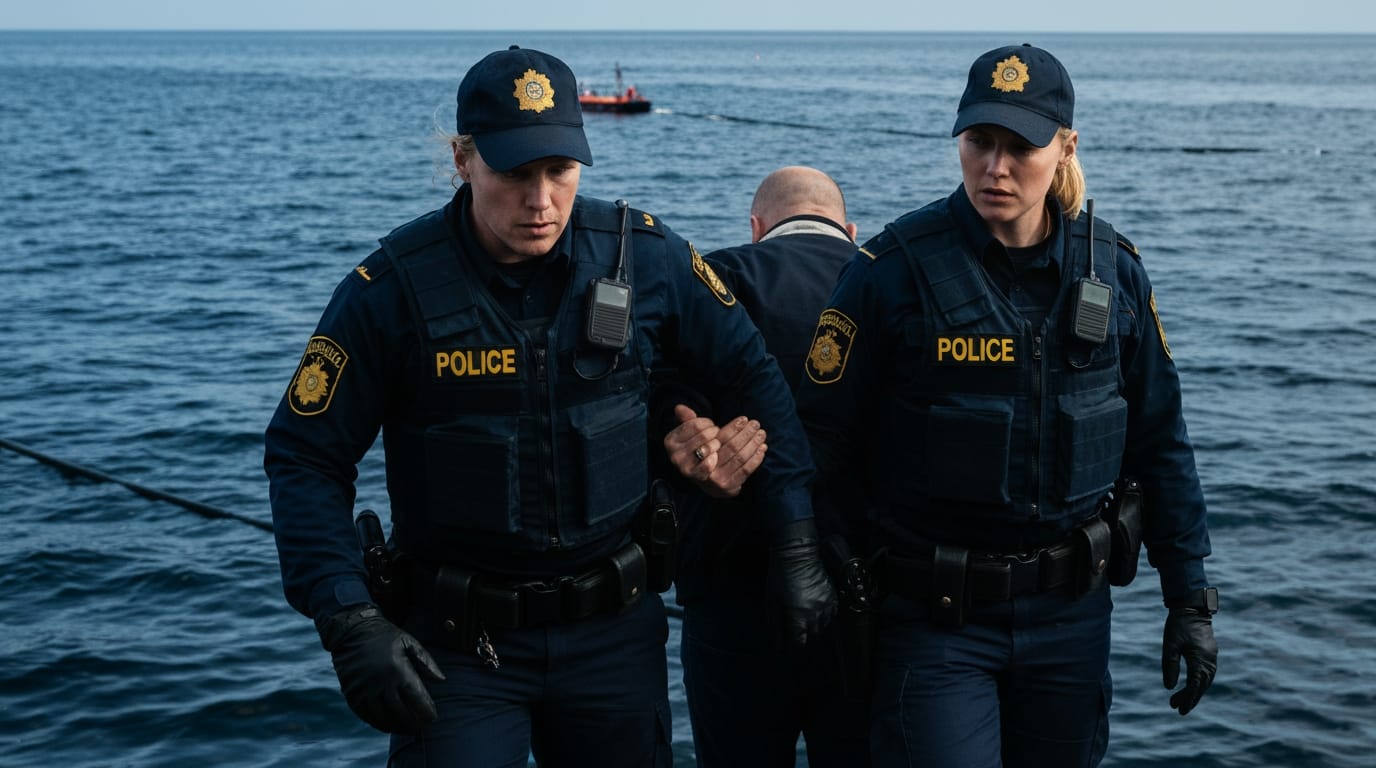
HELSINKI — Finnish authorities have arrested two crew members from a cargo ship, the Fitburg, in connection with suspected damage to a critical undersea telecommunications cable linking Finland and Estonia. The arrests, made on January 1, 2026, follow an investigation into disruptions detected on Wednesday, December 31, 2025, affecting vital digital infrastructure in the Gulf of Finland. The incident marks the latest in a series of events raising concerns over the security of underwater networks in the strategically significant Baltic Sea.
Arrests and Ongoing Investigation
Finnish police formally arrested the two individuals from the Fitburg's 14-member crew, while two other crew members were issued travel bans as part of the ongoing probe. The multinational crew includes citizens from Russia, Georgia, Azerbaijan, and Kazakhstan. The St. Vincent and the Grenadines-flagged vessel was seized by Finnish authorities in a joint operation involving the Border Guard and a helicopter after its movements were linked to the damage. The ship, which was reportedly traveling from Russia to Israel, was subsequently moved to the Port of Kantvik, approximately 30 kilometers west of Helsinki, for further inspection.
Investigators are examining the case under suspicion of aggravated criminal damage, attempted aggravated criminal damage, and aggravated interference with telecommunications. Finnish National Police Commissioner Ilkka Koskimäki indicated that the Fitburg's anchor was found to have been dragging for hours when the vessel was discovered in Finland's exclusive economic zone. A photographer reported that the anchor, appearing rusted, had been raised and secured to the ship's stern. This suggests the damage may have been caused by the physical impact of the anchor on the seabed infrastructure. Additionally, Finnish Customs discovered "structural steel" originating from Russia within the Fitburg's cargo, which falls under European Union sanctions. This discovery has prompted a separate investigation into potential violations of EU sanctions regulations.
Detective Superintendent Risto Lohi of the National Bureau of Investigation stated that the probe remains in its early stages and police are not speculating on any potential links to state-level actors. However, he noted similarities between this incident and several other cable disruptions in the Gulf of Finland over the past year involving foreign vessels with lowered anchors, indicating a pattern authorities are examining individually.
The Damaged Infrastructure
The primary cable affected belongs to the Finnish telecommunications provider Elisa and is considered vital underwater infrastructure. The damage was detected early on Wednesday, December 31, 2025, in Estonia's exclusive economic zone (EEZ), between Helsinki and Tallinn. While Elisa stated that the functionality of its services was not affected by the damage, the incident underscored the critical nature of such connections for civilian, business, and governmental communications. Estonian officials also confirmed that a second telecommunications cable between the two countries, owned by Swedish telecommunications service provider Arelion, was damaged around the same time. It remains unclear if the damage to both cables is directly linked.
Undersea cables are the backbone of global internet traffic and communication, making their integrity paramount for national security and economic stability. The Gulf of Finland, a heavily trafficked maritime lane, is crisscrossed by numerous such cables and pipelines, linking Nordic, Baltic, and Central European nations. Damage to these links, whether accidental or deliberate, can have far-reaching consequences, disrupting communication and energy supplies.
A Pattern of Disruptions in the Baltic Sea
This incident is not an isolated event but rather the latest in a series of disruptions to critical undersea infrastructure in the Baltic Sea, raising alarms across the region. In October 2023, the Balticconnector gas pipeline, connecting Finland and Estonia, along with an accompanying telecommunications cable, suffered significant damage. Finnish investigators determined that the damage was caused by an external mechanical force, believed to be the anchor of the Hong Kong-flagged container ship NewNew Polar Bear. Chinese authorities later acknowledged that the vessel accidentally damaged the infrastructure during a storm, and the ship's captain, Wan Wenguo, has faced charges in Hong Kong for criminal damage and violating marine safety regulations.
Earlier, on Christmas Day in 2024, Finnish authorities also investigated damage to other undersea cables between Finland and Estonia, leading to charges against the captain and two senior officers of a Russia-linked vessel, the Eagle S. Although a Finnish court later dismissed these charges because the damaged cables were outside Finland's territorial waters, the recurring nature of these incidents points to a persistent vulnerability.
These events highlight the growing concerns over "hybrid threats" and potential sabotage in the Baltic Sea, particularly in the context of heightened geopolitical tensions. NATO has repeatedly emphasized the critical role of undersea cables and pipelines in global infrastructure, warning of their vulnerability to disruptions that could impact both civilian life and military operations.
Securing Critical Undersea Infrastructure
The ongoing investigations into these incidents underscore the urgent need for enhanced security measures and international cooperation to protect vital undersea infrastructure. The Finnish government, including President Alexander Stubb, has reaffirmed its commitment to addressing such security challenges. The vulnerability of these networks, which carry large volumes of global internet traffic, necessitates robust strategies to mitigate risks and ensure swift repairs in the event of damage.
The Baltic Sea, bordered by eight NATO states and Russia, has become a focal point for these security concerns. In response, NATO has expanded patrols using various naval assets to monitor and protect the shallow seabed. The international community, including Finland and Estonia, continues to cooperate on investigations and repair efforts, but the frequent nature of these disruptions raises fundamental questions about the long-term security of critical submarine infrastructure in an increasingly complex geopolitical landscape.
As the investigation into the Fitburg incident progresses, it serves as another stark reminder of the delicate balance between international shipping, economic interests, and the imperative to safeguard the unseen arteries of the modern world that lie beneath the waves. The focus now shifts to the details emerging from the arrests and the broader implications for maritime security in the Baltic region.