Football Diplomacy: Can a Women's Team Bridge the Korean Divide?
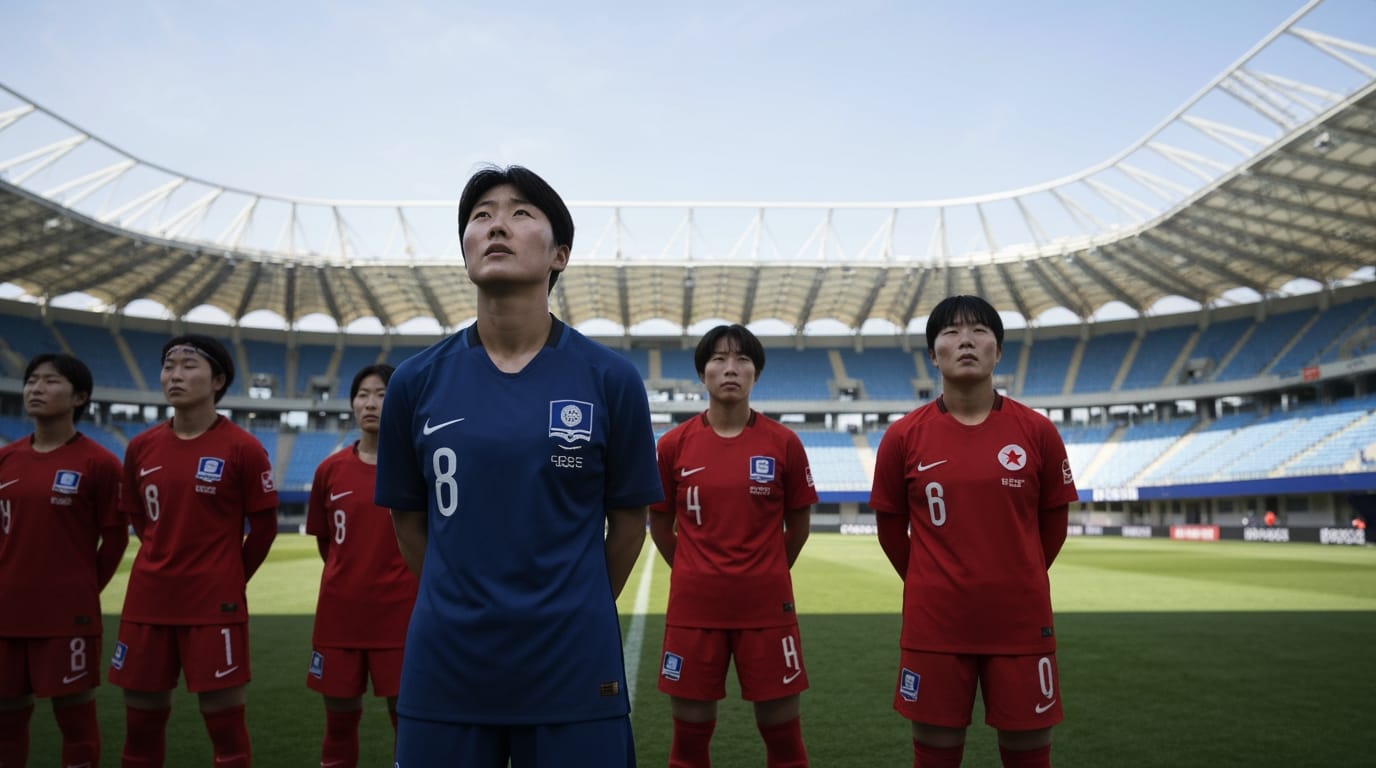
A rare convergence on the football pitch in South Korea has once again sparked discussions on the potential of sports diplomacy to thaw the long-frozen relationship between North and South Korea. As North Korea's Naegohyang Women's FC prepares to face South Korea's Suwon FC Women in the AFC Women's Champions League semi-finals, the eyes of the world are turning to a sporting event laden with symbolic weight, raising cautious hopes for a crack in the formidable wall of inter-Korean tensions. This visit, the first by North Korean athletes to the South in eight years, highlights a persistent, albeit often fragile, avenue for dialogue amidst deep political estrangement.
A History of Sporting Overtures
The Korean Peninsula, divided since the 1950-53 conflict that ended in an armistice rather than a peace treaty, has frequently seen sports serve as a unique, if inconsistent, channel for communication. Historically, athletes from both Koreas have marched together under a "unification flag" at Olympic opening ceremonies and even formed joint teams in various international competitions. Notable instances include unified teams at the 1991 World Table Tennis Championships, where the women's team famously defeated China, and a joint youth football team in the same year. These moments often generated emotional scenes of reconciliation, offering glimpses of shared identity despite profound ideological differences.
The most high-profile example in recent memory was the unified Korean women's ice hockey team at the 2018 Pyeongchang Winter Olympics. This initiative, while hailed by some as a diplomatic breakthrough, also faced considerable criticism in South Korea, particularly from those concerned about its impact on the South Korean players' opportunities. Such historical precedents underscore the dual nature of sports diplomacy: while it can foster goodwill, its impact is often contingent on broader political will and can be fraught with domestic complexities.
The Pitch for Women's Football Diplomacy
The upcoming match in Suwon marks a significant, albeit politically nuanced, occasion. On May 17, North Korea's Naegohyang Women's FC arrived in South Korea, consisting of 27 players and 12 staff, for the AFC Women's Champions League semi-final against Suwon FC Women on May 20. This event is particularly noteworthy because North Korea's women's football program boasts a strong international standing, currently ranked 11th globally by FIFA, a position higher than South Korea's 19th. The North Korean women's team has also won the Asian Cup three times, demonstrating their prowess on the international stage.
Public interest in the match has been exceptionally high, with all 7,087 tickets released to the general public selling out within a single day. The South Korean government, while providing logistical support, has been cautious about overstating the political implications, emphasizing that it is primarily an international club competition rather than a direct inter-Korean political dialogue. This distinction is crucial, as the match will not feature national anthems or the customary "unification flag," typically reserved for national team encounters.
Navigating the Hurdles on and Off the Field
Despite the positive optics generated by sporting exchanges, the underlying political realities remain stark. Inter-Korean relations have severely deteriorated since the collapse of U.S.-North Korea nuclear talks in 2019. Pyongyang has recently designated South Korea as its "most hostile state" and formally abandoned reunification as a national objective. This makes the current visit by Naegohyang Women's FC a rare exception to a period of minimal contact and heightened tensions.
Logistical complexities and ideological divides continue to pose significant challenges. For instance, while both teams will stay in the same hotel in Suwon, their dining areas and travel routes will be kept separate to minimize direct interaction. Furthermore, the participation of North Korean athletes in such events can raise concerns about international sanctions, as seen during the 2018 Pyeongchang Olympics where the use of North Korean facilities and funding drew scrutiny. While the current South Korean administration, led by President Lee Jae Myung, has expressed a desire for improved ties and renewed dialogue, North Korea's motivations for allowing its club team to participate are seen as complex, potentially serving domestic propaganda by showcasing national capability without contradicting its "two hostile states" doctrine.
A Glimmer of Connection Amidst Division
The visit by Naegohyang Women's FC, though carefully managed and politically downplayed by both sides, offers a poignant reminder of the human element beneath geopolitical tensions. For the players and the fans, the focus remains on the competition and the universal appeal of football. South Korea's Unification Ministry has even allocated funds to support a cheering squad for both teams, hoping to foster mutual understanding.
While a single football match is unlikely to engineer a complete thaw in strained relations, it can create a valuable space for informal contact and a momentary shared experience. As one South Korean official noted, the hope is that such events can "tear down high barriers" between the two Koreas. The sight of players from rival sides sharing the same field, competing under the banner of sport, offers a rare "crack in the ice" on a peninsula where hostile rhetoric has largely prevailed. These small steps, though not leading to immediate reconciliation, keep alive the faint hope that shared passions can, in time, pave the way for greater understanding.


