Former FBI Director James Comey Appears in Court on Charges of Threatening President Trump
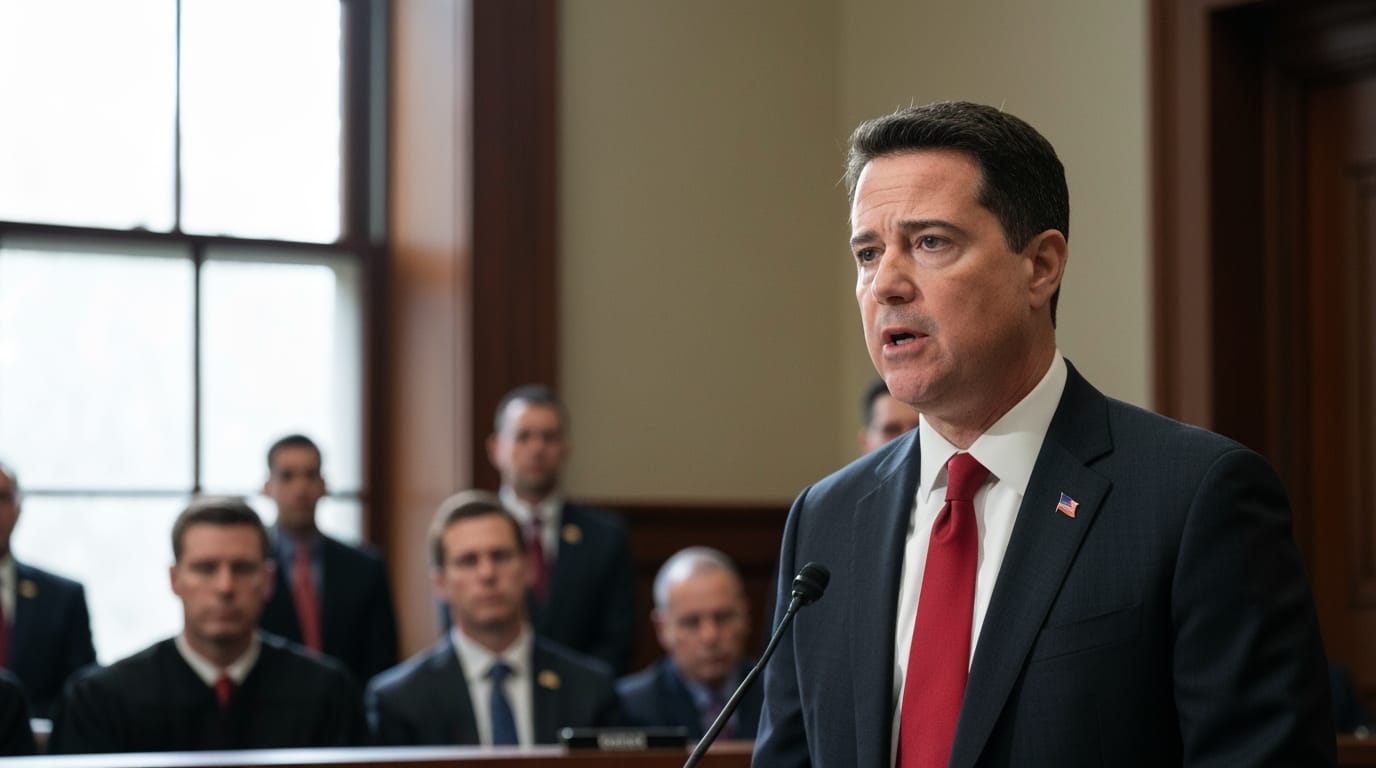
Former FBI Director James Comey made his initial court appearance today, April 29, 2026, after a federal grand jury indicted him on charges of threatening President Donald Trump. The indictment, unsealed yesterday, accuses Comey of two felony counts related to a social media post from May 2025. The high-profile case immediately drew national attention, rekindling debates over political speech, prosecutorial discretion, and the weaponization of the justice system against perceived adversaries.
Comey, a long-standing critic of President Trump, surrendered to federal authorities in Virginia and appeared before U.S. Magistrate Judge William E. Fitzpatrick in Alexandria. During the brief proceeding, Comey was released on his own recognizance, with a plea hearing before a federal judge in North Carolina to be scheduled at a later date. He remained silent during the court appearance, accompanied by his legal team, who indicated they would challenge the charges as vindictive and selective prosecution.
The charges stem from an Instagram post Comey shared nearly a year ago, depicting seashells arranged on a beach to spell out the numbers "86 47." The accompanying caption read, "Cool shell formation on my beach walk." Prosecutors assert that the numbers constitute a coded threat against President Trump. In restaurant industry parlance, "86" is often used to mean "nix" or "remove," while "47" is interpreted as a reference to Donald Trump as the 47th President of the United States. Federal prosecutors contend that a "reasonable person" would interpret the image as "a serious expression of an intent to do harm to the President of the United States." Following widespread criticism and controversy over the post, Comey swiftly deleted it, clarifying in a subsequent message that he had intended it as a political statement and was unaware of any association of the numbers with violence, stating, "It never occurred to me, but I oppose violence of any kind so I took the post down."
This marks the second time Comey has faced criminal charges brought by the Justice Department during President Trump's second administration. A previous indictment, alleging Comey made false statements to Congress and obstructed a congressional proceeding, was dismissed by a federal judge in November 2025. That judge ruled that the prosecutor overseeing the case had been unlawfully appointed, casting a shadow of legal and political controversy over the prosecution's tactics. The timing and nature of the current charges have led many, including Democrats and legal observers, to view them through a political lens. Senator Dick Durbin, for instance, characterized the charges as "baseless" and "petty retribution," suggesting a "weaponized Justice Department lashing out on behalf of a vengeful president." Acting Attorney General Todd Blanche, who stepped into the role after the recent dismissal of former Attorney General Pam Bondi—reportedly due to dissatisfaction with her pace in prosecuting perceived Trump adversaries—has publicly stated that "threatening the life of the president of the United States will never be tolerated by the Department of Justice."
The legal battle is anticipated to be a significant test of First Amendment protections and the "true threat" doctrine. Legal experts highlight that prosecutors will face substantial hurdles in demonstrating that Comey "knowingly and willfully" made a threat, particularly given his immediate retraction and explanation. The Supreme Court's 2023 ruling on "true threats" requires the government to prove that a speaker "consciously disregards a substantial risk" that their words would be perceived as threatening violence for the speech to fall outside First Amendment protections. Critics argue that pursuing this case could criminalize a broad spectrum of political speech, setting a dangerous precedent. Some analysts suggest the Justice Department's argument that Comey, as a former FBI director, "should have known better" about the potential interpretation of such symbols, will be a challenging one to prove given Comey's stated intent.
As the legal proceedings unfold, the case against James Comey is poised to become a flashpoint in the ongoing tension between political dissent and national security concerns. The outcome could significantly influence the parameters of free speech in the digital age, particularly when public figures use social media to express political views. Comey, who has maintained his innocence, issued a video statement following his indictment asserting, "I'm still innocent, I'm still not afraid, and I still believe in the independent federal judiciary. So, let's go." The coming months will determine whether the Justice Department can successfully navigate the complex legal and constitutional challenges inherent in this politically charged prosecution.