Former Pakistani Spy Chief Sentenced to 14 Years for Abuse of Power, Shaking Nation's Political Landscape
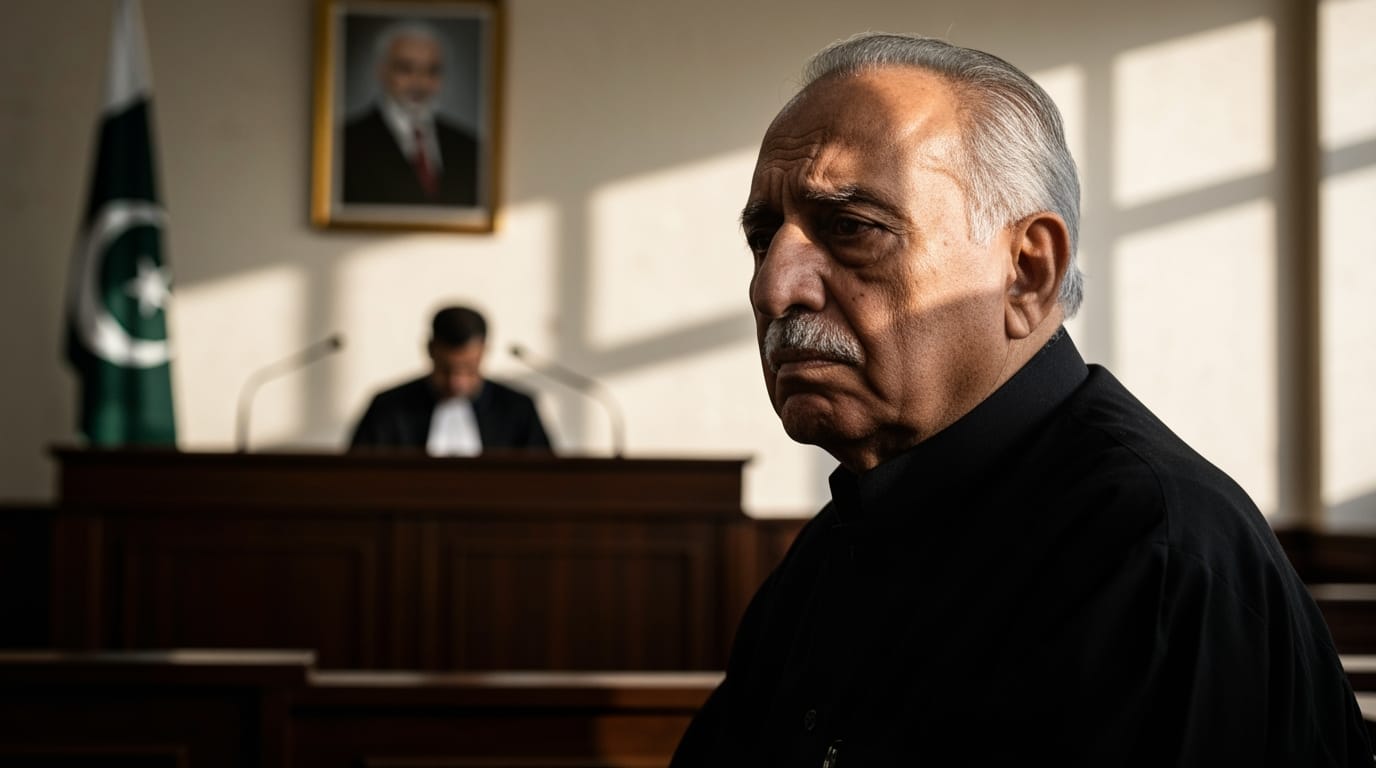
ISLAMABAD, Pakistan – In a landmark decision that reverberates through Pakistan's corridors of power, Lieutenant General (Retired) Faiz Hameed, the influential former chief of the country’s Inter-Services Intelligence (ISI), has been sentenced to 14 years of rigorous imprisonment by a military court. The verdict, promulgated on December 11, 2025, follows a 15-month court-martial and marks an unprecedented moment in Pakistan's history, as it is the first time a former head of the powerful spy agency has been convicted and jailed for abuse of power.
The Charges and the Court's Stance
The military court, operating under the Pakistan Army Act, found General Hameed guilty on multiple serious charges, including engaging in political activities, violating the Official Secrets Act in a manner detrimental to state security and interests, misuse of authority and government resources, and causing wrongful loss to individuals. The Inter-Services Public Relations (ISPR), the media wing of the Pakistani army, stated that the lengthy and laborious legal proceedings culminated in Hameed being found guilty on all counts.
Specific allegations against Hameed, revealed in Supreme Court documents, included abuse of power related to investigations into the businesses of a private real estate developer, known as the "Top City project scam." He was accused of unlawfully seizing control of a housing project near Islamabad. The court-martial, which commenced on August 12, 2024, strictly adhered to legal requirements, affording the accused full rights of defense, including counsel of his choice, according to the military. General Hameed retains the right to appeal the verdict before the relevant legal forums. This conviction underlines the military's commitment to its institutional accountability system, even for its most senior figures.
A Career Marked by Influence and Controversy
General Faiz Hameed's ascent through the ranks was rapid, culminating in his appointment as the Director General of the ISI from 2019 to 2021, a period some sources extend to 2022. During his tenure, he was widely regarded as one of the most powerful figures within Pakistan's military establishment, often seen as the second most influential officer after the Army Chief. His influence extended beyond intelligence operations, notably into the political sphere. He was a close associate of former Prime Minister Imran Khan, who was ousted in a no-confidence vote in April 2022 and is currently imprisoned on various charges.
Hameed's close ties with Khan's government were well-documented, with some reports suggesting disputes between Khan and the military leadership over Hameed's retention as ISI chief. He retired prematurely on December 10, 2022, a few months after Khan's removal from power. His arrest in August 2024, which surprised many in Pakistan, stemmed from an internal probe ordered by Pakistan's Supreme Court into the Top City project allegations. Furthermore, Hameed's public statements regarding the Afghan Taliban's takeover in 2021, where he optimistically suggested their return to power "would work out fine," also form part of his controversial public profile. The military also indicated that his alleged involvement in "fomenting political agitation and instability in collaboration with political elements" is being dealt with separately.
Unprecedented Implications for Pakistan's Military-Political Nexus
The conviction of Lieutenant General (Retired) Faiz Hameed represents a significant tremor within Pakistan's delicate civil-military relations and the powerful military's internal accountability mechanisms. Historically, senior military officers facing court-martial have typically been dealt with internally, often resulting in dismissal or early retirement, but rarely such a public and rigorous imprisonment sentence. This case sets a new precedent, demonstrating a willingness by the military establishment to pursue accountability against even its most prominent figures.
The military's decision to prosecute and convict Hameed, especially given his high profile and perceived alignment with a previously popular civilian leader, highlights the intricate and often tense interplay between the military and political landscape in Pakistan. It suggests a move towards reinforcing internal discipline and potentially reshaping perceptions of military influence in domestic governance. The transparency, albeit within a military court system, surrounding the charges and the outcome, could signal a concerted effort to assert the rule of law within the armed forces and demonstrate institutional integrity. The proceedings against Hameed have also led to the arrest of other retired officers, indicating a broader investigation into potential misconduct.
This verdict arrives at a time of considerable political instability in Pakistan, with ongoing legal challenges and political maneuvering involving various factions. The sentencing of a former ISI chief on charges of political interference and abuse of power inevitably sends a strong message across the political spectrum, underscoring the potential repercussions for those perceived to overstep their constitutional roles, regardless of their past stature.
A New Chapter in Accountability
The 14-year rigorous imprisonment handed down to Lieutenant General (Retired) Faiz Hameed marks a pivotal moment for Pakistan. It underscores the military's assertion of internal accountability and its commitment to addressing grave charges such as political interference, misuse of authority, and violations of national security protocols. While Hameed has the right to appeal, the current verdict stands as a powerful statement, suggesting a recalibration of the military's role in the nation's affairs and a renewed emphasis on institutional discipline. The coming months will reveal the full implications of this unprecedented judgment on Pakistan's political future and the ongoing evolution of civil-military dynamics.


