Former South Korean First Lady Sentenced to Prison for Bribery in Landmark Corruption Case
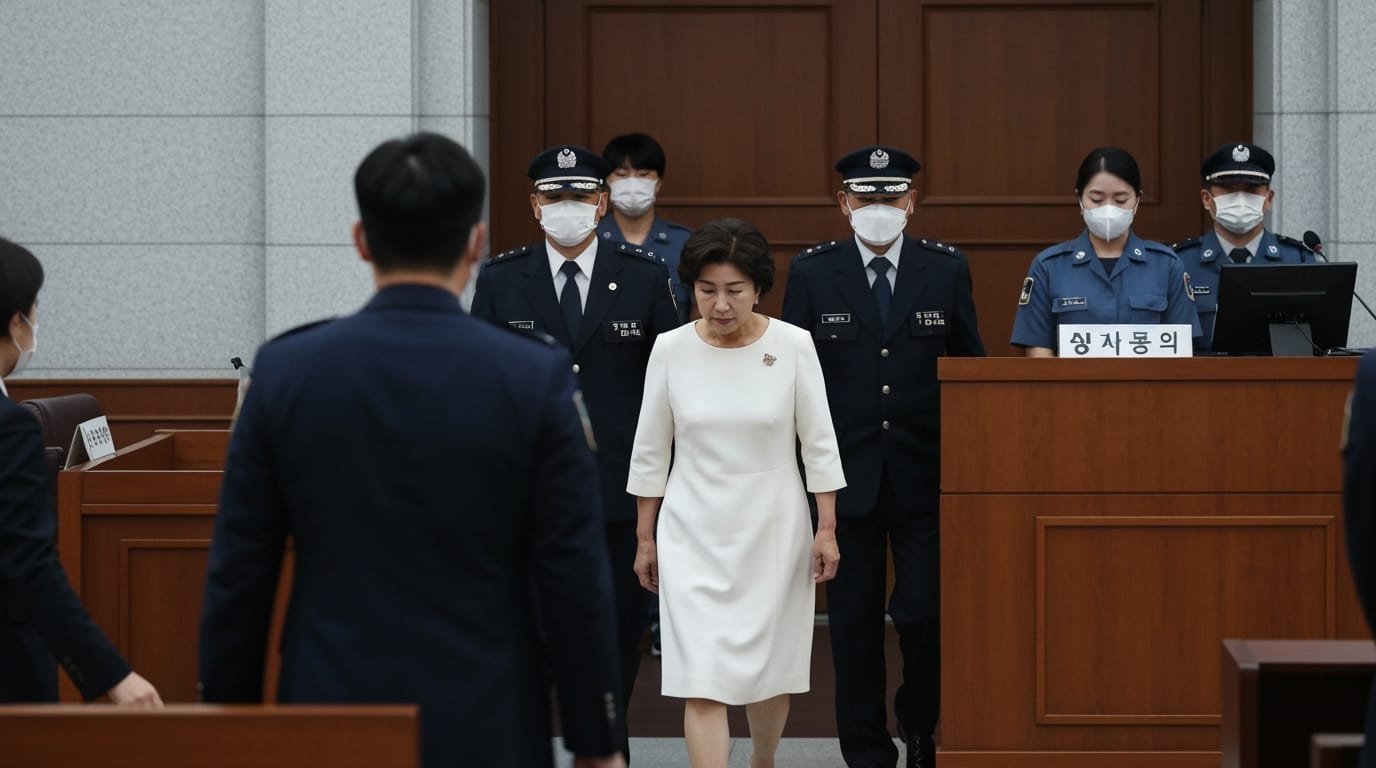
SEOUL, South Korea – In a historic ruling signaling a relentless pursuit of accountability for top officials, South Korea's former first lady, Kim Keon Hee, was sentenced Wednesday to 20 months in prison for corruption. The Seoul Central District Court found Ms. Kim guilty of receiving substantial bribes, primarily linked to the controversial Unification Church, in exchange for business favors. This verdict marks an unprecedented moment in the nation's political landscape, coming just weeks before her impeached husband, former President Yoon Suk Yeol, awaits a verdict on severe rebellion charges.
The sentencing of Kim Keon Hee, 53, underscores a dramatic downfall for the presidential couple, setting a new precedent where both a former president and first lady face prison terms. While acquitted on charges of stock manipulation and other allegations, the conviction on bribery charges casts a long shadow over their past administration and highlights the country's unwavering commitment to combating corruption at the highest echelons of power.
The Conviction: Bribes and Influence Peddling
Judge Woo In-sung of the Seoul Central District Court delivered the sentence, finding Kim Keon Hee guilty of corruption tied to illicit financial gains. The central element of the conviction revolved around her receipt of bribes from the Unification Church, purportedly in exchange for business concessions. Prosecutors had earlier sought a 15-year prison term for Ms. Kim, alleging she had "stood above the law" and that her actions had "severely undermined" South Korea's institutions.
Specifically, the court established that Ms. Kim accepted various luxury items and monetary bribes totaling more than $200,000 from businesses and politicians. Among the detailed accusations, she was found to have received high-value gifts, including two Chanel bags and a Graff necklace, from an official linked to the Unification Church in 2022. These transactions, according to the prosecution, were facilitated through a shaman and were directly tied to requests for business favors. The court's decision to convict on these bribery counts reinforces the gravity of illicit exchanges involving public figures.
Acquittals and Persistent Allegations
Despite the conviction on bribery, the court acquitted Ms. Kim of several other high-profile charges that had been part of the extensive investigation. These included allegations of stock manipulation involving Deutsch Motors, a BMW dealer in Korea, where she was accused of conspiring to artificially inflate stock prices between 2010 and 2012, generating an estimated 810 million won (approximately $565,170) in illegal profits. She was also cleared of charges related to violations of South Korea's campaign financing laws and receiving free opinion polls worth 270 million won, along with her husband, from a self-proclaimed power broker ahead of the 2022 presidential election.
The investigation into Ms. Kim's conduct had been broad, encompassing accusations of academic fraud and plagiarism during her master's and doctoral studies, which led to the revocation of her degrees by Sookmyung Women's University and Kookmin University in 2025. While these academic infractions were distinct from the criminal charges, they contributed to a public image of controversy that surrounded the former first lady throughout her husband's tumultuous time in office.
A Presidential Couple in Crisis
The conviction of Kim Keon Hee comes amidst a period of intense legal and political turmoil for her husband, former President Yoon Suk Yeol. Yoon, who was impeached and removed from office, has already been sentenced to five years in prison for obstructing an attempt to arrest him. He now faces a separate, more severe verdict on rebellion charges stemming from his declaration of martial law in December 2024 and its chaotic aftermath. Prosecutors in that case have demanded the death sentence for the former president, signaling the extreme seriousness of the charges against him.
This parallel legal drama has captivated South Korea, with Ms. Kim's sentencing being seen as a precursor to her husband's impending fate. The possibility of both a former president and his spouse serving jail time marks a profound moment in South Korean democracy, emphasizing that no one, regardless of their past status, is above the law. The confluence of these high-profile cases underscores a deeply rooted political instability that has seen several former South Korean presidents and their families embroiled in legal battles and corruption scandals.
South Korea's Enduring Fight Against Corruption
The prosecution and conviction of a former first lady is a testament to South Korea's rigorous and evolving anti-corruption framework. The country has a long history of grappling with corruption, leading to the establishment of stringent laws designed to ensure transparency and accountability. Key legislative measures, such as the "Kim Young-ran Act" (officially the Improper Solicitation and Graft Act), enacted in 2016, prohibit public officials, educators, and journalists from receiving gifts or money exceeding certain limits, regardless of direct relation to their duties.
Institutions like the Anti-Corruption and Civil Rights Commission (ACRC) play a pivotal role in investigating corruption, protecting whistleblowers, and promoting integrity across both public and private sectors. These robust legal and institutional mechanisms have been developed in response to a public demand for greater transparency and accountability, especially following previous high-profile corruption scandals involving former presidents. The consistent enforcement of these laws, even against the nation's most powerful figures, signals a commitment to fostering a cleaner and more ethical political environment.
Conclusion: A Clear Message of Accountability
The sentencing of Kim Keon Hee serves as a potent reminder of South Korea's steadfast resolve to confront corruption at all levels. While the verdict on her husband's more severe charges remains pending, the judiciary's actions against the former first lady send a clear message: public office and its associated privileges do not confer immunity from legal scrutiny. This outcome reflects a national ethos where judicial independence and the rule of law are paramount, even when faced with politically charged cases involving the highest former office holders. As South Korea continues to navigate its political landscape, this judgment reinforces the ongoing effort to uphold public trust and ensure that those who betray it are held to account.


