Former South Korean President Yoon Suk Yeol Handed Life Sentence for Insurrection
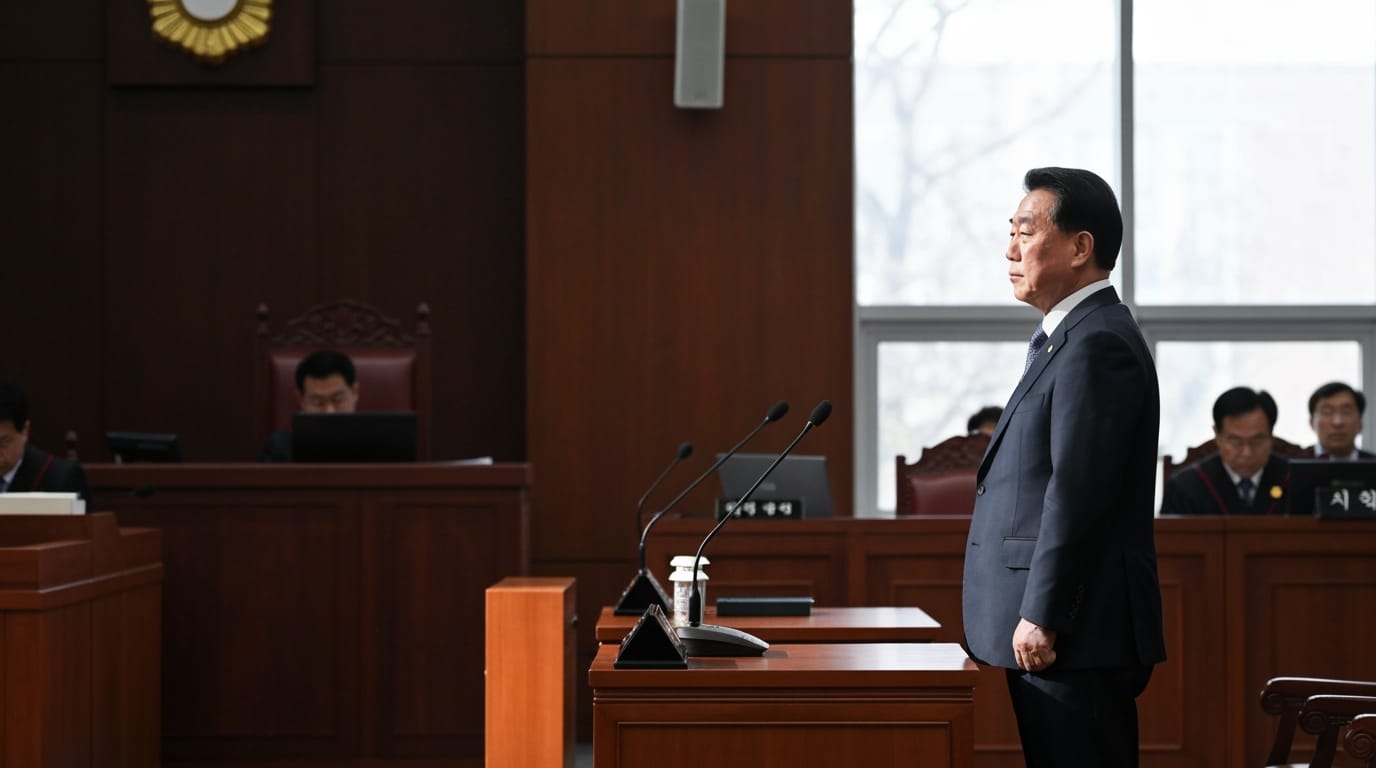
SEOUL, South Korea – A South Korean court on Thursday, February 19, 2026, sentenced former President Yoon Suk Yeol to life in prison, marking a dramatic and unprecedented culmination to the country's most significant political crisis in decades. The 서울 Central District Court found Yoon guilty of leading an insurrection and abusing his authority in connection with his short-lived martial law declaration in December 2024, an event that plunged the nation into turmoil and tested the resilience of its democratic institutions. The verdict arrived after a closely watched trial, with prosecutors having sought the death penalty for the ousted leader, who is now the first elected head of state in South Korea's democratic era to receive the maximum custodial sentence.
The ruling, delivered by Judge Jee Kui-youn, underscored the gravity of Yoon's actions, stating that the former president "directly and proactively planned the offense" and that his conduct resulted in "enormous social costs." The court further noted the difficulty in finding any indication that Yoon had expressed remorse for his role in the attempted power grab. Outside the Seoul courthouse, a palpable tension lingered as hundreds of police officers maintained order amidst a gathering of both Yoon's supporters and critics. Supporters expressed disappointment, while opponents reiterated demands for the harshest possible punishment, highlighting the deeply divided public sentiment surrounding the former president's fate.
The Martial Law Gambit and Subsequent Impeachment
The path to Thursday's life sentence began on December 3, 2024, when then-President Yoon Suk Yeol abruptly declared martial law, alleging that "anti-state forces" were undermining the government and citing baseless claims of election fraud. This declaration, which involved mobilizing military and police forces to surround the National Assembly, was widely perceived as a desperate attempt to overcome an opposition-controlled legislature and consolidate power. However, the martial law decree proved short-lived, lasting only six hours before the National Assembly swiftly passed an emergency motion to nullify it, thwarting Yoon's efforts and demonstrating a robust parliamentary check on executive power.
The failed martial law attempt triggered an immediate political backlash. Lawmakers moved rapidly to impeach Yoon, suspending him from his presidential powers on December 14, 2024. The Constitutional Court then unanimously upheld the impeachment in April 2025, officially terminating his presidency and making him the shortest-serving directly elected president in South Korean history since 1987. This removal from office paved the way for a series of criminal investigations and trials. Prior to the insurrection verdict, Yoon had already been sentenced in January 2026 to five years in prison for separate charges, including obstructing authorities from executing an arrest warrant and fabricating official documents related to his martial law declaration.
A Test of Democratic Institutions
The saga of former President Yoon Suk Yeol represents one of the most severe challenges to South Korea's democratic framework since its transition from authoritarian rule. His declaration of martial law, an act reminiscent of the nation's authoritarian past, sent shockwaves through a society accustomed to democratic norms. The swift and decisive response from both the National Assembly and the Constitutional Court, however, affirmed the strength and resilience of South Korea's democratic institutions. The judiciary, in particular, played a critical role in holding a former head of state accountable, reinforcing the principle that no one, regardless of their position, is above the law.
This episode also highlights a recurring theme in South Korean politics, where former leaders often face legal scrutiny and imprisonment after leaving office. While previous presidents like Park Geun-hye and Lee Myung-bak were also incarcerated on corruption charges, Yoon's conviction for insurrection marks a new and profound precedent, directly addressing an attempt to subvert the constitutional order. The case garnered significant international attention, with the court's decision seen as a crucial affirmation of the rule of law and a deterrent against future attempts to undermine democratic processes in the region. The extensive media coverage and public debate underscore the deep engagement of South Koreans with their political system, even amidst profound divisions.
Legal Precedents and the Future of Justice
The charges against Yoon Suk Yeol, particularly that of leading an insurrection, carry severe penalties under South Korean law, ranging from life imprisonment to the death penalty. While prosecutors vehemently argued for capital punishment, citing Yoon's "grave destruction of constitutional order," the court ultimately opted for a life sentence. This decision aligns with South Korea's de facto moratorium on capital punishment, which has been in place since 1997, despite the death penalty remaining legally possible. This reflects a broader societal shift away from executions, even for the most egregious crimes.
In addition to Yoon, several of his key associates also faced conviction for their roles in the martial law attempt. Former Defense Minister Kim Yong Hyun was found guilty of participating in and planning the insurrection alongside Yoon. Similarly, former Prime Minister Han Duck-soo received a 23-year prison sentence for attempting to legitimize the decree and falsifying records, though he has since appealed his verdict. These parallel convictions underscore the court's view that the martial law plot was a concerted effort involving multiple high-ranking officials. Yoon's legal team has indicated that they intend to appeal Thursday's life sentence, suggesting that the legal battles surrounding this unprecedented event are far from over. The appeal process will likely extend the judicial proceedings for months, continuing to keep the nation's attention focused on the intricacies of its legal and political systems.
Lingering Questions and a Nation Divided
The life sentence for former President Yoon Suk Yeol concludes a chapter that has deeply scarred South Korea's political landscape, yet its implications will resonate for years to come. The verdict solidifies a powerful message regarding the sanctity of democratic governance and the accountability of even the highest office. It serves as a stark reminder of the fragile balance of power within a democracy and the constant vigilance required to protect it. While the legal process has delivered a definitive outcome, the deep societal divisions exposed by Yoon's actions and his subsequent trial are likely to persist.
The nation now grapples with the task of healing and reconciliation in the wake of such profound political upheaval. The judgment, while a legal resolution, also carries significant symbolic weight, offering both a cautionary tale and a testament to the strength of South Korea's constitutional order. As the appeals process unfolds, the country will continue to reflect on the events of late 2024 and early 2025, seeking to understand how a democratically elected leader could attempt such a drastic measure and what lessons must be learned to safeguard its hard-won freedoms for future generations. The legacy of Yoon Suk Yeol will undoubtedly be intertwined with this pivotal moment in South Korean history, forever marking him as the president who challenged, and was ultimately constrained by, the very democratic system he swore to uphold.


