Former South Korean President Yoon Suk-yeol's Obstruction Sentence Increased to Seven Years
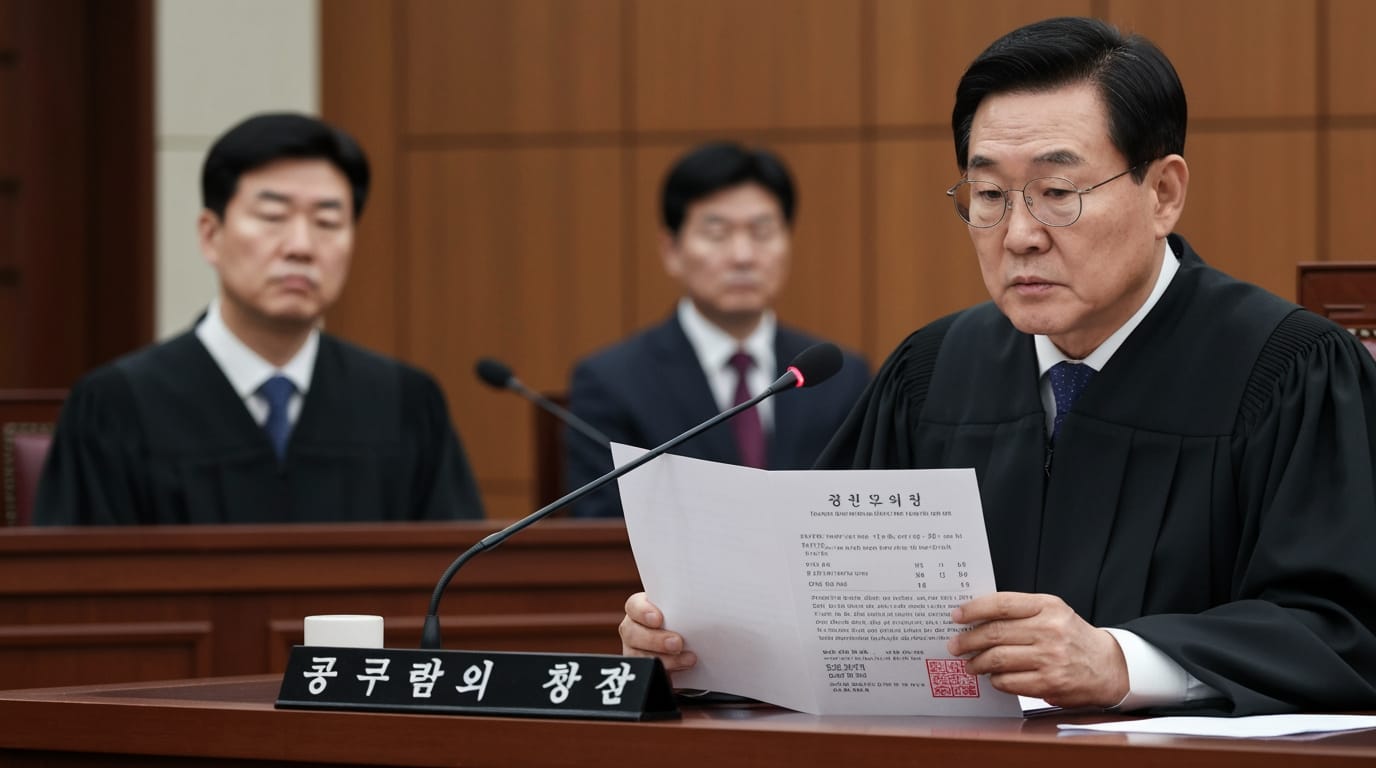
Seoul, South Korea – Former South Korean President Yoon Suk-yeol faces a harsher legal future following an appeals court decision that increased his prison sentence for obstruction of justice to seven years. The Seoul High Court delivered its ruling on Wednesday, April 29, 2026, marking a significant escalation in the legal challenges confronting the ousted leader. This latest judgment intensifies a period of unprecedented political and legal turmoil in South Korea, further solidifying the nation's commitment to holding its highest officials accountable under the law.
The increased sentence stems from Yoon's actions surrounding his short-lived martial law declaration in December 2024 and his subsequent efforts to impede his arrest. The decision by the appeals court adds two years to the initial five-year term Yoon received in January, underscoring the judiciary's view of the gravity of his offenses.
The Appeals Court's Stiffer Verdict
The Seoul High Court's ruling on Wednesday found former President Yoon Suk-yeol guilty of multiple charges related to obstruction of justice and abuse of authority, culminating in a seven-year prison sentence. Presiding Judge Yoon Sung-sik did not mince words, describing the former president's actions as "highly reprehensible." A central component of the conviction was Yoon's deployment of presidential security agents to actively obstruct law enforcement officials from executing a lawful arrest warrant against him. The court highlighted that Yoon used these public officials "as if they were private guards for his personal protection," a clear abuse of power.
Beyond obstructing his arrest, the appeals court further found Yoon culpable for a range of constitutional and legal violations. These included fabricating official documents and failing to adhere to the stringent legal procedures mandated for declaring martial law. Specifically, the court found that Yoon deliberately excluded several cabinet ministers from critical deliberation meetings concerning the martial law declaration, thereby infringing upon their constitutional rights to participate in such crucial state matters. The lower court had partially acquitted him on some abuse of power charges related to these cabinet meetings, but the appeals court reversed that decision, finding him guilty on all counts and ruling that he violated the rights of all nine cabinet members, including two who were notified but unable to attend, and seven others who were not notified at all.
Furthermore, the court confirmed that Yoon had ordered the after-the-fact drafting and subsequent destruction of a backdated martial law proclamation. He also directed aides to conceal encrypted phone records pertinent to the ensuing insurrection investigation. In an additional finding, judges ruled that Yoon abused his authority by instructing staff to brief foreign media with false claims regarding the scope and impact of the martial law, deeming this a misleading public communication that damaged South Korea's credibility and the public's right to know. Prosecutors had initially sought a more severe 10-year prison term, arguing that Yoon's actions represented a profound betrayal of public trust and undermined the constitutional order by privatizing state resources. Yoon's defense team had contended that the arrest warrants were based on an "unlawful investigation" and that the actions of the security service were a legitimate protection of the presidential residence. However, the judicial panel meticulously dismantled these arguments, upholding the legitimacy of the investigation and the court's jurisdiction, while strongly criticizing Yoon for "abusing his immense influence as president to turn public officials into his private army." Following the verdict, Yoon's lawyers announced their intention to appeal to the Supreme Court, labeling the ruling "incomprehensible" and asserting that the court erred in applying rigid legal principles to what they considered political acts.
The Genesis of the Crisis: Martial Law and Impeachment
The dramatic legal proceedings against Yoon Suk-yeol find their origin in the tumultuous events of December 2024, when he declared martial law. In a late-night televised address, Yoon justified his decree by accusing the opposition party of undermining the South Korean government with a pro-North Korea agenda, a move that sent shockwaves through the nation and the international community. However, the martial law declaration was short-lived, lasting only about six hours. Lawmakers swiftly convened and voted to overturn the order, demonstrating a robust constitutional check on executive power.
The martial law crisis plunged South Korea into a period of severe political instability, paralyzing government functions and rattling financial markets. Public outrage mounted, leading to widespread protests and calls for Yoon's accountability. This intense pressure culminated in Yoon's impeachment by the National Assembly in April 2025, which was subsequently upheld by the Constitutional Court. The Constitutional Court's unanimous decision cited Yoon's grave violations of his duties as president and commander-in-chief, particularly his attempt to seize political control by mobilizing troops.
Following his impeachment and removal from office, Yoon confined himself to the presidential residence. Authorities, specifically the Corruption Investigation Office for High-ranking Officials (CIO), issued an arrest warrant for him in January 2025 on charges of "obstruction of arrest" related to the martial law declaration. Initial attempts by law enforcement to detain him were met with resistance, including the mobilization of the Presidential Security Service, which the courts later deemed an illegal use of state resources for personal protection. Yoon eventually surrendered on January 15, 2025, after a period of confinement and failed arrest attempts.
A Web of Legal Challenges
The obstruction of justice conviction is merely one thread in a complex tapestry of legal battles former President Yoon Suk-yeol is currently facing. He is already serving a life sentence, imposed in February 2026, for leading an insurrection in connection with his failed martial law attempt. This conviction underscored the profound threat his actions posed to South Korea's democratic foundations.
Adding to his woes, Yoon faces another separate and equally serious trial on charges of aiding the enemy. Prosecutors in this case are seeking an extraordinary 30-year sentence, alleging that he ordered military drones to be sent into North Korea earlier in 2024. Prosecutors argue that this incursion was a calculated move designed to provoke a response from Pyongyang, thereby providing Yoon with a pretext to declare martial law and consolidate power. Yoon's legal team has vehemently denied these allegations, asserting that he gave no prior order or subsequent approval for such an operation.
The former First Lady, Kim Keon Hee, Yoon's wife, is also embroiled in legal troubles. She is currently serving time in prison for unrelated corruption crimes, with her bribery sentence also recently increased to four years. In total, Yoon Suk-yeol has been involved in eight trials since his removal from office, demonstrating the pervasive nature of the investigations into his conduct. He has been incarcerated since July, a stark reflection of his fall from grace.
Implications for South Korean Democracy
The appeals court's decision to increase Yoon Suk-yeol's sentence for obstruction of justice, coupled with his existing life sentence for insurrection and other pending charges, carries profound implications for South Korea. This series of rulings marks a significant and uncompromising stance by the nation's judiciary, reinforcing the principle that no individual, regardless of their former stature, is above the law. The legal system's unwavering pursuit of accountability, even against a former head of state, serves as a powerful testament to the strength and independence of South Korea's democratic institutions.
The escalating legal woes for Yoon are likely to continue shaping the political landscape, impacting public trust in leadership and potentially influencing future elections. The successful impeachment and subsequent criminal convictions of a former president, a scenario once unimaginable, have set a new precedent for governmental accountability in a country with a history of political turbulence. While the immediate turmoil stemming from the martial law declaration eased after his liberal rival, Lee Jae Myung, won an early presidential election in June, the long-term consequences of Yoon's actions and the judicial response will undoubtedly resonate through South Korean society for years to come. These ongoing legal battles underscore the nation's commitment to upholding its constitutional order and democratic values, even in the face of unprecedented challenges.


