Fragments of Freedom: Navigating the Authentic and Imitation in Berlin Wall Souvenirs
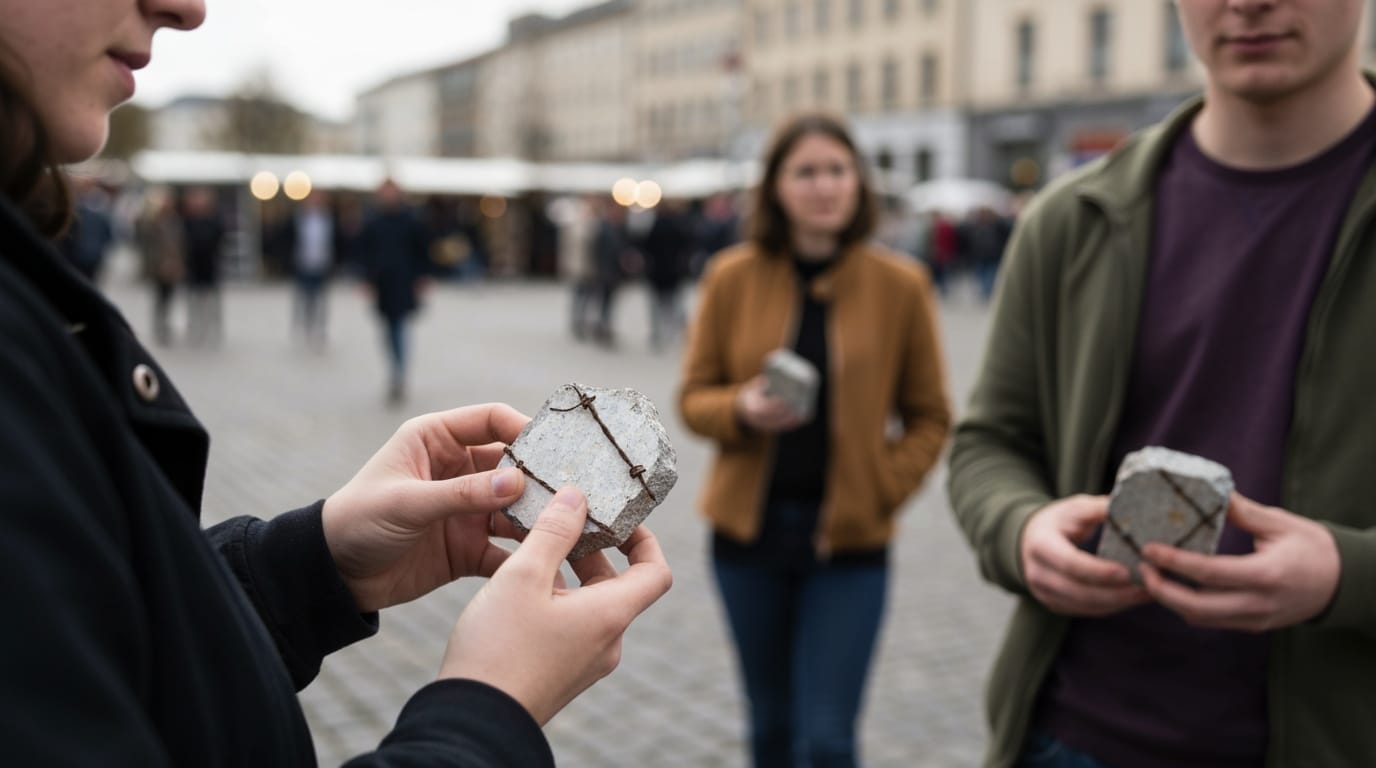
Thirty-five years after its dramatic fall, pieces of the Berlin Wall remain highly sought-after souvenirs, embodying a tangible link to a pivotal moment in 20th-century history. From minuscule chips encased in plastic to substantial concrete slabs, these fragments offer buyers a personal connection to the collapse of the Iron Curtain. Yet, the booming global market for these relics is fraught with complexities, leaving many to wonder: are these cherished mementos truly genuine remnants of the once-impenetrable barrier, or are they clever imitations capitalizing on historical sentiment? The answer, much like the Wall itself, is multi-layered, weaving through a narrative of spontaneous liberation, shrewd commercialization, and the persistent challenge of authentication.
The Wall's Demise and the Rise of the "Mauerspechte"
The evening of November 9, 1989, etched itself into history as East German border guards opened the checkpoints, dismantling the physical and ideological division that had scarred Berlin for decades. In the euphoric aftermath, a spontaneous phenomenon emerged: thousands of "Mauerspechte," or "wall peckers," descended upon the barrier with hammers and chisels, eager to claim a piece of history. The Wall, constructed primarily from porous concrete, yielded relatively easily to these impromptu efforts, allowing individuals to amass chunks as personal trophies of freedom. This immediate, grassroots appropriation of the Wall marked the very first wave of its transformation from an oppressive barrier into a global commodity, driven by a profound human desire for a tangible symbol of a monumental historical shift. The initial chips, often unadorned and irregularly shaped, were imbued with authenticity by the very hands that liberated them.
From Deconstruction to Commercialization: The Market Takes Shape
While individual citizens were chipping away at its facade, the official deconstruction and commercialization of the Berlin Wall soon commenced. Remarkably, the provisional East German government, displaying a nascent capitalist instinct, moved to monetize the Wall before its official demolition even began. By December 1989, Limex-Bau, an East German foreign trade company, was tasked with marketing individual segments. This initiative led to the sale of 360 art-valued segments worldwide, fetching prices as high as 40,000 marks and finding new homes in diverse locations from Las Vegas casinos to South Korean parks. These early, large-scale transactions were accompanied by authentication certificates from Limex-Bau, which remain the only truly official documentation ever produced for Wall pieces.
Following the initial fervor, the systematic demolition of the Wall, largely undertaken by the National People's Army and various construction firms, led to a massive quantity of concrete. Much of this material was repurposed, finding its way into recycling plants or even becoming makeshift building materials for livestock sheds. However, a significant portion was also acquired by entrepreneurs who recognized the enduring historical and commercial value of these remnants. Among the most prominent was Volker Pawlowski, a West Berlin construction worker who, starting around 1991, toured recycling plants and purchased numerous segments, each weighing 2.75 tonnes and standing 3.6 meters high. His business, Pawlowski Souvenirs & Postcards, became so influential that by 2014, it was estimated to supply approximately 90% of Berlin's gift shops. This industrial-scale operation ensured a steady supply of fragments to meet the continuous global demand, transforming the Wall from a geopolitical dividing line into a ubiquitous tourist souvenir.
The Challenge of Authenticity: Separating Fact from Fiction
The sheer volume of Berlin Wall souvenirs on the market inevitably raises questions about their authenticity. While some skeptics dismiss most small pieces as generic concrete, many fragments sold today are, in fact, genuine. The primary challenge lies in discerning which pieces truly originate from the historic barrier and which are later fabrications. The informal nature of the initial dismantling, coupled with the subsequent commercial boom, created an environment ripe for both genuine articles and convincing fakes.
Certificates of authenticity often accompany souvenir pieces, but their reliability varies greatly. While Limex-Bau's certificates were official, many modern certificates, sometimes misleadingly embossed with the seal of the communist German Democratic Republic, offer little true guarantee. Experts suggest several visual and material cues to aid in authentication. Genuine Berlin Wall concrete typically exhibits a rough surface and an off-white color, often containing chunks of black quartz. A crucial indicator is a faint grey weathering line beneath the painted exterior, a testament to the concrete's prolonged exposure to the elements. For larger segments, the presence of iron rebar with a specific hole arrangement can also point to authenticity.
A common misconception concerns the vibrant graffiti often seen on souvenir pieces. While the western side of the Wall was indeed covered in art, many smaller fragments available today have had their "graffiti" added post-fall to enhance their appeal. Tourists, it has been observed, are more inclined to purchase colorful, "politically rich" pieces, leading to the mass production of genuine Wall fragments that are later re-sprayed. Another tell-tale sign of a probable fake is the inclusion of barbed wire with a concrete piece. The actual Berlin Wall rarely featured barbed wire directly on its top; instead, it was typically part of the secondary fences behind the inner wall. Therefore, a piece marketed with integrated barbed wire is likely not genuine. For definitive authentication, scientific analysis, such as identifying specific mineral traces from the Rudersdorf quarry where the Wall's calcite was mined, can be employed, offering a sophisticated method to detect counterfeits. It is worth noting that even pieces purchased from seemingly reputable sources, including some museum gift shops, have occasionally been found to be inauthentic due to the use of subcontractors.
The Enduring Symbolism and the Future of the Market
The continued demand for Berlin Wall souvenirs speaks to a deep-seated human desire to possess a tangible connection to significant historical events. These fragments transcend mere concrete; they symbolize freedom, unity, and the triumph over oppression. They serve as powerful conversation starters and educational tools, reminding new generations of the Cold War era and the fragility of peace. This profound symbolic value ensures the market for Wall fragments will persist.
While the commodification of the Wall, particularly in heavily touristed areas like Checkpoint Charlie, has been described by some as "Disneyfied," the underlying historical significance remains potent. Beyond small souvenirs, full segments of the Wall continue to be displayed globally in museums, government buildings, and public spaces, serving as solemn memorials and reminders. As the supply of authentic pieces naturally diminishes, their value as collector's items is on an upward trajectory. The blend of historical reverence and commercial enterprise continues to shape the legacy of the Berlin Wall, making each piece, whether fully authenticated or simply believed to be, a poignant reminder of a divided past and a united future.
In essence, the market for Berlin Wall souvenirs is a microcosm of history itself—a complex interplay of verifiable facts, enduring narratives, and the occasional embellishment. For those seeking a genuine piece of this iconic structure, careful consideration and a degree of informed skepticism are advisable. Ultimately, the true value of these fragments lies not just in their material authenticity, but in their capacity to preserve memory and inspire reflection on one of the most defining moments of the modern age.