France Confronts Rising Racism as Thousands March in Nationwide Protests
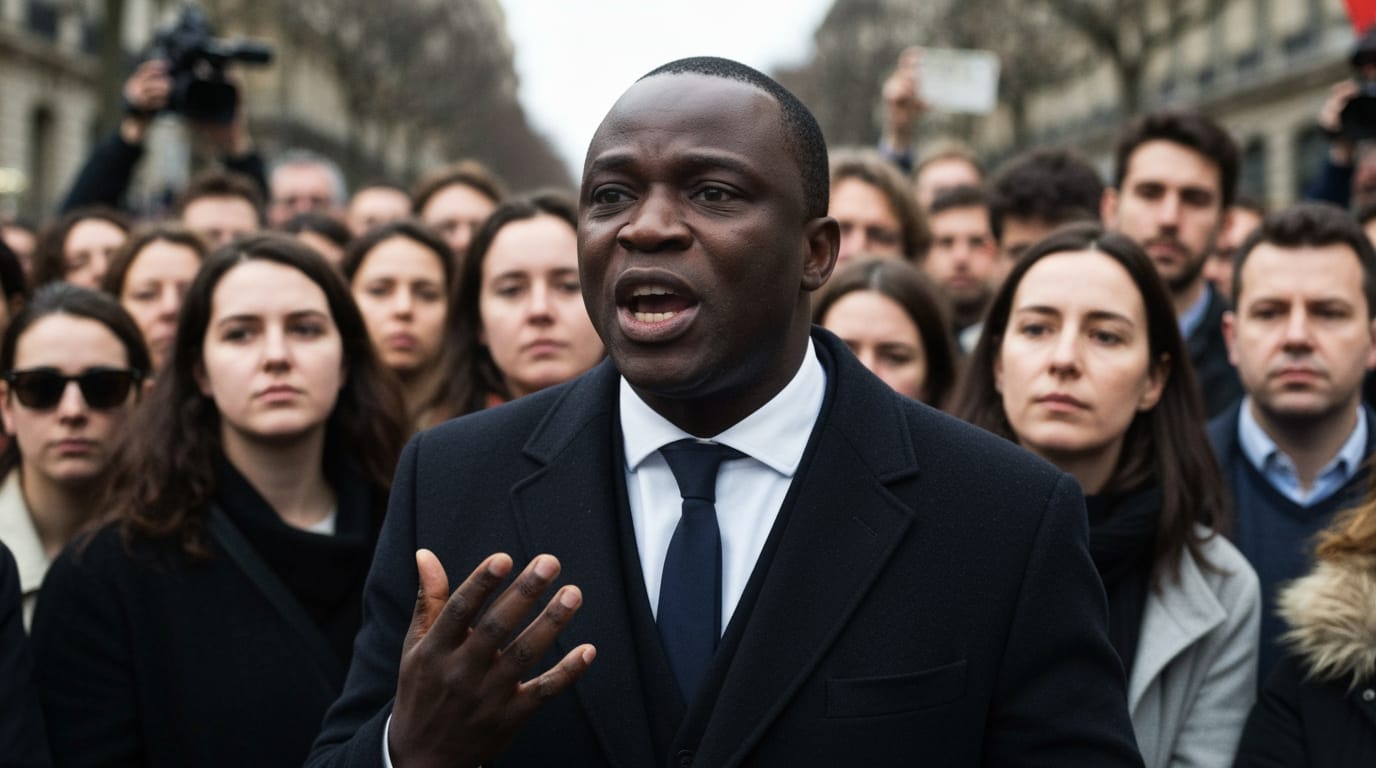
PARIS – Tens of thousands of individuals across France recently took to the streets in a powerful rebuke against escalating racism and the burgeoning influence of far-right ideologies. These widespread demonstrations, spanning over 200 locations nationwide, were ignited in part by the experience of Bally Bagayoko, the newly elected Black mayor of Saint-Denis, a significant suburb of Paris, who has faced a barrage of racist attacks since assuming office. The protests underscore a deep-seated societal tension, bringing to the forefront long-standing issues of racial discrimination, particularly within France's diverse urban areas.
The Saint-Denis Catalyst: A Mayor Under Siege
The election of Bally Bagayoko, a 52-year-old of Malian descent, as mayor of Saint-Denis in mid-March marked a significant moment for the Parisian suburb and for French politics. However, his victory was swiftly followed by a wave of explicit racism. The town hall of Saint-Denis has since been inundated with racist phone calls, questioning whether the city was becoming a "town of Blacks and Arabs" or implying that religious attire would be mandated for school attendance. This torrent of abuse extended to online platforms, fueled by accounts associated with the far-right, and escalated during a national television debate where derogatory comments, including references to apes and tribal chiefs, were reportedly made in connection with Bagayoko's new role. Such incidents have been condemned by various political figures and anti-racist organizations, highlighting what many perceive as a "racist regression" within French society. Saint-Denis, a city of approximately 150,000 inhabitants known for its multiculturalism and historical significance, is grappling with a 37% poverty rate and the highest percentage of residents under 25 in metropolitan France, embodying the complex socio-economic and demographic challenges often faced by the nation's suburbs.
A Nationwide Cry for Equality
The racist backlash against Mayor Bagayoko became a focal point for broader anti-racism demonstrations that mobilized hundreds of thousands across the country. On Saturday, March 22, protesters converged in major cities including Paris, Lyon, Toulouse, Marseille, and Rennes, with roughly 49,000 participants reported by the Interior Ministry nationwide, including approximately 10,000 in Paris and 11,000 in Lyon. The demonstrations were a collective effort, supported by nearly 600 organizations, including various trade unions, human rights associations, and left-wing political parties. These groups united under a common banner, expressing concerns over what they described as a rising tolerance for hate speech and extremist ideologies in France. The rallies aimed to combat all forms of division and systemic discrimination, including Islamophobia, and to push back against the rhetoric promoted by the political far-right. Organizers emphasized the importance of unity against hatred and encouraged civic participation, particularly ahead of municipal elections.
The Persistent Shadow of Systemic Discrimination
The recent wave of protests underscores a persistent and often denied reality of racism in France. While official French law prohibits the collection of ethnic and religious census data, hindering a full quantitative assessment, human rights groups and anecdotal evidence consistently point to systemic issues. A 2024 report by France's human rights commission highlighted a significant increase in racist incidents between 2022 and 2023, with anti-Semitic acts rising by 284%, anti-Muslim acts by 29%, and other forms of racist incidents by 21%. The United Nations Committee on the Elimination of Racial Discrimination (CERD) has also expressed concern regarding the prevalence of racist and discriminatory discourse in France, particularly in media and political spheres. Historically, suburbs (known as banlieues) have become home to a high proportion of immigrants, many of whom are of Black and Arab descent due to France's colonial past. These areas have often faced public under-investment and have been associated with socioeconomic disadvantages and racial minorities, leading to what some describe as institutionalized racism and spatial segregation. Residents of these banlieues frequently report discrimination in employment, housing, and encounter issues like racial profiling and police brutality. Despite these concerns, French authorities and government officials have repeatedly denied the existence of systemic racism within institutions like the police force, maintaining that any such instances are isolated cases.
Political Tides and a Divided Nation
The protests occur against a backdrop of increasing political polarization and the growing influence of the far-right National Rally party, which has seen a surge in support and aims for electoral success in upcoming national elections. This political climate has exacerbated discussions surrounding national identity, immigration, and secularism. For many, the attacks against Mayor Bagayoko symbolize a broader societal regression, echoing concerns that parts of the country are yielding to xenophobic sentiments. The demonstrations therefore serve as a direct challenge to this narrative, advocating for a universalist vision of the Republic where all citizens are treated equally, regardless of origin or background. Activists and political figures from the left have proposed legislative reforms and changes in education to confront the legacy of colonialism and ingrained racism, pushing for a re-evaluation of how France addresses its complex history and its diverse population.
A Call for a More Inclusive Future
The recent anti-racism protests across France, spurred by the experiences of Saint-Denis's new mayor, represent a significant public outcry against persistent discrimination and the rising tide of far-right rhetoric. These demonstrations highlight the ongoing struggle for racial equality and recognition in a country that often prides itself on universalist values but grapples with the realities of its diverse demographics and colonial past. The unified stance of numerous organizations and thousands of citizens signifies a collective demand for a more inclusive society and a clear rejection of racist ideologies. As France navigates its political future, the resolve shown in these protests indicates a powerful societal undercurrent pushing for fundamental change and a renewed commitment to the principles of liberty, equality, and fraternity for all its inhabitants.