France's 2026 Budget Navigates Political Storm, Prioritizes Defense and Deficit Reduction
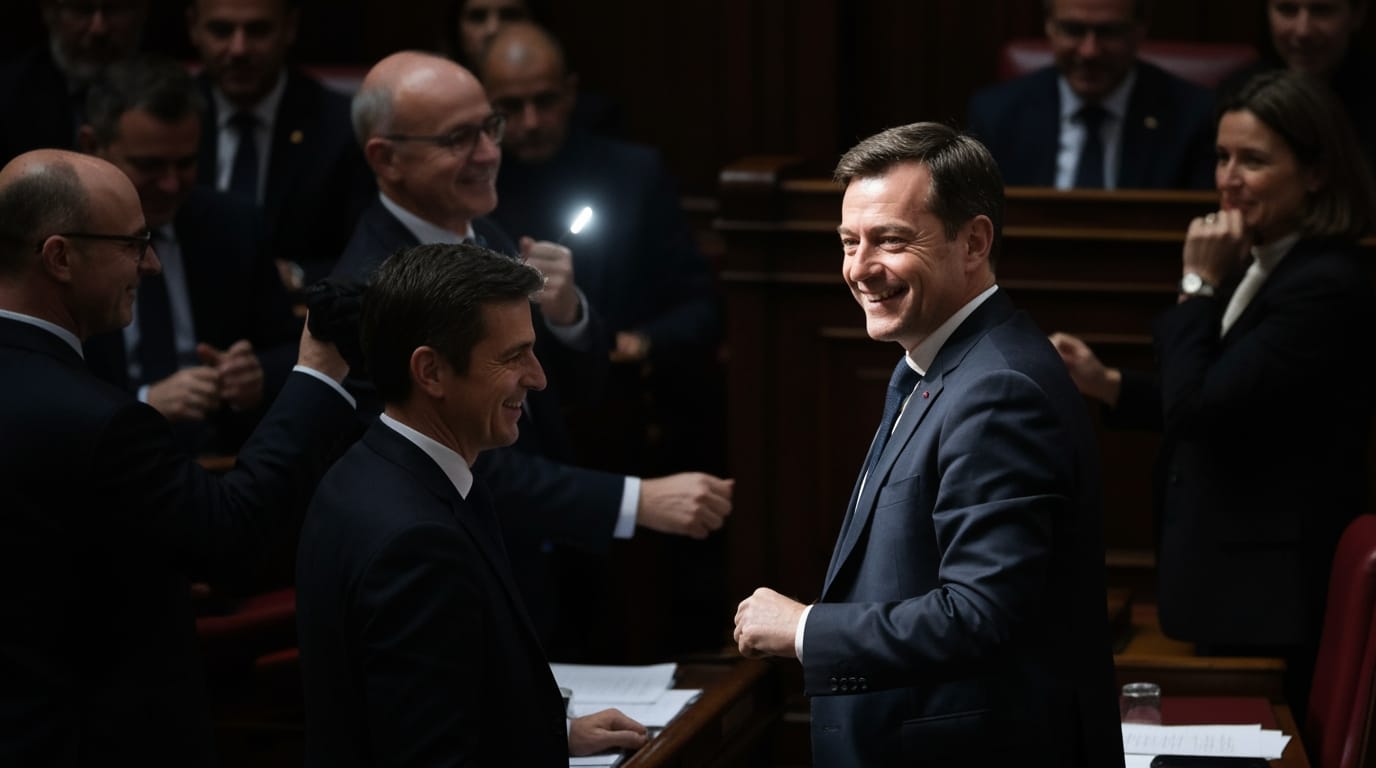
PARIS – After months of intense political wrangling, constitutional maneuvers, and failed no-confidence votes, France's 2026 budget has finally been adopted, bringing an end to a period of legislative uncertainty that had unsettled markets and raised concerns among European partners. The hard-fought passage of the fiscal plan underscores the deep divisions within the French parliament, but ultimately paves the way for the government's efforts to reduce the national deficit, bolster military capabilities, and implement targeted social measures amid a challenging economic climate.
The budget's approval represents a critical, albeit politically costly, victory for Prime Minister Sébastien Lecornu and President Emmanuel Macron's minority government. The protracted debate highlighted the complexities of governing a fractured parliament, a consequence of Macron's 2024 snap election which yielded no outright majority. This political landscape necessitated significant concessions and ultimately compelled the government to utilize a powerful constitutional tool to bypass a direct parliamentary vote, triggering a series of no-confidence challenges that the administration narrowly survived.
A Turbulent Legislative Journey
The journey to the 2026 budget's adoption has been fraught with political peril, consuming the French political class for nearly two years. The absence of a clear parliamentary majority following the 2024 elections transformed budget negotiations into a high-stakes battle for consensus. This legislative gridlock proved particularly challenging, with budget talks having previously contributed to the downfall of two of Prime Minister Lecornu's predecessors.
Facing a deeply divided National Assembly, Prime Minister Lecornu resorted to Article 49.3 of the French Constitution on January 30, a controversial executive power allowing the government to pass a bill without a vote. This move automatically triggered two no-confidence motions filed by opposition parties – one from the far-left La France insoumise and another from the far-right Rassemblement national. Both motions were rejected by Members of Parliament on the evening of February 2, falling short of the absolute majority required to topple the government. The survival of these votes ensured the budget's final adoption, marking the end of months of political deadlock and providing a degree of stability for Lecornu's government.
Navigating Fiscal Realities: Deficit and Debt
A central pillar of the 2026 budget is the government's commitment to fiscal prudence, specifically aiming to rein in the national deficit. The budget targets a reduction of France's fiscal deficit to 5% of Gross Domestic Product (GDP) in 2026, a decrease from an estimated 5.4% in 2025. This target, however, represents a slight easing from an earlier ambition of 4.7% (or 4.6%), a change attributed to the necessity of making concessions to opposition parties during the negotiation process.
The impetus for these deficit reduction efforts is not solely internal. France has faced increasing pressure from the European Union and international credit rating agencies to address its burgeoning public debt, which stood at 117% of GDP in 2025 and is projected to climb to 120% by 2027. This figure significantly exceeds the Eurozone average, which remains below 90%. The government's strategy includes approximately €9 billion in spending cuts, although this is less than half of the initial €17 billion in savings originally targeted. Public spending is anticipated to slightly decrease from 56.8% to 56.6% of economic output, yet France's public expenditure levels will remain among the highest globally.
Key Measures: Strategic Investments and Targeted Adjustments
The 2026 budget outlines a blend of strategic investments, revenue-generating measures, and social concessions. A prominent feature is a substantial increase in military spending, with an additional €6.5 billion (or €6.7 billion) allocated to defense. This boost, described by the Premier as the "heart" of the budget, is driven by President Macron's commitment to counter evolving international threats, including the ongoing conflict in Ukraine and instability in the Middle East. The funding will support the acquisition of new defense assets, including a nuclear-powered attack submarine, 362 armored vehicles, and advanced Aster surface-to-air missiles.
On the revenue side, the government has opted for targeted tax adjustments rather than broad-based increases for households. A surtax on large companies with revenues exceeding €1 billion will be extended, expected to generate approximately €7.3 billion. A new 20% wealth tax on non-business assets, such as private jets and yachts, is projected to bring in €100 million. Additionally, a temporary tax on high earners will be prolonged, affecting around 20,000 taxpayers and contributing an estimated €650 million. A new €2 levy will be imposed on small parcels arriving from outside the European Union, primarily targeting e-commerce imports, and is anticipated to raise between €400 million and €500 million. Critically, income tax brackets will be indexed to inflation, a measure designed to prevent "fiscal drag" and ensure households are not implicitly taxed more due to rising prices. This reversed an earlier proposal to freeze tax brackets that would have generated an additional €1.9 billion.
Significant social concessions were also woven into the budget to secure support, particularly from Socialist lawmakers. These include the nationwide extension of the €1 student meal program, a monthly increase of approximately €50 in the prime d'activité (a top-up payment for low-income workers) for three million recipients, and the continuation of the MaPrimeRénov' scheme supporting eco-renovations for homes. Furthermore, a key concession involved the suspension of President Macron's 2023 pension reform, which had aimed to gradually raise the retirement age from 62 to 64. The agricultural sector also saw its budget maintained at around €6 billion, with additional funds for specific initiatives, following earlier protests.
Implications and Future Outlook
The successful adoption of the 2026 budget, despite the political turbulence, offers a measure of immediate relief to the French government, removing some of the uncertainty that had weighed on economic prospects. Prime Minister Lecornu celebrated the passage, highlighting it as a product of parliamentary compromise despite the use of constitutional powers to bypass a vote.
However, the budget's compromises have drawn criticism from some quarters, particularly from business groups, who argue that the extended corporate surtaxes and lack of significant structural reforms could stifle investment and economic growth. Concerns also persist regarding the trajectory of public debt and whether the deficit reduction targets are ambitious enough in the long term, especially given the European Union's scrutiny. While the immediate crisis of a budget impasse has been averted, the underlying challenges of a fragmented political landscape and the need for deeper structural reforms remain.
As France looks ahead, the 2026 budget sets the fiscal course for the coming year, balancing immediate social needs and strategic defense priorities with the imperative of fiscal consolidation. Yet, the consensus among observers is that the political struggles to craft and pass future budgets, particularly for 2027, are likely to be even more complex, underscoring the enduring challenges of governance in a deeply divided parliament.


