Hungary's Political Earthquake: Rival Rallies Signal Historic Election Battle
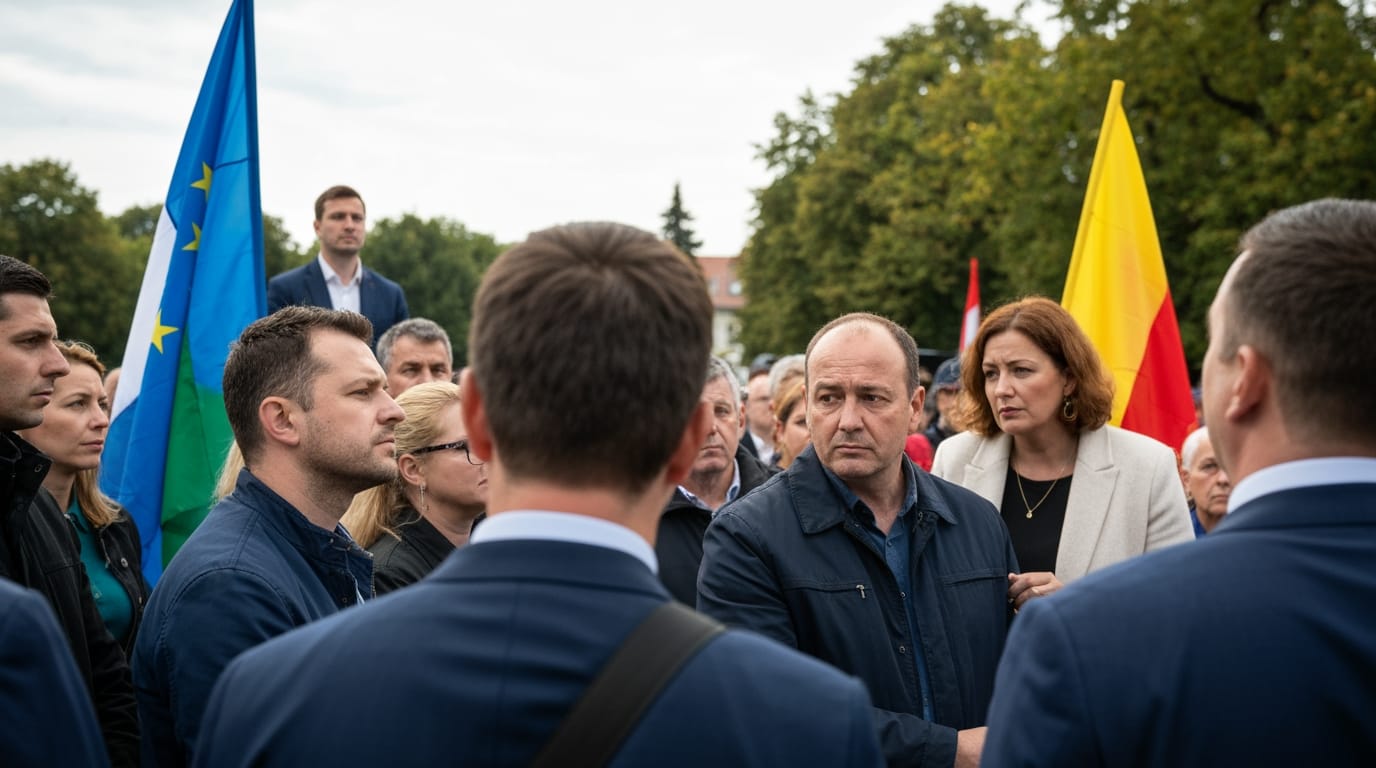
BUDAPEST, Hungary – The streets of Hungary's capital transformed into a vibrant battleground of political will on Sunday, March 15, 2026, as Prime Minister Viktor Orbán's ruling Fidesz party and the ascendant opposition Tisza party, led by Péter Magyar, staged massive parallel rallies. With parliamentary elections just four weeks away on April 12, the dueling demonstrations served as a potent display of strength and a stark illustration of the deep ideological divisions gripping the nation, setting the stage for what many observers are calling the most competitive election in Hungary in two decades.
Battle for Budapest: A Capital Divided by Ideologies
Sunday's events saw Budapest cleaved into two distinct political spectacles, each drawing hundreds of thousands of supporters. Prime Minister Orbán's nationalist Fidesz party rallied in front of the iconic Parliament building, a traditional center of power, underscoring the party's narrative of national strength and stability. Simultaneously, Péter Magyar, a former Fidesz insider turned formidable challenger, led his Tisza (Respect and Freedom) party supporters in a march along a majestic avenue, culminating in a powerful address at Heroes' Square. The sheer scale of both gatherings, described by various reports as involving "hundreds of thousands" of Hungarians, showcased the energized and polarized political climate, with each side eager to project dominance as the election campaign enters its pivotal final month. Observers widely viewed these synchronized shows of force as a critical barometer of public sentiment, offering a glimpse into which political force might ultimately command greater popular support.
Orbán's Campaign: Stability, Sovereignty, and Warnings of War
For Prime Minister Orbán, seeking an unprecedented fifth consecutive term since returning to power in 2010, the rally was a crucial moment to galvanize his base and reaffirm his long-standing vision for Hungary. Addressing the throng of Fidesz supporters, many of whom traveled from across the country in buses reportedly arranged by party-affiliated groups, Orbán framed the upcoming vote as a fundamental choice between peace and war. His speech, delivered amidst banners proclaiming "We won't be a Ukrainian colony!", continued a prominent theme of his campaign: portraying Hungary as an "island of security and tranquility" amidst a turbulent world.
Orbán reiterated his combative stance against both the European Union and neighboring Ukraine, accusing them of seeking to drag Hungary into the ongoing conflict. He alleged that his political rivals, particularly Magyar, were "puppets" of Brussels and Kyiv, part of a conspiracy to undermine his government and push Hungary into financially supporting Ukraine and even sending soldiers to fight. This narrative, which has seen the extensive use of state-controlled media and billboards featuring AI-manipulated images of Ukrainian President Volodymyr Zelenskyy, paints a dire picture of foreign threats to Hungary's sovereignty and economic well-being. Orbán's objective is not merely to win, but to achieve a "historic victory," aiming to surpass his party's 2022 landslide results.
Magyar's Momentum: A Call for Change and a Pro-European Future
In stark contrast, Péter Magyar's Tisza party rally resonated with a message of systemic change, democratic renewal, and a stronger alignment with Western values. Magyar, a 44-year-old lawyer and former diplomat, burst onto the political scene in 2024 after resigning from his government-related positions, citing widespread corruption and a disillusionment with Fidesz's trajectory. His rapid rise has shaken Hungary's political landscape, with Tisza quickly becoming the most significant challenge to Orbán's long dominance.
Magyar's address at Heroes' Square, before a crowd estimated at over 100,000, lambasted the current government for its divisive policies, propaganda, and perceived steering of the country away from its rightful place among Western democracies. Chants of "Russians go home!" from his supporters, echoing the sentiment of the 1956 anti-Soviet uprising, underscored their rejection of Orbán's warm relations with Moscow. Magyar emphasized that "Our homeland is part of the West, our homeland is part of the European community, our country is part of NATO." His platform centers on improving the lives of ordinary Hungarians by tackling persistent inflation, addressing the deteriorating public services, and combating corruption – issues that have fueled growing dissatisfaction with the current administration. Magyar pledged to restore belief in freedom and the feeling that Hungary "truly belongs to every Hungarian," positioning himself as an alternative for all citizens, rather than just a segment.
The Stakes: Economic Woes, Geopolitical Fault Lines, and Democratic Concerns
The upcoming April 12 election is set against a backdrop of significant internal challenges and complex international relations for Hungary. The country has been grappling with a stagnating economy, a cost of living crisis, and mounting allegations of government corruption, all contributing to widespread public discontent. Critics argue that Orbán's government, often described as an "illiberal democracy," has systematically undermined independent institutions, curtailed media freedom, and manipulated the electoral system since 2010 to consolidate its power. Several established opposition parties have even chosen to withdraw from the election to rally behind Tisza, recognizing the new party's potential to unseat Fidesz.
Geopolitically, Hungary's position as a NATO and EU member with close ties to Russia, particularly amidst the ongoing war in Ukraine, has caused friction with its Western allies. Orbán's consistent arguments against Western support for Ukraine and his maintenance of warm relations with the Kremlin have been a source of ongoing tension. The campaign has been further clouded by allegations of potential Russian interference aimed at boosting Orbán's re-election chances, reminiscent of past electoral interference activities in other nations. Concerns have also been raised about the government's use of AI-generated disinformation and the possibility of Orbán challenging election results or even obstructing a transition of power should he face defeat.
Independent polls indicate a significant shift in public opinion, with most surveys showing Tisza leading Fidesz, sometimes by a substantial margin of up to 20 percentage points among decided voters. However, Fidesz dismisses these polls, pointing to government-affiliated surveys that still predict their victory and highlighting historical instances where opposition support was overestimated. The outcome remains uncertain, particularly given Fidesz's strong organizational presence in rural areas and its extensive control over media channels.
A Nation at a Crossroads
As Hungary hurtles towards its April 12 parliamentary elections, the rival rallies in Budapest underscore a nation at a critical juncture. The contest pits Orbán's narrative of national sovereignty and traditional values, coupled with warnings against foreign influence and conflict, against Magyar's promise of democratic reform, economic prosperity, and a renewed commitment to Hungary's place within the European mainstream.
The election is not merely a choice between two parties, but between two fundamentally different visions for Hungary's future. The results will determine not only the country's domestic political landscape and its approach to pressing economic and social issues but also its trajectory within the European Union and its stance on critical geopolitical matters. The intense mobilization witnessed in Budapest suggests that Hungarian voters are keenly aware of the high stakes, and the coming weeks will reveal which vision ultimately resonates most deeply with the electorate.


